 Jonas Lindqvist
Panama sorts arriving tourists into three groups, and your passport decides which one you are in before you book anything. Most visitors, including citizens of the United States, Canada, the United Kingdom, the European Union, Australia and Japan, enter visa free: up to 180 days for US and Canadian citizens, and up to three months for most other visa exempt nationalities. A second group must obtain a stamped visa at a Panamanian consulate before travel, and a third, smaller group needs an authorised visa approved in Panama itself. There is also a valuable shortcut: since Executive Decree 196 of 28 October 2024, travellers who normally need a visa can enter for up to 30 days on a valid visa or residence permit issued by the US, Canada, the UK, the EU, Australia, Japan, South Korea or Singapore. This explainer sets out who qualifies under each route, what it costs, and the order to file in before you fly to Panama City.
Quick Facts
- Main gateway: Tocumen International Airport (PTY), Panama City
- Visa free stays: Up to 180 days for citizens of the United States and Canada; up to three months for most other visa exempt nationalities, with the entry stamp on arrival setting your actual deadline
- Stamped visa: Required in advance from a Panamanian consulate for nationalities on the stamped visa list, including India, the Philippines, the Dominican Republic and Venezuela; holders are usually admitted for 30 days at a time
- Authorised visa: Required for a smaller list of nationalities; the application is approved by the immigration service in Panama before the consulate can issue
- Third country shortcut: Executive Decree 521 as amended by Decree 196 (28 October 2024) admits otherwise visa required travellers for up to 30 days on a valid visa or residence from Canada, the US, Australia, South Korea, Japan, the UK, Singapore or any EU state
- Passport validity: At least three months on entry under the immigration service minimum; six months is the safer planning standard
- On arrival proof: Proof of economic solvency of at least 500 US dollars, plus an onward or return ticket, can be requested at the border
- Authority: Servicio Nacional de Migracion, the National Immigration Service
Who qualifies for visa free entry to Panama?
The visa exempt list is long, covering the United States, Canada, the United Kingdom, all European Union states, Australia, Japan, South Korea, Singapore and most of Latin America, among many others published by the immigration service. For these travellers there is no application and no fee before departure: you present your passport at Tocumen, receive an entry stamp, and your stay runs from that stamp. Two different ceilings apply inside the visa free group. Resolution 22706 of September 2021 confirms up to 180 days for citizens of the United States and Canada, while the general visa exempt ceiling is three months. The stamp is the document that matters. Officers can grant fewer days than the maximum, so read the stamp before you leave the desk and plan your departure around the date it sets, not the headline allowance.
Visa free entry is for tourism and short visits. It does not authorise paid work, and travellers arriving to take up employment, long term residence or study follow separate permit routes with their own filings. If your itinerary combines Panama with other entry rule puzzles in the region and beyond, our explainer on Sao Tome and Principe entry rules shows a very different island system built on advance authorisation instead.
Who needs a stamped visa, and who needs an authorised visa?
Nationalities on the stamped visa list, which in current consular guidance includes India, the Philippines, the Dominican Republic, Venezuela, China, Cuba, Ghana and the Republic of Congo, among others, must hold a visa stamped into the passport by a Panamanian consulate before they travel. Consulates describe the stamped tourist visa as typically multiple entry and valid for up to three years, with each admission usually 30 days, but the consulate handling your application sets the exact terms, so confirm them when you file. Processing is measured in weeks rather than days; one consular summary puts the standard processing time at about 30 calendar days, and the applicant collects the stamped passport in person.
The authorised visa is the slower route. For nationalities on this list, which current guidance illustrates with Pakistan, Bangladesh, Nepal and Nigeria, the consulate cannot simply issue: the file goes to the National Immigration Service in Panama for approval first, and only then is the visa placed in the passport. Build substantially more lead time for this route, and do not book non refundable flights until the approval exists. Lists change by resolution, so the check that counts is the immigration service list for your exact nationality and passport type, verified in the weeks before you apply rather than from an old forum post.
How does the third country visa exemption work?
Executive Decree 521 of 2018 created the shortcut, and Executive Decree 196 of 28 October 2024 widened it. In its current form, a traveller whose nationality normally requires a Panamanian visa may enter Panama without one if they hold a valid visa or residence permit duly issued by Canada, the United States, Australia, South Korea, Japan, the United Kingdom, Singapore or any European Union member state. US permanent resident cards are expressly accepted in embassy guidance. The stay under this route is capped at 30 days.
The 2024 amendment removed the older, stricter conditions that the foreign visa be multiple entry, already used to enter the issuing country, and valid for at least six more months; the amended text requires a valid visa from a named country at the moment of entry. Because airline check in staff apply these rules at the desk, carry the physical visa or residence card, be ready to show the decree based entitlement calmly, and arrive at the airport with extra time. The exemption covers entry as a tourist; it does not convert into a longer stay, and anyone planning more than 30 days should use the consular route instead. Travellers comparing exemption systems will find a useful contrast in our guide to the Madagascar eVisa and landing authorisation, where the authorisation is filed with the destination itself rather than borrowed from a third country.
What is the order to file in, and what happens at Tocumen?
Step one, at booking time, classify your passport against the current immigration service lists: visa exempt, stamped visa, authorised visa, or exempt via a third country document. Step two, if you need a consular visa, file at the nearest Panamanian consulate immediately, allowing about 30 days for a stamped visa and longer for an authorised one. Step three, check passport validity: three months is the stated immigration minimum, but six months avoids airline and consulate friction, and you need a blank page for stamps. Step four, assemble the arrival proofs that officers may request from any visitor: an onward or return ticket and evidence of at least 500 US dollars in solvency, which embassy guidance states expressly for exemption travellers and which is routinely applied more widely. Step five, on arrival at Tocumen, complete immigration, confirm the days granted on your stamp, and keep your passport accessible until you leave the airport, because the stamp is your proof of lawful stay for hotels, car hire and any police check.
Overstaying is fined and complicates future entries, and extensions are an immigration office process in Panama City rather than an airport fix, so the cheapest strategy is to diarise the stamped deadline the day you arrive. Cruise passengers, yacht arrivals and land border crossings from Costa Rica or Colombia follow the same nationality rules but different desks; the classification work in steps one to four is identical.
What are the common Panama entry mistakes?
The first is assuming a US or Schengen visa automatically means 90 days; under the third country exemption the cap is 30 days. The second is relying on an out of date list, because Panama moves nationalities between categories by resolution, and the October 2024 decree changed the exemption conditions themselves. The third is arriving with under three months of passport validity and discovering the minimum at check in. The fourth is treating the maximum stay as guaranteed, when the stamp on the day governs. The fifth is booking a stamped or authorised visa trip on a tourist timeline of days, when the consular routes run in weeks. Every one of these is a paperwork error made at home, which is precisely why Panama rewards travellers who file in order.
Frequently Asked Questions
How long can US and Canadian citizens stay in Panama without a visa?
Up to 180 days as tourists, under Resolution 22706 of September 2021. Most other visa exempt nationalities receive up to three months. In both cases the entry stamp issued on arrival sets the binding deadline, and officers can grant less than the maximum.
I hold a valid US visa but my passport normally needs a Panama visa. Can I enter?
Yes, under Executive Decree 521 as amended by Decree 196 of October 2024, provided the US visa or residence is valid when you enter. The same applies to visas or residence from Canada, the UK, the EU, Australia, Japan, South Korea and Singapore. The stay on this route is capped at 30 days.
What is the difference between a stamped visa and an authorised visa?
A stamped visa is issued directly by a Panamanian consulate and placed in your passport before travel. An authorised visa must first be approved by the National Immigration Service in Panama, and only then can the consulate issue it, so it takes longer.
How much money must I show to enter Panama?
Embassy guidance states proof of economic solvency of at least 500 US dollars, alongside an onward or return ticket. Officers do not ask every visitor, but any visitor can be asked, so carry the evidence in an accessible form.
How long must my passport be valid for Panama?
The immigration service minimum is three months of validity. Consulates and airlines often work to a six month standard, so travelling with six months remaining is the safer plan.
Can I extend my stay once I am in Panama?
Extensions are handled through the National Immigration Service inside Panama and are never guaranteed. The reliable approach is to plan around the deadline on your entry stamp and, if you know you need longer, to use the consular visa route before you travel.
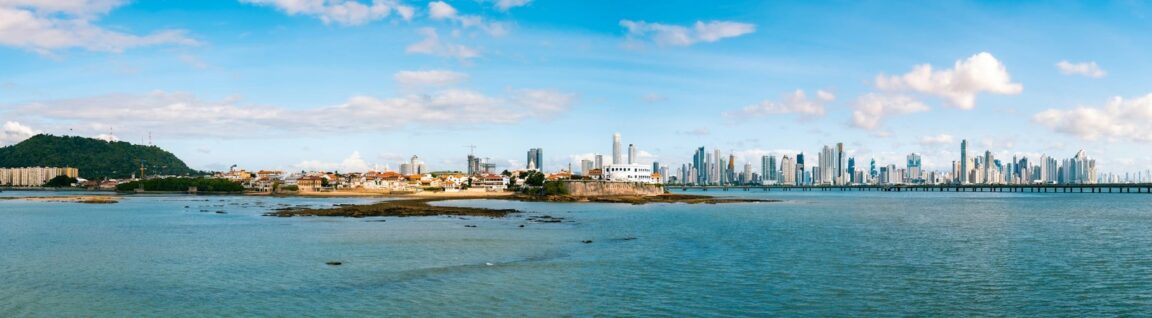
Photo: Casco Viejo and the modern skyline across the bay, Panama City. Photo by Armands Brants on Unsplash, Unsplash License. Facts checked 16 November 2026 against National Immigration Service and Panamanian embassy guidance, including Executive Decrees 521 and 196; confirm your nationality category before booking, as lists change by resolution.