 James Wolfe
Eat in Porec by following the wine, not the waterfront crowds. This small Istrian town on the west coast of Croatia pairs a 6th century UNESCO listed basilica with a food scene built on two grapes, Malvasia Istriana and Teran, plus Adriatic fish, Istrian olive oil and the resort grills of Zelena Laguna just south of the old town. The most rewarding meals sit one or two streets back from the harbour, in wine bars pouring local labels by the glass and in family run konobas where the menu follows the morning catch. Plan one long wine led lunch, one fish dinner facing Sveti Nikola island, and one grill evening in Zelena Laguna, and Porec stops being a beach base and becomes a food trip in its own right.
Quick Facts
- Where: Porec, also called Parenzo in Italian, on the western coast of the Istrian peninsula, Croatia
- Order first: A glass of Malvasia Istriana with an Istrian platter of prsut, cheese and olive oil
- Signature wines: Malvasia Istriana, a fresh white, and Teran, a deep red native to Istria
- Best splurge: A multi course wine dinner pairing Istrian dishes with a named local winemaker
- Best value: Lunch menus and wine bars on and just off Decumanus, the old town main street
- Do not miss: Sunset drinks facing the harbour and Sveti Nikola island
- Prices checked: November 2026, against restaurant and hotel sources listed in this guide
What wine should you drink first in Porec?
Start with Malvasia. Istrian Malvasia, listed on local wine bar menus simply as Malvasia or Malvazija, is the white wine that defines drinking in this part of Croatia: aromatic, dry and built for seafood, asparagus and light pasta. The wine bar and bistro Fora Le Porte, at Trg Slobode 2 in the centre of town, describes its own offer as a wide selection of local Istrian wines like Malvasia and Teran, which is exactly the right starting point for a first evening. Order a glass of each, side by side, with a small plate, and you have the two poles of Istrian wine in front of you: the white you will drink with fish all week, and the red you will want with grilled meat and aged cheese.
Teran deserves patience. It is a native Istrian red with firm acidity and dark fruit, historically grown in the iron rich red soils inland around Motovun. With food it shines: pour it beside grilled lamb, a mixed grill or a board of Istrian prsut and sheep cheese. Wine bars in the old town, including the long running Bacchus Vinoteka on Eufrazijeva, build their evenings around exactly this format, local wine by the glass with simple hot dishes and mixed Istrian platters, in a small alley setting a short walk from the harbour.
The name in this guide title, Parentino, nods to Parenzo and Parentium, the Roman name for Porec, and you will see the Parentino name carried by one of the big seafront hotels south of the centre. Treat it as a reminder of how deep the wine story runs here: this coast has made wine since Roman times, and the modern Istrian wine road inland from Porec is lined with family cellars pouring Malvasia and Teran at the source.
Where do locals actually eat in the Porec old town?
The old town peninsula is compact, laid out on its Roman street grid, with Decumanus running its length. The harbour front, Obala Marsala Tita, holds the view tables. Restaurant Divino, at Obala Marsala Tita 20, lists Mediterranean, Croatian and Italian cooking and describes its setting as facing Saint Nicholas island in front of the old town, which makes it the classic choice for a fish dinner with the sunset in front of you. Book the terrace, ask what Adriatic fish arrived that day, and keep the order simple: grilled fish, olive oil, lemon, blitva, the Swiss chard and potato side that accompanies fish all along this coast.
One square inland, Cotton Club at Trg Slobode 6 sits at the start of Decumanus in the historic centre and runs from morning coffee through to late evening, with a menu that moves from coffee and croissants to steaks, including tomahawk and dry aged cuts, and homemade pasta. It suits the traveller who wants one reliable address for both a slow breakfast and a meat led dinner without leaving the old town.
For something quieter, look for the small vegetarian bistro Artha on Ulica Joze Surana, which lists vegetarian and vegan cooking, risotto and crepes, and keeps shorter hours than the grill houses, including lunch focused service on several days. In a town where menus lean heavily on fish and meat, a dedicated vegetarian kitchen is worth planning around rather than stumbling on. As with everywhere in Porec, check the day hours before you walk over, because shoulder season schedules shrink fast outside summer.
How should you eat around the Euphrasian Basilica?
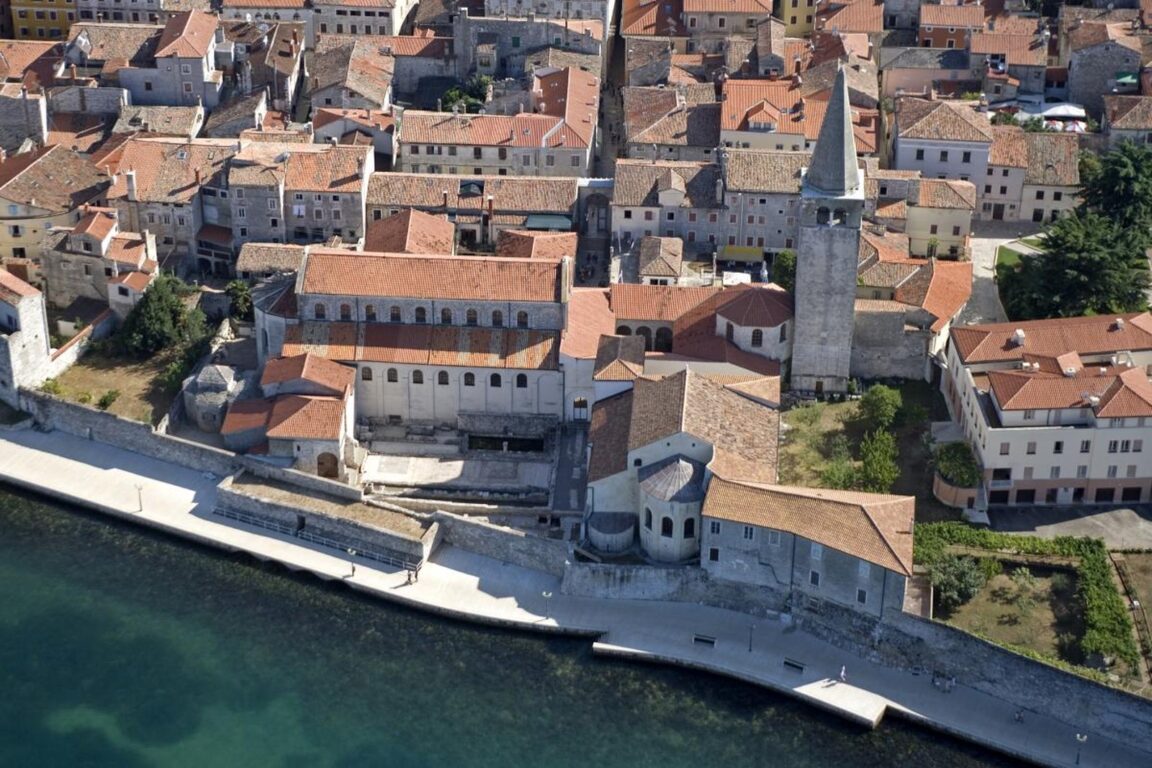
The Euphrasian Basilica, designated a UNESCO World Heritage Site in 1997, anchors the north side of the old town, and the streets around it hold the cafe strip locals use between sightseeing and dinner. The pattern that works is coffee first, basilica second, lunch third. Cafes on the lanes near the basilica fill with tour groups at midday, so eat either early, before 12.30, or late, after 14.00, when the day trip coaches have gone and the kitchens return to local pace. A light lunch here, an Istrian pasta such as fuzi with a seasonal sauce, or a plate of grilled sardines in season, leaves room for the bigger dinner the town does best.
What happens at a Porec wine dinner?
The most distinctive food event in the Porec area is the wine dinner format run by the big resort hotels, where a named Istrian winemaker pours through a set menu. Plava Laguna, the hotel group behind the Zelena Laguna and Parentium zone south of town, publishes wine dinner menus for its Bacchus restaurant at Hotel Parentium built as four courses chosen by the chef and paired with the wines of a famous Istrian winemaker, with dishes based on traditional Istrian and Mediterranean cuisine with a modern touch. Past pairings listed by the group have included Istrian producers such as Vina Roxanich from Motovun, and courses running from smoked cuttlefish to beef Wellington and a cheese selection. If one of these evenings falls during your stay, it is the single easiest way to taste across an Istrian cellar without hiring a car.
Valamar, the other large operator, runs a similar ladder of options around its Parentino hotel, from the Mediterraneo buffet restaurant through the Oliva Grill to a la carte restaurants nearby. The useful lesson for independent travellers is not the buffet itself but the grill format: Zelena Laguna evenings are built on open fire cooking, whole fish and mixed grills eaten outdoors, and that is the Porec meal to schedule on your warmest night.
How do you eat well in Zelena Laguna and the resort zone?
Zelena Laguna, the resort village a short drive or waterfront walk south of the old town, feeds thousands of guests a night in season, and the trick is to eat like the staff do: choose the grill restaurants over the all purpose buffets, arrive when service opens, and order the Istrian standards rather than the international list. Grilled calamari, scampi in the shell, and a mixed grill with cevapi style minced meat rolls and ajvar all travel well from these kitchens. Pair with house Malvasia, which in this zone is usually a local Istrian bottling rather than a generic white.
Balance a resort dinner with one old town wine bar evening and one harbour front fish lunch, and you have covered the three Porec food registers. Travellers building a wider Istria and Dalmatia trip can pair this guide with our coverage of the Montenegrin coast in Kotor, Montenegro: Why Go, What to Do, How to Reach It, and the Best Time to Visit, where the same Adriatic fish and grill culture runs south, and with Mexico City Food Guide: Markets, Street Food, and Where to Eat in Each Neighborhood for a very different market led way of eating.
What should you buy at the market and bring home?
Istria travels well in a suitcase. The edible souvenirs to hunt for in Porec shops and at cellar doors are bottled Istrian extra virgin olive oil, small jars of truffle products from the inland forests around Motovun and Buzet, and a bottle each of Malvasia and Teran from a named producer. Buy oil where you can taste it first, and check that truffle products list real truffle content rather than aroma alone. Wine bought at a family cellar inland, on the wine roads toward Visnjan and Motovun, will almost always beat the harbour front souvenir markup, and the producers will tell you which vintage to drink now and which Teran to lay down.
Frequently asked questions about eating in Porec
What is the most local thing to drink in Porec?
Malvasia Istriana, the native white grape poured everywhere from wine bars like Fora Le Porte to resort grills. For red, order Teran, the native Istrian red that pairs with grilled meat and aged cheese.
Where should you eat with a view in Porec?
The harbour front on Obala Marsala Tita faces Sveti Nikola island. Restaurant Divino at number 20 is the established choice there for Mediterranean and Croatian fish cooking with that view.
Is Porec good for vegetarians?
Yes, with a little planning. Bistro Artha in the old town is a dedicated vegetarian and vegan kitchen, and most konobas serve fuzi pasta, risotto, grilled vegetables and the chard and potato side blitva.
When is the best season for food travel in Porec?
Late spring and early autumn give you open kitchens without peak crowds, plus the grape harvest inland in September and October. Many resort restaurants in Zelena Laguna run reduced schedules outside the summer season, so check hours before you go.
How much should you budget for dinner in Porec?
Old town wine bars and bistros sit in the moderate range, harbour front fish dinners cost more because fish is priced by weight, and resort wine dinners are a set splurge. Ask the price per kilo before ordering whole fish, a habit that keeps any Adriatic fish dinner predictable.
Last updated and prices checked: 16 November 2026. Sources consulted the same day include the restaurant and hotel pages named in this guide.