 Wei Chen
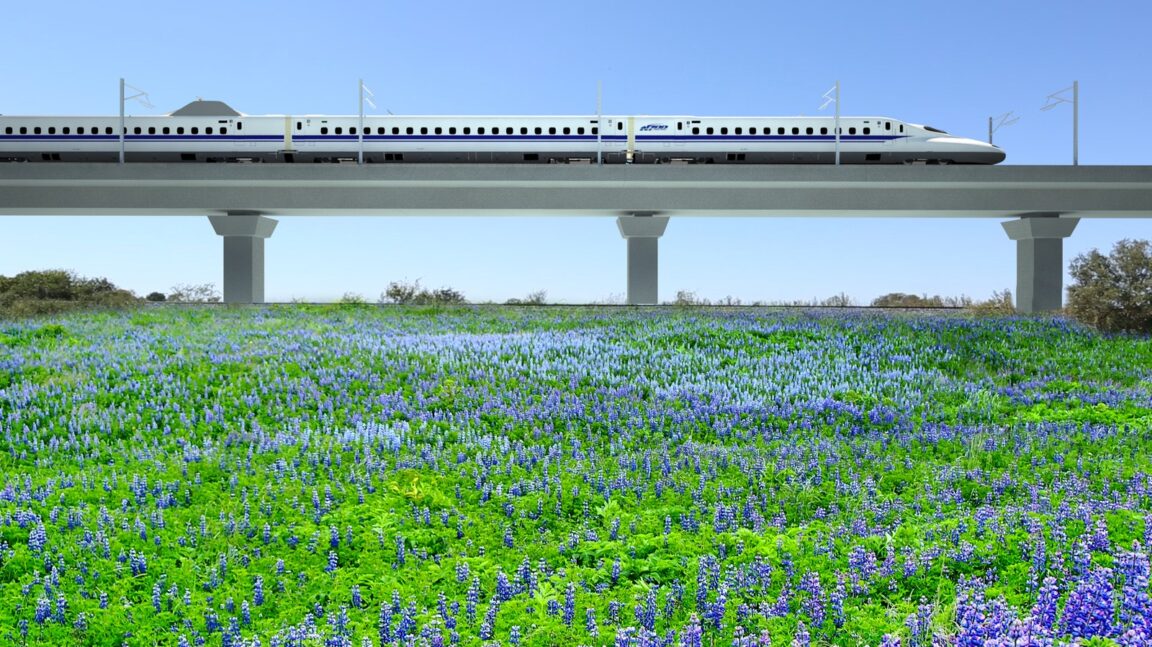
The Dallas to Houston bullet train cannot be booked, boarded or priced today, because no track has been laid and the project still lacks the financing and final construction approvals it needs to build. What exists in November 2026 is a permitted alignment on paper, a Houston terminal site being cleared, a court ruling that gives the developer eminent domain power, and a funding gap measured in tens of billions of dollars after the federal government withdrew its planning grant in April 2025. For travelers, the practical answer is simple: plan Dallas to Houston by plane, car, bus or the existing Amtrak service for now, and treat any opening date for the high speed line as provisional until construction finance closes and a start of works is announced by the developer itself.
Quick Facts
- Route: Dallas to Houston, about 240 miles, with a planned intermediate stop in the Brazos Valley near College Station.
- Planned journey time: Under 90 minutes end to end, using Japanese Shinkansen technology.
- Federal environmental clearance: The Federal Railroad Administration issued a Record of Decision and a Rule of Particular Applicability in 2020.
- Land power: The Texas Supreme Court ruled in 2022, in Miles v. Texas Central Railroad and Infrastructure, that the developer qualifies as a railroad with eminent domain authority.
- Federal funding: A planning grant of 63.9 million dollars was terminated by the US Department of Transportation in April 2025, and Amtrak ended its involvement.
- Cost estimates: Recent federal statements put construction costs above 40 billion dollars.
- Tickets: None exist. There is no timetable, no fare table and no booking channel.
- Status checked: 16 November 2026, against Federal Railroad Administration and Department of Transportation releases and Texas court reporting.
What is the filing sequence the project still has to complete?
High speed rail in Texas is a private project, so the sequence is not a single government application. It is a chain of separate clearances, and the train can only run when every link in the chain is closed. The environmental link closed first. After a multi year review, the Federal Railroad Administration completed the environmental process in 2020 and set the safety rulebook for the line in a Rule of Particular Applicability, written specifically because Shinkansen style trains do not match the rules written for conventional American railroads. That decision fixed the preferred alignment between Dallas and Houston and the basic station areas.
The land link came next. Landowners along the rural part of the route challenged whether a private developer could condemn land for the line. The Texas Supreme Court answered that question in 2022, holding that Texas Central is a railroad company and an interurban electric railway under Texas law, with the eminent domain power that follows from that status. The ruling did not buy a single parcel. It removed the legal argument that the company could never buy the corridor at all, and it left price and parcel disputes to be settled case by case.
The money link is the one that broke in 2025. Amtrak had joined the project in 2023 and the federal government awarded close to 64 million dollars to advance planning. In April 2025 the Department of Transportation terminated the 63.9 million dollar grant, arguing that a project proposed as a private venture should not lean on federal dollars as its cost estimate climbed. Amtrak walked away at the same time. Reporting through 2026 describes a single remaining investment group led from Fort Worth, and no replacement funding package has been publicly closed.
The construction link is still open. As of the most recent detailed status reporting, the project had not received the Surface Transportation Board construction authority it needs, Houston had not given final approval to a terminal plan, and Dallas was still debating the downtown approach, including local opposition to an elevated alignment. Demolition at the former Northwest Mall site in Houston, the planned Houston terminus near US Highway 290 and Loop 610, began as early enabling work. The developer itself described that work with conditional language, saying it would allow the project to proceed as soon as it gets the green light. Travelers should read that wording literally: site clearance is not the same thing as an approved, funded railway.
What fees and costs should a traveler expect?
There are no passenger fees to explain, because there is no passenger service. No fare has been published, no reservation window exists, and any website selling Dallas to Houston bullet train tickets today is not selling a real product. The costs in this story are project costs. Early estimates sat far lower, but the Department of Transportation put construction costs above 40 billion dollars when it ended the grant, and opponents in the corridor cite figures as high as 50 billion dollars. Those numbers matter to travelers for one reason: until an investor group agrees to carry a cost of that size, there is no construction schedule that a trip plan can rely on.
For a trip you actually need to take, budget for the options that run today. Airlines fly Dallas to Houston in about an hour of air time, with the usual airport time on top. Driving the Interstate 45 corridor takes roughly three and a half to four hours in normal traffic. Amtrak connects the two cities only indirectly and slowly, at about nine hours and twenty minutes on the single daily pattern listed by booking aggregators, so it suits travelers who value the ride itself over the clock. None of those options requires a permit, a filing or an arrival day check beyond the normal ticket and identification rules of the carrier.
What should you check on arrival day in Dallas today?
Because the bullet train has no Dallas station, arrival day checks belong to the services that do exist. Dallas Union Station, formally Eddie Bernice Johnson Union Station at 400 South Houston Street, is the downtown rail arrival point for Amtrak long distance trains, plus local DART light rail and the Trinity Railway Express toward Fort Worth. If a future high speed station is approved, its site and its connection to Union Station will be part of the Dallas approval debate described above, and this guide will need a full rewrite at that point.
Until then, a sensible Dallas arrival routine is the one that works for any large Texas city. Confirm which Dallas airport or station your ticket actually uses, because Dallas Love Field and Dallas Fort Worth International are different places on different sides of the metro area. Keep identification that matches the ticket name. Allow extra time in summer storm season, when both flights and highway drives on the Houston corridor are regularly delayed. If you are comparing a future train against a flight, compare door to door times, not the headline 90 minute train time against flight time alone.
How does this project compare with high speed lines that already run?
The Texas plan borrows its technology from Japan, where the Shinkansen has carried passengers since 1964 and where new lines still take decades to extend. The delay now facing the Sapporo extension in Hokkaido, covered in our explainer on planning a first trip to Tokyo and beyond, shows how even a country with a complete high speed network can see a single extension slip by eight years when tunneling and costs turn against it. Texas starts from a harder position: no existing high speed network, no public operator, and a corridor where most land is privately owned.
That comparison cuts both ways. It explains why the Texas timeline keeps moving, and it also explains why the prize is real if the line is ever finished. A 90 minute city center to city center link between two of the largest metro areas in the United States would change how Texans plan business days, sports trips and family visits. The honest position in November 2026 is that the prize is documented, the alignment is documented, the court power is documented, and the money is not.
What happens next, and when should travelers pay attention again?
Regional transportation officials have said publicly that the next 18 months will show whether the corridor gets built, because the developer must either assemble finance and approvals or lose momentum entirely. The signals worth watching are specific, not rhetorical. A closed financing package with named lenders or investors. A Surface Transportation Board filing for construction authority. A Dallas council decision on the downtown alignment. A Houston terminal approval that goes beyond demolition of the mall site. Any one of those would move this story from permitting to construction. None of them, on its own, creates a bookable train.
If you are planning Texas travel for 2027 or 2028, plan it without the bullet train. If you are planning for the early 2030s, which is the earliest window even supporters now discuss for opening if funding is secured, keep the project on a watch list and recheck its status each year. For wider trip planning in the region, our guide to arrival paperwork done properly, using Taiwan as the worked example, shows the standard we apply: a form, fee or filing only counts when the operating authority itself publishes it.
Frequently Asked Questions
Can I buy a ticket for the Dallas to Houston bullet train?
No. There is no timetable, fare or booking channel, because the line has not been built. Anyone selling a ticket for this specific high speed service today is not selling travel on a real train.
When will the Texas bullet train open?
No opening date is confirmed. After the April 2025 grant termination, reporting put a possible start of service into the early 2030s at the earliest, and only if private funding is secured. Treat every date as provisional.
How long would the trip take if the line opens?
The plan is under 90 minutes for about 240 miles between Dallas and Houston, with one intermediate stop in the Brazos Valley. That is a design target, not a published timetable.
Why did Amtrak leave the project?
Amtrak ended its involvement in 2025 at the same time the Department of Transportation terminated the 63.9 million dollar planning grant, returning the project to the private sector.
What is the fastest way to travel between Dallas and Houston now?
By air, at about an hour of flight time between the Dallas and Houston airports. Driving takes roughly three and a half to four hours. The existing Amtrak routing takes about nine hours and twenty minutes and runs once a day.
Has any construction started?
Demolition and site clearance began at the former Northwest Mall site in Houston, described by the developer as early enabling work. No track has been laid on the rail line itself.