 Elena Vasquez
Do Naoshima in this order and the island works: book the Chichu Art Museum timed ticket before you book anything else, cross from Uno Port on the short ferry to Miyanoura, see the Red Pumpkin at the port, work the museums in the south of the island while your ticket time holds, and finish at the yellow Pumpkin on the pier by Benesse House. Reverse that order, or leave Chichu to chance, and the most common Naoshima story follows: a lovely island, a sold out museum, and a ferry home.
Quick Facts
- Island: Naoshima, Kagawa, in the Seto Inland Sea, Japan
- Book first: Chichu Art Museum, timed online ticket for a set date and time. If online tickets sell out, none are sold on the day, per Benesse Art Site Naoshima
- Chichu hours: 10:00 to 17:00, last entry 16:00, closed Mondays, or the next day when Monday is a national holiday
- Chichu price: Weekdays 2,500 yen online and 2,800 yen on site, weekends and holidays 2,700 yen online and 3,000 yen on site, age 15 and under free, per Benesse Art Site Naoshima, checked 18 November 2026
- Benesse House Museum hours: 08:00 to 21:00, last entry 20:00, open year round. Price 1,300 yen online and 1,500 yen on site, free for Benesse House guests
- Ferry: Uno Port to Miyanoura Port, about 20 minutes by ferry, adult 370 yen one way with Shikoku Kisen, per the Benesse Art Site access page. Takamatsu to Miyanoura takes about 50 minutes by ferry
- Monday trap: Chichu, the Lee Ufan Museum, the Ando Museum and the Art House Project close on Mondays. Benesse House Museum stays open
- Photography: No photography inside Chichu Art Museum
- Facts checked: 18 November 2026, against Benesse Art Site Naoshima and the ferry operator information it publishes
Why must Chichu be booked before the ferry or the hotel?
Because Chichu is the one hard constraint on the island. The museum, designed by Tadao Ando and built largely underground so the coastline stays intact, shows permanent works by only three artists: Claude Monet, James Turrell and Walter De Maria. Entry runs on a date and time reservation bought online, the online price undercuts the door price, and the official warning is blunt in effect: when the online allocation is gone, there is no fallback queue at the door that day. Everything else on Naoshima bends. Ferries run through the day, Benesse House Museum opens from 08:00 to 21:00 every day of the year, and the outdoor works are always there. Chichu does not bend, so it gets booked first and the rest of the day is built around its slot.
Inside, allow the museum time to work slowly. The Monet room holds five Water Lilies paintings in a chamber lit only by natural light from above, with a marble floor underfoot, and it rewards standing still longer than feels natural. Turrell contributes three light works, including Open Sky, and De Maria fills a vast hall with a polished black granite sphere and gilded wooden forms in Time, Timeless, No Time. There are no photographs to take, which changes the visit for the better: nobody is composing a shot, and the rooms stay quiet. Budget around ninety minutes to two hours, and check the official open days calendar before you travel, because the museum also closes for maintenance periods. A long winter closure has been listed for early 2027, which is exactly the kind of detail that ruins a trip built on old blog posts.
How does the Benesse House museum and hotel split work?
Benesse House is the original Naoshima idea, opened in 1992: a museum and a hotel in the same Ando building on a headland in the island south. Day visitors buy the museum ticket and get the galleries plus the Valley Gallery, with works by artists including Hiroshi Sugimoto, Andy Warhol, Bruce Nauman and Frank Stella, and outdoor works scattered along the shore. Overnight guests get the stranger and better version. Their museum entry is included, and they can stay in the galleries until 23:00, hours after the last day visitor has left for the ferry. Sleeping inside the museum is the split: the building is a gallery that happens to have beds for guests, and a hotel that happens to empty into art at night.
Practically, that makes Benesse House the answer to two different trips. On a day trip it is your safety net, the major museum that is open on Mondays and open latest every day, so a delayed start never wastes the crossing. On an overnight trip it is the reason to stay, because Naoshima after the last ferry is a different island: quiet roads, the outdoor works lit or dark along the water, and the galleries to yourself. Rooms are limited and popular dates go early, so if the overnight version appeals, check availability as soon as your Chichu date is set. If you are sequencing Naoshima inside a longer Japan trip, our first time in Tokyo itinerary covers the city end of the journey, and our guide to visiting Hiroshima Peace Memorial pairs naturally with Naoshima on a western Honshu route, since Uno and Okayama sit on the same rail corridor.
What is the right ferry order from Uno Port?
Uno, in Okayama Prefecture, is the mainland port most visitors should use. The crossing to Miyanoura, Naoshima main port, takes about 20 minutes by ferry and about 15 minutes by the smaller passenger boat, at a standard adult fare of 370 yen one way for either, with a higher fare on the late night sailings. The distinction that matters is cargo: the ferry carries cars and bicycles, the passenger boat carries neither. Sailings run from early morning to late evening in both directions, but the timetable thins in the middle of the day, so photograph the return board when you arrive rather than trusting memory at 16:00 with a museum still to see.
The Takamatsu crossing is the alternative, at about 50 minutes by ferry from Shikoku, and it suits travellers already based in Takamatsu or combining Naoshima with Shikoku. What it should not be is an afterthought bolted onto an Uno plan. Pick one port, check that operator timetable for your exact date, and remember that the ferry and passenger boat can leave from different piers at both Uno and Miyanoura. Arrive at the port with a margin, buy the ticket at the counter, and step off at Miyanoura directly into the island first artwork: Yayoi Kusama Red Pumpkin, installed at the port square in 2006, big enough to walk inside through its openings.
Where does the yellow Pumpkin fit in the day?
At the end of it. The yellow Pumpkin stands on an old pier below Benesse House, at the water edge with the Seto Inland Sea behind it, and it is the island signature image for good reason. The work was first installed in 1994, was badly damaged when a typhoon swept it into the sea in August 2021, and a newly made Pumpkin was installed in the same place in October 2022. It is free, outdoors and always available, which is precisely why it should not consume your morning. See it late, when the museum tickets are used, the light is lower over the water, and the day trippers have thinned. The walk between the Benesse area works, the shore and the pier is the island slowing down, and it is the correct final half hour before the bus or the walk back toward the port.
A final piece of order for the Honmura district, if you have a second day or a long first one. The Art House Project has turned empty houses in the village into artworks, sold mainly as a combined ticket for five houses, with Minamidera and Kinza on separate tickets that reward booking ahead. Like Chichu, the houses close on Mondays. Build day one around Chichu and Benesse in the south, day two around Honmura and the port, and the island stops feeling like a checklist and starts feeling like the place it is.
Frequently Asked Questions
Can you buy Chichu Art Museum tickets on the day?
Only if the online allocation has not sold out. Entry needs a ticket booked online for a set date and time, and Benesse Art Site Naoshima states that when online tickets sell out, no tickets are sold on the day. Book Chichu first, before ferries or rooms.
How much does a Naoshima museum day cost?
Using the prices checked on 18 November 2026: Chichu costs 2,500 yen online on a weekday or 2,700 yen on weekends and holidays, Benesse House Museum costs 1,300 yen online, and the Uno to Miyanoura ferry costs 370 yen each way for an adult. Children aged 15 and under enter Chichu and Benesse House Museum free.
Is Naoshima worth visiting on a Monday?
It is a reduced island on a Monday. Chichu, the Lee Ufan Museum, the Ando Museum and the Art House Project all close, while Benesse House Museum opens as usual from 08:00 to 21:00 and the outdoor works, including both Pumpkins, remain in place. Go Tuesday to Sunday if Chichu matters to you.
How long does the ferry from Uno to Naoshima take?
About 20 minutes by ferry and about 15 minutes by passenger boat to Miyanoura Port, per the access information published by Benesse Art Site Naoshima for operator Shikoku Kisen. The ferry carries cars and bicycles. The passenger boat does not.
Can you do Naoshima as a day trip?
Yes, and most visitors do, provided Chichu is booked in advance and the return ferry time is checked on arrival. An overnight at Benesse House adds the after hours museum, until 23:00 for guests, and a far quieter island once the day boats leave.
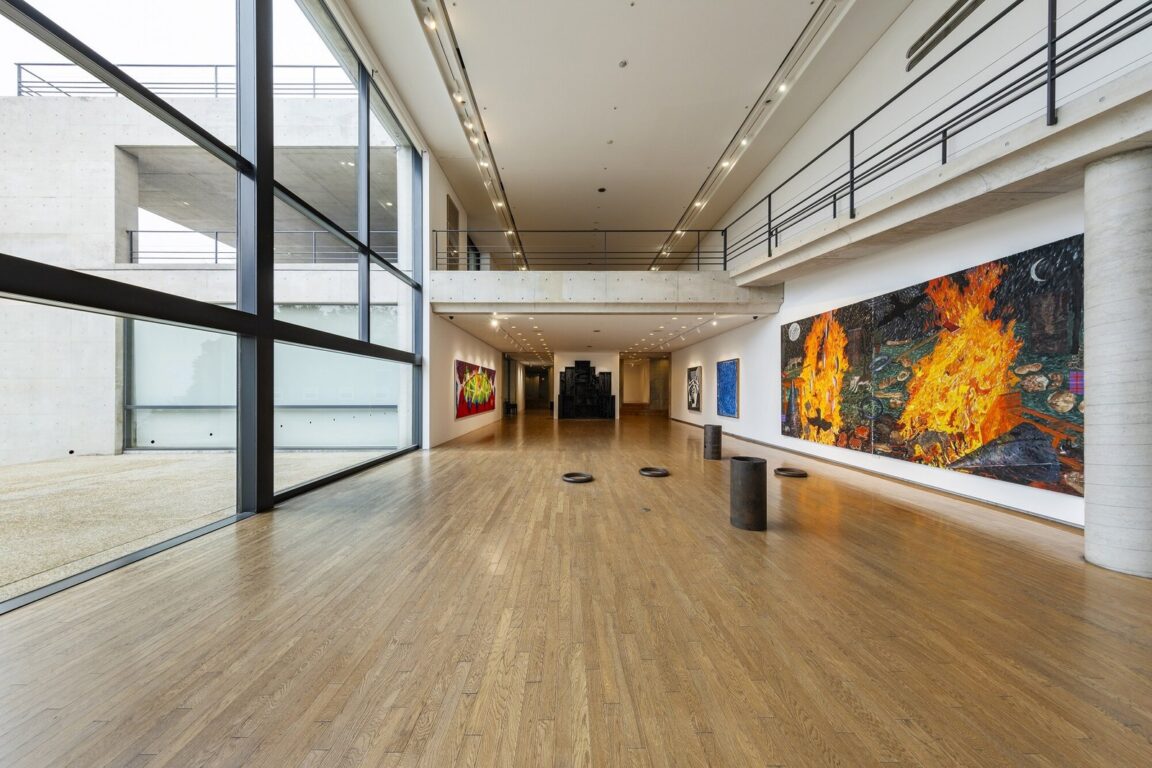
Image: Inside Benesse House Museum, Naoshima. Photo via Benesse Art Site Naoshima official site, benesse-artsite.jp.