 Jonas Lindqvist
Yes, and the distinction in the headline is the whole decision. The Post Hotel and Spa stands in the village of Lake Louise at 200 Pipestone Road, on the Pipestone River, not on the shore of the lake itself, and that trade is deliberate. In return for a short shuttle ride to the famous water, guests get the Canadian Rockies’ most storied dining room, a wine cellar of more than 25,000 bottles, log built calm and space that the lakeshore properties cannot match. It suits food and wine travellers, skiers who will use the complimentary ski shuttle, and anyone who prefers a village lodge to a grand lakeshore hotel. It will disappoint only the traveller whose one non negotiable requirement is waking up directly above Lake Louise itself. The official site is posthotel.com.
Quick Facts
- Location: 200 Pipestone Road, Lake Louise village, Banff National Park, Alberta, in the village and not on the lakeshore
- Style: Log built Relais and Chateaux hotel, part of the CRMR family, built in 1942 as a ski lodge
- Rooms: Rooms, suites, family suites and cabins, including family suites with lofts and cabins beside the Pipestone River
- Dining: The Dining Room, Chef’s Stubli, The Outpost pub and the Sir Norman Lounge
- Wine cellar: More than 25,000 bottles and more than 3,800 selections, per the hotel’s own wine cellar page summary
- Spa: Temple Mountain Spa, plus a salt water pool, fitness centre and library
- Ski access: Complimentary ski shuttle to Lake Louise Ski Resort, about a 10 minute drive
- Official site: posthotel.com
Why the Village Location Is a Feature
Lake Louise the lake is about five kilometres from Lake Louise the village, and in peak season that gap matters in both directions. The lakeshore concentrates day visitors, tour buses and parking pressure into one small area. The village, where the Post stands among pines beside the Pipestone River, is quieter in the morning and calmer at night, with the hotel’s own grounds, ice rink setting in winter and riverbank cabins giving it the feel of a lodge rather than a monument. The hotel runs shuttles that close the distance, including a complimentary ski shuttle in winter and lake shuttle arrangements in the sightseeing season, so the practical cost of the village position is a short, organised ride. The gain is the Post itself, a property that could not exist at this scale and serenity on the lakeshore. Travellers planning the wider park should read our guide to Banff in winter, including a frozen Lake Louise, alongside this one.
The Hotel and Its Story
The Post was built in 1942 and began life as the Lake Louise Ski Lodge, founded in the spirit of its adventurous founder Sir Norman Watson, whose name now sits over the fireside lounge. Long term owners Andre and George Schwarz built its reputation for food and wine over decades, and the hotel is now part of the CRMR family of Canadian Rocky Mountain Resorts, which the hotel credits with continuing the passion for great food, wine and this area. It holds Relais and Chateaux membership, the only such address in the Canadian Rockies in the hotel’s own positioning, and the architecture stays true to the lodge idea, heavy timber, stone fireplaces and rooms that feel built for winter rather than decorated for photographs.
Rooms, Suites, Family Suites and Cabins
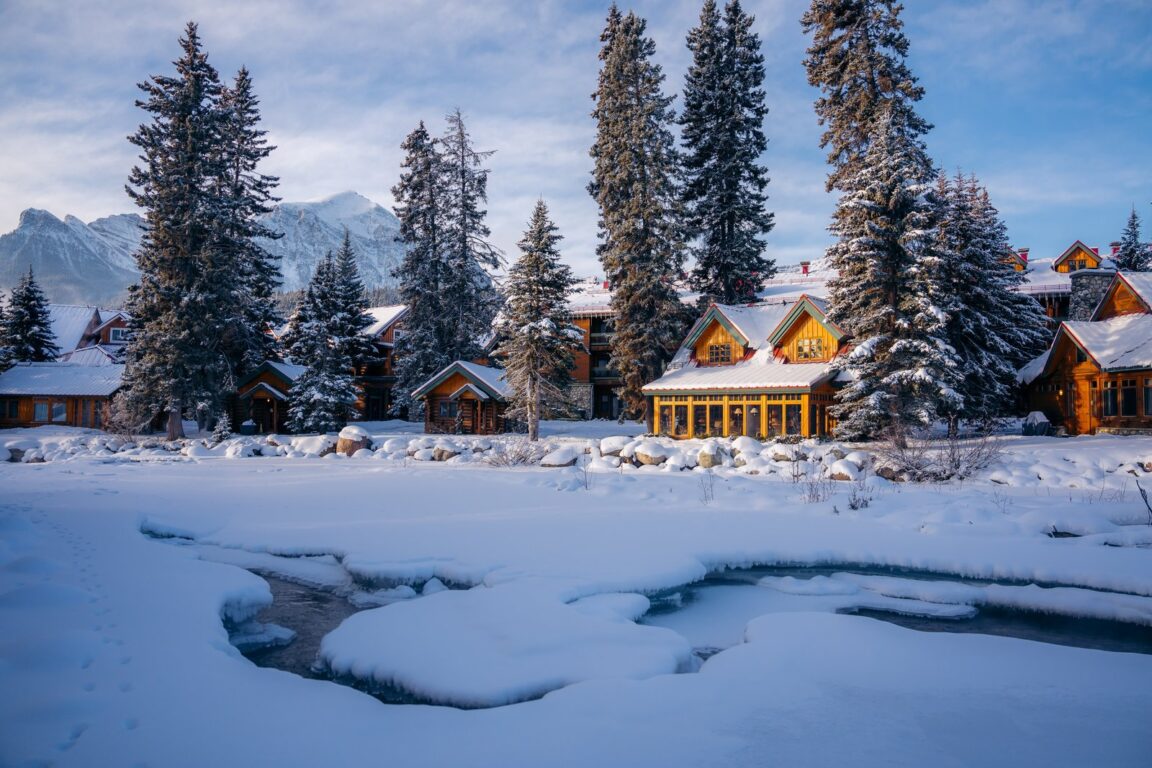
The official site organises accommodation into rooms, suites, cabins and family suites, and the distinctions are practical rather than cosmetic. Standard rooms deliver the Post formula in its simplest form, warm wood, deep tubs and mountain quiet, with many rooms offering balconies, whirlpool tubs and, in the better categories, wood burning fireplaces. Suites add separate living space, which matters on a ski trip when boots, layers and tired legs all need somewhere to go. Family suites are the workhorses, offered with lofts or separate bedrooms and two to three beds, each with an oversize jacuzzi tub and a wood burning fireplace, and cribs and cots available on request. Cabins are the privacy play, tucked just away from the main hotel on the peaceful Pipestone River, ranging from one to eight beds with features that can include patios, sunrooms and gourmet kitchens. The winter photograph on the hotel’s own site, used as the featured image for this guide, shows exactly this cabin and lodge roofscape in snow beside the frozen river. Families should also note the hotel’s published babysitting service and its equipment room beside the main doors, where skis and boots are dropped straight off the shuttle.
Four Places to Eat and Drink, Audited
The Dining Room
The Dining Room is the reason many guests book the Post at all. The hotel records that it was awarded Best Food in the Americas by Conde Nast Traveler’s Gold List, and the room itself is classic alpine fine dining, fresh cut flowers, sparkling crystal and a grand fireplace. The kitchen is now led by Chef de Cuisine Rupert Garcia, succeeding the long Hans Sauter era, with a farm to fork philosophy that champions Canadian producers from land and sea. Dinner here should be reserved when the room is reserved, not left to chance on arrival, especially in ski season and summer peak.
Chef’s Stubli
The newest addition is Chef’s Stubli, an intimate dining experience inspired by a traditional Swiss Stubli. Led by Rupert Garcia with Head Sommelier Kristie Boschman, it serves a six course tasting experience to just 20 guests each evening, pairing seasonal ingredients and technique with serious wines. For food focused guests this is now the hardest seat in the house to secure, and the one to prioritise for a special night.
The Outpost and the Sir Norman Lounge
The Outpost is the hotel’s comfortable English style pub, serving classic pub fare and craft brews with no reservations required, and it is where ski days get retold. The Sir Norman Lounge is the fireside alternative, a relaxed room for apres ski, apres hike or a light menu before or after dinner, with piano entertainment on weekend evenings. Between the pub, the lounge and afternoon tea traditions, the Post gives guests somewhere to be at every hour, which is part of why the village location never feels isolating.
The Wine Cellar
The cellar is not a marketing line. The hotel’s own summary puts it at more than 25,000 bottles and more than 3,800 selections, one of the most comprehensive wine lists in Canada, and the Dining Room has held Wine Spectator’s Grand Award recognition over many years. Cellar tours and wine led dinners, including the hotel’s programmed wine dinner series with visiting producers, are a genuine strand of a Post stay. Wine travellers should say so at booking, because the sommelier team can shape pairings, a Stubli seating and a cellar visit into the stay rather than improvising them at the table.
Temple Mountain Spa and the Quiet Hours
Temple Mountain Spa is the hotel’s haven of relaxation, with massage therapists and aestheticians offering massages, body therapies, facials and nail and waxing services built on curated products. Alongside it sit the salt water pool, the fitness centre and the library, the three indoor answers to a storm day in Banff National Park. The spa takes appointments by phone and through the hotel, and in peak weeks treatments should be booked ahead alongside dinner.
Skiing, the Shuttle and the Seasons
Lake Louise Ski Resort is about a 10 minute drive, and the hotel’s complimentary ski shuttle runs door to door, departing the main doors through the morning and returning through the afternoon, with drivers who, in the hotel’s own blog guidance, may be able to help outside regular times. That removes parking, the worst part of a Lake Louise ski day, from the equation entirely. Summer reverses the programme, hiking, the lake and Moraine Lake access, gondola sightseeing and long evenings by the river, with shuttle arrangements for the lakes that should be confirmed for the dates of the stay, as Parks Canada access rules for the area change by season. Winter brings the frozen lake, skiing and the Post at its most atmospheric, all firelight and snow load. Shoulder seasons are quieter and better value in positioning, though the hotel does not publish a simple tariff on its main pages, so confirm the full rate, inclusions and cancellation terms directly rather than trusting any third party figure.
Who the Post Suits Best
Book the Post for the table and the cellar, for a ski week without a car, or for a winter lodge stay where the building itself is part of the holiday. Choose a lakeshore property instead only if the view from the window is the entire point of the trip. For a contrast in grand hotel styles, see our guide to The Plaza Hotel in New York, a city landmark that makes the opposite trade, all address and ceremony, where the Post makes its case with dinner, wine and snow quiet.
Frequently Asked Questions
Is the Post Hotel on Lake Louise itself?
No. It stands at 200 Pipestone Road in the village of Lake Louise, beside the Pipestone River, a few kilometres from the lakeshore. The hotel runs shuttle services for the ski resort and the lakes, which is how most guests bridge the distance.
How big is the Post Hotel wine cellar?
The hotel states more than 25,000 bottles and more than 3,800 selections, making its wine list one of the most comprehensive in Canada, recognised by Wine Spectator’s Grand Award programme.
What dining options does the Post Hotel have?
Four. The Dining Room for fine dining, Chef’s Stubli for a six course tasting menu for 20 guests nightly, The Outpost as an English style pub with no reservations required, and the Sir Norman Lounge for fireside drinks and a light menu.
Does the Post Hotel offer a ski shuttle?
Yes, a complimentary ski shuttle runs door to door between the hotel and Lake Louise Ski Resort, about 10 minutes away, with morning departures and afternoon returns listed in the hotel’s own ski guidance.
What accommodation suits families at the Post Hotel?
Family suites with lofts or separate bedrooms, two to three beds, jacuzzi tubs and wood burning fireplaces, or the riverside cabins, which range from one to eight beds and can include kitchens, patios and sunrooms.
What is Temple Mountain Spa?
It is the hotel’s spa, offering massages, body therapies, facials and nail services, complemented by a salt water pool, fitness centre and library elsewhere in the hotel.