 Priya Nair
Go in spring, September to November, if you want the complete Perth: wildflowers at their peak in Kings Park, daytime highs climbing from about 21 to 27 degrees, and the sea warm enough by late spring for a proper Rottnest Island swimming day. Go in summer for guaranteed beach heat with an afternoon sea breeze, in autumn for the calmest all-round weather, and in winter only if mild, wet-season city touring matters more to you than swimming. The month-by-month evidence follows, drawn from the Bureau of Meteorology climate record and the island and wildflower authorities.
Quick Facts
- Best all-round window: Mid September to late November, wildflower peak plus warming seas
- Climate type: Mediterranean. Hot, dry summers and mild, wetter winters, per the Bureau of Meteorology, Perth Metro
- Hottest months: January and February, mean maximums of 31.4 and 31.7 degrees Celsius
- Wettest month: July, mean rainfall 144.3 mm, against 9.6 mm in December
- Wildflower anchor: The Everlasting Kings Park Festival ran 18 September to 4 October 2026, with more than 3,000 Western Australian plant species on display, per the Botanic Gardens and Parks Authority
- Rottnest admission: A$21.50 per adult for a single-day visit, included in ferry fares, per the Rottnest Island Authority
- Sea breeze: The Fremantle Doctor, a reliable afternoon onshore breeze, takes the edge off summer heat on the coast
Spring, September to November: why is this the complete Perth?
Spring is when every Perth asset fires at once. The Bureau of Meteorology record for Perth Metro shows mean maximums rising from 20.7 degrees in September to 23.4 in October and 26.8 in November, while mean rainfall falls away from 78.7 mm in September to 40.0 mm in October and 24.0 mm in November. In plain terms, each spring month is warmer and drier than the one before, and the city visibly dries out and lights up.
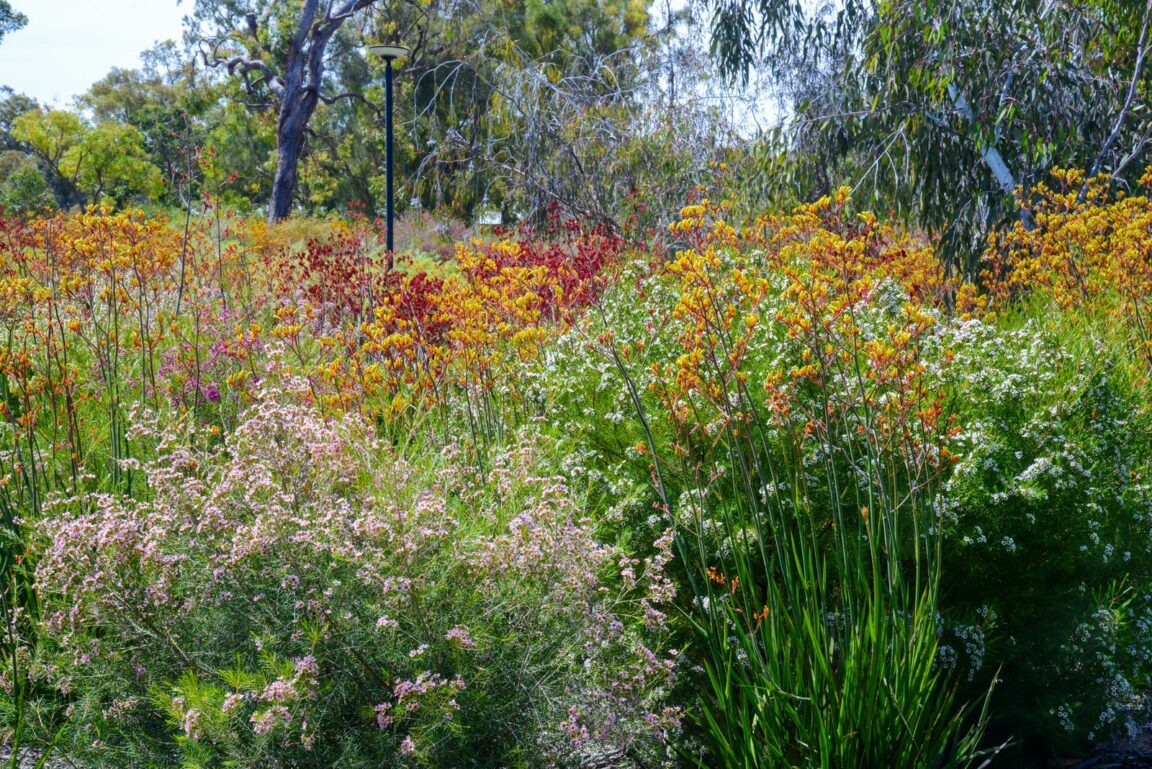
The headline event is floral. Western Australia’s wildflower season rolls from north to south through winter and spring and reaches Perth in September, when Kings Park and Botanic Garden, one of the largest inner-city parks in the world, puts its collection on show. The Botanic Gardens and Parks Authority’s Everlasting Kings Park Festival, held every September since 1964, ran from 18 September to 4 October in 2026 with thousands of blooms and more than 3,000 Western Australian plant species on display in the Western Australian Botanic Garden. Kangaroo paws, everlastings and banksias carry the show, and the park’s elevated position adds the classic skyline and Swan River view to the same walk. Book a spring trip around the festival fortnight if wildflowers are a priority, and treat mid to late September as the single best fortnight of the Perth year.
Spring is also the start of the Rottnest window. Quokka joeys begin emerging from the pouch in late winter and spring, humpback whales pass the coast from about September to November, and by October and November the bays on Rottnest are swimmable for most visitors. Crowds and prices sit below the summer peak, which is why spring wins the all-round title rather than just the flower title.
Summer, December to February: how hot does Perth actually get?
Summer in Perth is a beach season with a thermostat. The Bureau of Meteorology puts the January mean maximum at 31.4 degrees and February at 31.7, with mean minimums around 18 degrees, and rainfall almost disappears, at 15.9 mm in January and just 9.6 mm in December. Heat spikes well above the averages arrive most years, so the daily pattern matters: swim and sightsee in the morning, retreat at midday, and return to the coast in the late afternoon.
That late afternoon is when Perth’s famous sea breeze, the Fremantle Doctor, arrives from the Indian Ocean and drops coastal temperatures noticeably. It is a gift for evening dining in Fremantle and for sunset at Cottesloe, and a nuisance for late beach sessions, when the wind can sandblast a towel in minutes. Plan beach mornings and breezy evenings and summer works beautifully. It is also peak season for Rottnest, when ferries and island accommodation book out furthest ahead and the island admission and ferry bundle costs the most in time, if not always in fare. Travellers combining Perth with the Red Centre should read the pass and cost rules in our Uluru-Kata Tjuta passes explainer before fixing dates, because the two climates reward opposite seasons.
Autumn, March to May: is this the locals’ favourite?
Autumn is the connoisseur’s Perth. March still averages a 29.7-degree maximum, April eases to 25.9, and May reaches 22.5, while the sea holds its summer warmth longer than the air does. The Fremantle Doctor weakens, the water flattens, and Rottnest in March and April offers summer swimming without summer crowds. Rainfall returns gradually, from 21.6 mm in March to 84.5 mm in May, so a May trip should carry a rain plan for a day or two, but March and April are among the most reliable beach weeks of the year.
Choose autumn if your trip is about eating, drinking and the water rather than flowers: Fremantle and the Swan Valley in harvest season, long lunches, and warm evenings that no longer need the breeze to rescue them. It is also the gentlest season for a first Rottnest overnight, when the island is quiet, the bays are calm and the quokkas are easy to watch around the settlement in the cooler parts of the day.
Winter, June to August: what do you gain and what do you give up?
Winter is Perth’s wet season, and the Bureau of Meteorology numbers are unambiguous: mean rainfall of 126.9 mm in June, 144.3 mm in July and 124.3 mm in August, with mean maximums of 19.5, 18.5 and 19.2 degrees and minimums down to about 8 degrees. That is a mild winter by almost any world standard, and between fronts the city gets crisp, clear days that suit walking, galleries and the Swan Valley. What you give up is the beach as a daily habit. The sea is cold, Rottnest ferries run reduced, wind-exposed schedules, and a winter island day is about cycling, history and wildlife rather than swimming.
Winter has two compensations. Prices and crowds bottom out, and the wildflower season is already building in the regions north of Perth for travellers adding a road trip. If your Perth trip is a city break attached to other Australian travel, winter is honest value. If Perth is the trip, winter is the one season to avoid. East-coast travellers can compare the trade-offs with our 3 days in Melbourne itinerary, where winter asks a similar question and gives a colder answer.
The Rottnest window, decided properly
Rottnest Island, Wadjemup, sits a short ferry ride offshore from Fremantle and Perth, and its season is wider than most visitors assume. The swimming season runs roughly from October to April, with the warmest, calmest water from December to April. The wildlife calendar pulls the other way: whale season runs from about September to November, and quokka joeys are a late winter and spring sight. The overlap, October and November, is the island’s sweet spot, warm enough to swim, early enough to beat peak crowds, and inside whale season.
Costs are simple and fixed by the authority. The Rottnest Island Authority sets a single-day admission fee of A$21.50 per adult and A$11 per child aged 4 to 16 for the 2026 to 2027 year, with an extended-stay fee of A$28.50 per adult if you sleep on the island. Ferry companies collect the admission inside the fare, so the price you see at booking is the full price. Two rules protect the island’s famous residents: never touch a quokka and never feed one, because human food harms them. Watch them around the Thomson Bay settlement in the morning and late afternoon, keep your distance, and let them come to the shade rather than chasing them across it.
So, when should you book?
For a first trip, book mid September to late November and aim a Kings Park morning at the wildflower peak. For a pure beach trip, book December to February and live by the Doctor’s timetable. For calm seas and warm water without the peak, book March or April. Take winter only at winter prices, with a city itinerary that does not depend on swimming. Perth rewards every season with something, but spring is the only one that offers everything at once.
Frequently asked questions
What is the single best month to visit Perth?
October. It pairs a mean maximum of 23.4 degrees and falling rainfall with the tail of the wildflower season, the start of reliable Rottnest swimming and the middle of whale season, all before summer crowds and prices arrive.
When is wildflower season in Perth?
Wildflowers reach Perth in spring, peaking in September. The Everlasting Kings Park Festival, run by the Botanic Gardens and Parks Authority every September since 1964, ran from 18 September to 4 October in 2026 with more than 3,000 Western Australian plant species on display.
What is the Fremantle Doctor?
It is Perth’s reliable afternoon sea breeze, blowing in from the Indian Ocean on summer days. It cools the coast in the late afternoon and evening, which is why locals swim in the morning and dine outside at night.
How much is the Rottnest Island admission fee?
For 2026 to 2027 the Rottnest Island Authority sets single-day admission at A$21.50 per adult and A$11 per child aged 4 to 16, or A$28.50 per adult for an extended stay. The fee is collected inside your ferry fare.
Can you swim at Rottnest in winter?
You can, but most visitors will not want to. Winter brings Perth’s heaviest rain, with July averaging 144.3 mm, cooler seas and reduced ferry schedules. The reliable swimming season runs from about October to April.
Is Perth too hot in January?
January averages a 31.4-degree maximum, with hotter spikes in most years. It is manageable with a coastal pattern: mornings outdoors, midday shade, and evenings in the Fremantle Doctor breeze. Travellers who dislike heat should choose October, November or March instead.
Climate figures are Bureau of Meteorology long-term means for Perth Metro, checked 18 November 2026. Festival dates are the Botanic Gardens and Parks Authority’s published 2026 dates, and island fees are the Rottnest Island Authority’s 2026 to 2027 schedule.