 Sofia Rossi
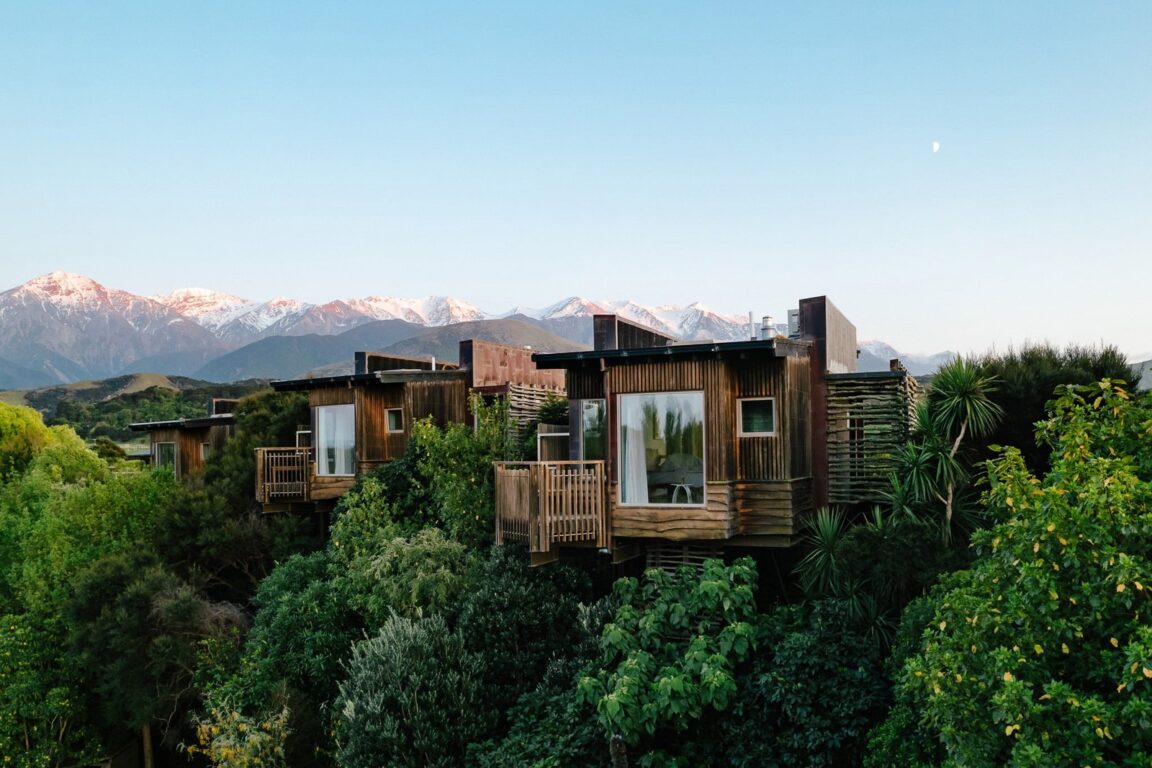
Yes, the tree houses are the reason to book Hapuku Lodge, and they are exactly as unusual as they sound: five freestanding houses set 10 metres, or 30 feet, up in the canopy of a native kanuka grove on a deer farm 12 kilometres north of Kaikoura, with the snow dusted Seaward Kaikoura Range on one side and the Pacific Ocean on the other. Dinner and breakfast are included in every rate, the restaurant works from the lodge’s own garden and olive grove, and Kaikoura’s famous whale watching boats leave from the town just down State Highway 1. Hapuku is not a cheap add on to a South Island road trip. It is a destination stay, priced at luxury lodge level in New Zealand dollars, and it earns that positioning when travellers use it properly: at least two nights, a tree house rather than a lodge room if the budget allows, and one clear morning reserved for the sea.
Quick Facts
- Location: State Highway 1 at Station Road, Hapuku, 12 km north of Kaikoura, South Island, New Zealand
- Setting: Deer breeding farm and olive grove between the Seaward Kaikoura Range and the Pacific coast
- Tree houses: Five, set 10 metres above ground in a native kanuka grove, reached by their own external staircases
- Other rooms: Four lodge suites and rooms in the main lodge, plus the three bedroom Olive House
- Rates include: A three course dinner and gourmet breakfast each day, per the official lodge FAQs
- Currency and tax: Rates quoted in New Zealand dollars and inclusive of 15 percent GST, per the official FAQs
- Dining: Lodge restaurant built around its kitchen garden, olive grove and Kaikoura seafood, including crayfish in season
- Facilities: Lap pool and sauna, added in the 2009 lodge remodelling
- Best for: Couples and families pairing a design led tree house stay with whale watching and coastal walking
What are the tree houses actually like, room by room?
The five tree houses were added in 2006, three years after the lodge opened with six rooms in the main lodge and the Olive House. There are three one bedroom tree houses and two larger family tree houses. Each family tree house puts a master bedroom in the upper branches and a smaller second bedroom in the lower branches, a layout that keeps parents and children together without putting everyone in one room. The one bedroom houses are the romantic pick: wraparound windows, a deep soaking bath positioned for the mountain view, a fireplace or wood burner for cold coastal nights, handmade furniture built from local timber by the architect family who designed the lodge, and a private deck suspended in the canopy.
Height is the detail travellers underestimate. At 10 metres up, a tree house sits above the grove rather than inside it, so the view runs over the deer paddocks to the mountains and out to the sea. Birdsong is constant, wind moves the building very slightly, and the external staircase means every arrival feels like climbing into a hide. Travellers with limited mobility, a fear of heights or a habit of forgetting things in the car should think hard before booking the canopy. For everyone else, the elevation is the whole point.
The lodge rooms are the sensible alternative. The 2009 remodelling converted the original six main lodge rooms into four larger spaces, two suites, one lodge room and the Hapuku Room, all at ground level with easier access and the restaurant, pool and sauna close by. The three bedroom Olive House suits groups and longer stays, with space for up to six guests and a more self contained, house style rhythm. If the tree houses are sold out for your dates, a lodge suite still delivers the food, the farm and the Kaikoura base, but it does not deliver the canopy experience that most guests travel for, so shifting dates is usually better than downgrading rooms.
How does the food work, and why does the olive grove matter?
Every rate at Hapuku includes a three course dinner and an a la carte or gourmet breakfast, per the lodge’s own FAQs, and dinner does not need to be pre booked, although guests can request a preferred seating time before arrival. That inclusion changes the value calculation. Kaikoura is a small town with a short list of evening restaurants, and Hapuku’s dining room is widely regarded as one of the best tables in the district, so most guests would pay for this dinner even if it were not bundled.
The kitchen works from the property itself: a kitchen garden, the olive grove that gives the Olive House its name and produces the lodge’s own olive oil, and the sea a few minutes away. Kaikoura’s name in Maori roughly translates as a meal of crayfish, and crayfish, known elsewhere as rock lobster, is the local signature alongside other line caught fish. Menus shift with the garden and the catch rather than following a fixed luxury lodge script. Travellers with dietary requirements should flag them before arrival, because a small kitchen cooking a set evening menu needs notice, not a surprise at the table.
How do you pair the lodge with whale watching in Kaikoura?
Kaikoura is one of the most reliable whale watching places in the world because a deep offshore canyon brings nutrient rich water close to shore, supporting sperm whales year round and a rotating cast of other species. Boat based whale watching, along with dolphin swimming, seal colonies and albatross encounters, runs from the town 12 kilometres south of the lodge. The practical pairing is simple: book the whale watch for the morning of your second day, not arrival day, because South Island driving times are longer than the map suggests and marine trips are weather dependent. A second morning in hand gives you a rebooking chance if the sea cancels your first trip.
Build the rest of the day around the coast. The Kaikoura Peninsula walkway, the seal colony at its car park, and the town’s crayfish food trucks fill an afternoon without another ticket. Back at the lodge, the lap pool, sauna and a long dinner close the day. Travellers continuing a wildlife focused New Zealand itinerary may also enjoy our guide to swimming with whale sharks at Ningaloo Reef, which uses the same season first planning logic, and those adding hiking should read how New Zealand’s Great Walks booking system works before assuming track huts can be added at short notice.
Which season suits Hapuku best?
Summer, from December to February, brings the longest days, the warmest sea and the fullest whale watching schedule, and it is also peak season, when rates are highest and the tree houses book out furthest ahead. Autumn, from March to May, is the connoisseur’s window: calmer seas, golden light on the range, cooler nights that justify the tree house fireplace and a quieter lodge. Winter, from June to August, puts real snow on the Seaward Kaikoura Range, which is the view in the lodge’s best photographs, and turns the stay into a fire, bath and long dinner retreat, but shorter days and rougher seas can disrupt marine trips. Spring, from September to November, brings lambs, new growth in the grove and changeable weather. There is no bad season at Hapuku, but there is a wrong expectation: winter guests should come for the mountains and the food, with whale watching as a bonus rather than a guarantee.
Is Hapuku Lodge worth its rate?
Judge it as a bundle, not a room. The rate covers a genuinely one off piece of architecture, dinner and breakfast for two, a working farm and grove to wander, and a base for one of the world’s great marine wildlife towns. Published seasonal ranges from tourism listings put the lodge firmly in the luxury tier, with tree houses at the top of the range, and exact pricing varies by room, season and availability, so travellers should price their own dates on the official site rather than trusting any third party figure. The stay is worth it for a honeymoon, a milestone trip or a South Island itinerary that values two slow, beautiful days over ticking off another town. It is harder to justify for a single overnight stop between Christchurch and Picton, because a one night stay barely leaves time for the canopy, the dinner and the sea to do their work.
Frequently asked questions
How high are the Hapuku tree houses?
The official lodge FAQs put the tree houses 30 feet, or 10 metres, above the ground, in the canopy of a native kanuka grove. Each one is reached by its own external staircase.
What is included in the Hapuku Lodge rate?
All stays include a three course dinner and a gourmet breakfast each day, per the official FAQs. Rates are quoted in New Zealand dollars and include 15 percent GST.
How many tree houses are there?
There are five tree houses: three one bedroom houses and two family tree houses, each family house combining an upper branch master bedroom with a smaller lower branch bedroom. The property also has four lodge rooms and suites and the three bedroom Olive House.
How far is Hapuku Lodge from Kaikoura and its whale watching tours?
The lodge is 12 kilometres north of Kaikoura on State Highway 1 at Station Road. Whale watching boats and other marine tours depart from Kaikoura town, a short drive south.
Can children stay in the tree houses?
The family tree houses are designed for families, and the lodge FAQs note infants under two can be accommodated in addition in an upper branch tree house, while three people aged two and over cannot share one, for fire safety reasons. Travellers should confirm their exact configuration with the lodge before booking.
When should I book a tree house?
As early as possible for summer and holiday periods. There are only five tree houses, and they are the rooms most guests request, so popular dates sell out well ahead of the lodge rooms.
Photo credit: Hapuku Lodge and Tree Houses, official Hapuku Lodge website. Tree houses in the kanuka grove under the Seaward Kaikoura Range.