 Aiko Tanaka
Yes, almost every foreign visitor can stay on Phu Quoc for up to 30 days without a visa, whatever their nationality, but only under an island-only rule: you must arrive at Phu Quoc from abroad, either on a direct international flight or ship, or by passing through another Vietnamese international airport while staying inside its transit area, and you must leave Vietnam from Phu Quoc itself. Clear immigration in Hanoi or Ho Chi Minh City first and the exemption is gone, because you have entered mainland Vietnam. Head on to the mainland afterwards without a visa and you are breaking the rule, not bending it. This explainer sets out who the rule covers, the two arrival patterns that keep it valid, and what to do instead if your trip includes anywhere else in Vietnam.
Quick Facts
- Who qualifies: Foreigners of any nationality. Unlike Vietnam’s 45-day exemption, which names specific countries, the Phu Quoc rule has no nationality list.
- How long: Up to 30 days on Phu Quoc only, counted from arrival.
- Cost and forms: No application, no fee and no form to file in advance for the exemption itself.
- Valid arrivals: A direct international flight or ship to Phu Quoc, or an international connection through another Vietnamese airport where you remain in the transit area.
- What breaks it: Clearing immigration on the mainland, or travelling on to the mainland from Phu Quoc without a visa or a separate exemption.
- Departure rule: Leave Vietnam from Phu Quoc, or hold a valid Vietnam visa or exemption before you travel beyond the island.
- Legal basis: Vietnam’s Law on Entry, Exit, Transit and Residence of Foreigners, applied to Phu Quoc since 1 July 2020, as published by the Vietnamese authorities.
Who can actually use the Phu Quoc exemption?
The exemption is open to foreigners entering Phu Quoc from abroad, with a temporary stay of no more than 30 days. That breadth is what makes it unusual. Vietnam’s better known 45-day visa exemption applies only to citizens of a named list of countries, and travellers from countries such as the United States, India and Australia get nothing from it. On Phu Quoc those same travellers receive the full 30 days, because the island rule is written around the place, not the passport.
Phu Quoc qualifies for this treatment because it meets the conditions Vietnam’s immigration law sets for a coastal economic zone: it has an international airport, a separate space of its own, and defined geographical boundaries separated from the mainland. The policy has applied since 1 July 2020. None of that makes it a general Vietnam visa waiver. It is a geographic exemption, and the geography is the whole point.
There is no advance step. You do not apply online, pay a fee or receive an approval letter. The exemption is assessed at the border on arrival, which is why the shape of your journey matters more than any paperwork. If your itinerary fits the rule, you are stamped in for the island stay. If it does not, no document you could have filed beforehand would have fixed it, short of getting a full Vietnam visa.
What counts as arriving directly, and what does not?
The simplest valid pattern is a flight that lands at Phu Quoc International Airport from outside Vietnam, or an international ship arriving at the island. You meet immigration for the first time on Phu Quoc, your entry is recorded there, and the 30 days run from that point. Direct regional flights make this the natural route for many visitors, and it is the pattern the rule was designed around.
The second valid pattern is the transit case, and it is the one travellers most often misunderstand. Vietnam’s published wording covers a foreigner who enters an international border gate of Vietnam, by air or by sea, stays in the transit area at that border gate, and then transfers to Phu Quoc. In practice that means an international-to-domestic connection at Hanoi or Ho Chi Minh City where you remain airside, in the international transit area, and board the onward flight to Phu Quoc without passing immigration.
The moment you clear immigration at the connecting airport, everything changes. You have now entered Vietnam at a mainland border gate, and a domestic flight after that is simply internal travel by someone who needed a visa to enter. The Phu Quoc exemption does not retroactively cover that entry. Travellers booking connections should check with their airline before purchase that the connection is handled as a transit, because separate tickets and baggage recheck can force you landside and quietly destroy the exemption before you ever reach the island.
Why does the island departure rule matter so much?
The exemption authorises a stay on Phu Quoc, not a stay in Vietnam. That is why the exit side of the trip deserves as much attention as the entry. The clean patterns are symmetrical: arrive from abroad at Phu Quoc, enjoy the island, and depart from Phu Quoc to an international destination. Your whole presence in Vietnam has then happened inside the zone the law carves out.
Trying to fold the mainland into the same trip is where visitors come unstuck. A flight from Phu Quoc to Ho Chi Minh City, Hanoi or Da Nang, or a ferry to the mainland ports, is travel to another place in Vietnam, and the island exemption gives you no right to make it. Vietnamese rules treat entering a coastal economic zone without a visa and then travelling onward within the country as a violation, with fines attached. Treat any mainland leg as a separate immigration problem that needs its own solution, arranged before you travel.
There is a straightforward solution, and it is cheap. Vietnam’s e-visa, applied for through the official portal at evisa.gov.vn, is open to all nationalities and covers the whole country, Phu Quoc included. If there is any chance your trip grows beyond the island, the e-visa removes the geographic trap entirely. Our guide to Vietnam’s 90-day e-visa explains who qualifies, how to apply and which entry points count.
How does the exemption compare with Vietnam’s other routes?
Think of Vietnam as having three doors. The first is the 45-day unilateral exemption for citizens of a listed set of countries, which covers the whole country but only for those passports. The second is the e-visa, open to everyone, valid for up to 90 days, and the right choice for any trip that mixes Phu Quoc with the mainland. The third is the Phu Quoc rule itself: universal, free and instant, but fenced to one island.
Choosing between them is really a question about your map. Island-only holiday, arriving and leaving internationally? The exemption is the easiest entry Vietnam offers anyone. Island plus anywhere else, even a single night in Ho Chi Minh City on the way home? You need the e-visa or a national exemption, and you need it before you fly, because the island stamp cannot be converted at the airport into permission to continue. Airlines check documents at check-in, and a routing that depends on an exemption your itinerary does not satisfy is a boarding problem waiting to happen.
Regional trips raise the same discipline elsewhere. Thailand, Vietnam’s most common pairing, now runs its own digital arrival process, covered in our explainer on Thailand’s Digital Arrival Card. Checking each country’s rule separately, rather than assuming one easy entry implies another, is the habit that keeps multi-country itineraries intact.
What should you check before you book?
Work through four checks. First, trace your exact route on the booking, airport by airport, and confirm that your first immigration encounter with Vietnam happens on Phu Quoc. Second, if you connect on the mainland, confirm with the airline that you stay in the transit area and that your baggage is checked through. Third, count your days: the stay is a maximum of 30 days, so a longer island holiday needs the e-visa instead. Fourth, decide honestly whether the mainland is truly off your itinerary. A day trip temptation is not worth a violation.
Finally, recheck the rule close to departure. Vietnam has revised its exemption lists repeatedly in recent years, and each revision carries its own dates. The island rule has been stable since 2020, but the official sources, the Ministry of Foreign Affairs visa exemption list and the Immigration Department, are the versions to trust on the day you book, not a screenshot from an earlier trip.
Frequently asked questions
Can Americans and Indians use the Phu Quoc exemption?
Yes. The rule names no eligible countries, so nationalities with no visa-free access to mainland Vietnam, including the United States and India, receive the same 30 days on Phu Quoc as everyone else, provided the arrival and departure patterns fit the island-only conditions.
Can I fly into Ho Chi Minh City and then take a domestic flight to Phu Quoc?
Only if you remain in the international transit area at Ho Chi Minh City and transfer to Phu Quoc without clearing immigration. If you pass immigration there, you have entered mainland Vietnam and the Phu Quoc exemption no longer applies to that entry.
Can I visit the mainland after a week on Phu Quoc?
Not on the exemption. Travelling from Phu Quoc to anywhere else in Vietnam requires a Vietnam e-visa or a visa exemption that covers your nationality. Arrange it before you travel rather than hoping to sort it out on the island.
Can the 30 days be extended?
Plan as if it cannot. The exemption is a fixed stay of up to 30 days at the border. Travellers who want a longer or more flexible stay should enter on the 90-day e-visa instead, which removes both the time pressure and the island fence.
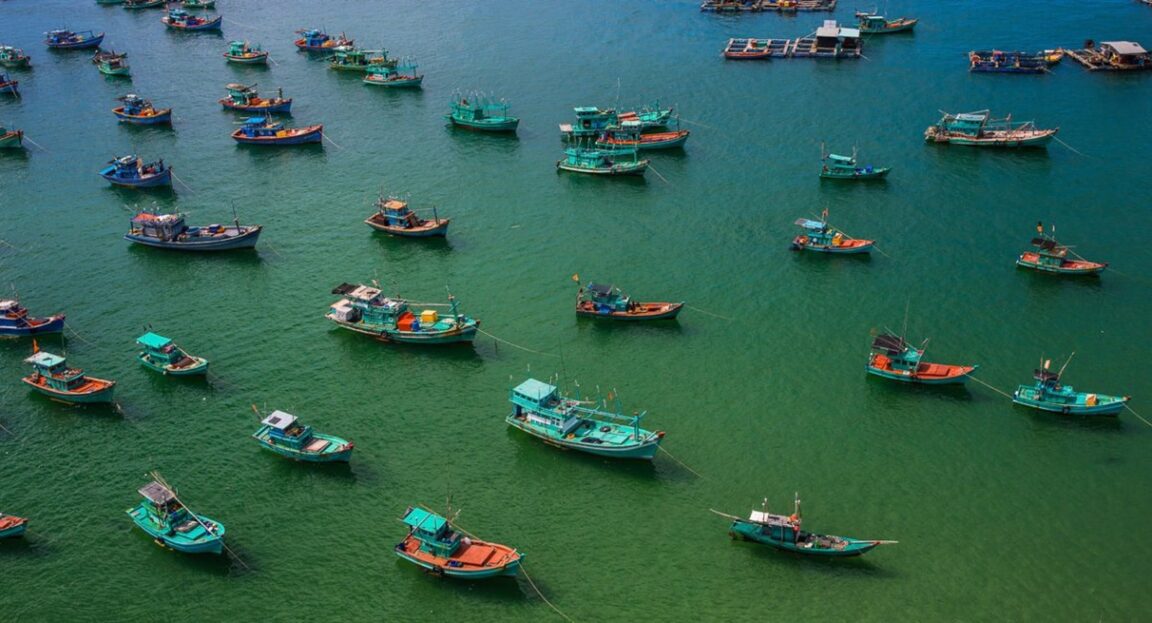
Featured image: fishing boats at anchor off Phu Quoc, Vietnam. Photo by Vietnam Tourism (vietnam.travel), the official site of Vietnam’s national tourism administration.