 Kwame Mensah
The way to do Tbilisi’s sulphur baths is to book a private room for one hour in Abanotubani, the domed bath district under Narikala Fortress, add the kisa scrub when the attendant, the mekise, knocks, and then walk the day slowly from there. A private room at the best known bathhouse, Chreli Abano, costs 130 GEL for a room for one or two people, 160 GEL for three, and 200 GEL for rooms holding up to six, priced per room rather than per person, while the public hall at Bathhouse No. 5 costs about 10 GEL for men and 6 GEL for women. The water arrives hot from the springs at about 38 to 40 degrees Celsius, the scrub takes 10 to 15 minutes in the middle of your hour, and the whole visit works best as the centre of a paced day in the Old Town, not as one stop among six.
Quick Facts
- District: Abanotubani, at the foot of Narikala Fortress in Tbilisi’s Old Town, where the brick domes are the roofs of bath chambers sunk below street level.
- Chreli Abano address and hours: 2 Abano Street, open 09:00 to 23:00, private rooms only, booked and paid online through its own site.
- Private room prices at Chreli Abano: 130 GEL per hour for rooms for one or two people, 160 GEL for three people, 200 GEL for rooms for up to six people including the Pushkin and Dumas rooms, 500 GEL for the VIP apartment for up to nine, and 600 GEL for the Royal Apartment for up to twelve. Prices read from the bathhouse’s own booking system on 19 November 2026.
- Public hall: Bathhouse No. 5, about 10 GEL for men and 6 GEL for women, separate halls for men and women, no booking needed.
- Kisa scrub: About 10 to 30 GEL per person depending on the bathhouse, 30 GEL at Chreli Abano, paid in cash to the mekise.
- Water temperature: About 38 to 40 degrees Celsius from the natural sulphur springs.
- Booking rule: Book a private room a day or two ahead for evenings and weekends; the public hall is walk in.
Why are there domes in the middle of the Old Town?
Tbilisi is named for warm water: tbili means warm in Georgian, and the founding legend has King Vakhtang Gorgasali’s hunting bird fall into a hot spring on this spot. The bath quarter grew over the springs on the eastern edge of the Old Town, and what you see from the street is mostly roofs, a field of low brick domes, each one covering a chamber below ground and pierced with small openings that drop daylight onto the water. The exception is Chreli Abano, also called the Orbeliani Baths, whose street front is a tall facade of blue and turquoise tile in a Persian style, the most photographed building in the district and the easiest landmark to navigate by. Behind the domes, the Leghvtakhevi gorge runs back into the hill to a small waterfall, which matters for pacing the day later in this article. For the wider Old Town layout, where the baths sit against the fortress and the river, our Tbilisi travel guide covers why go, when to go and how the Old Town works as a whole.
Public hall or private room: which should a first timer choose?
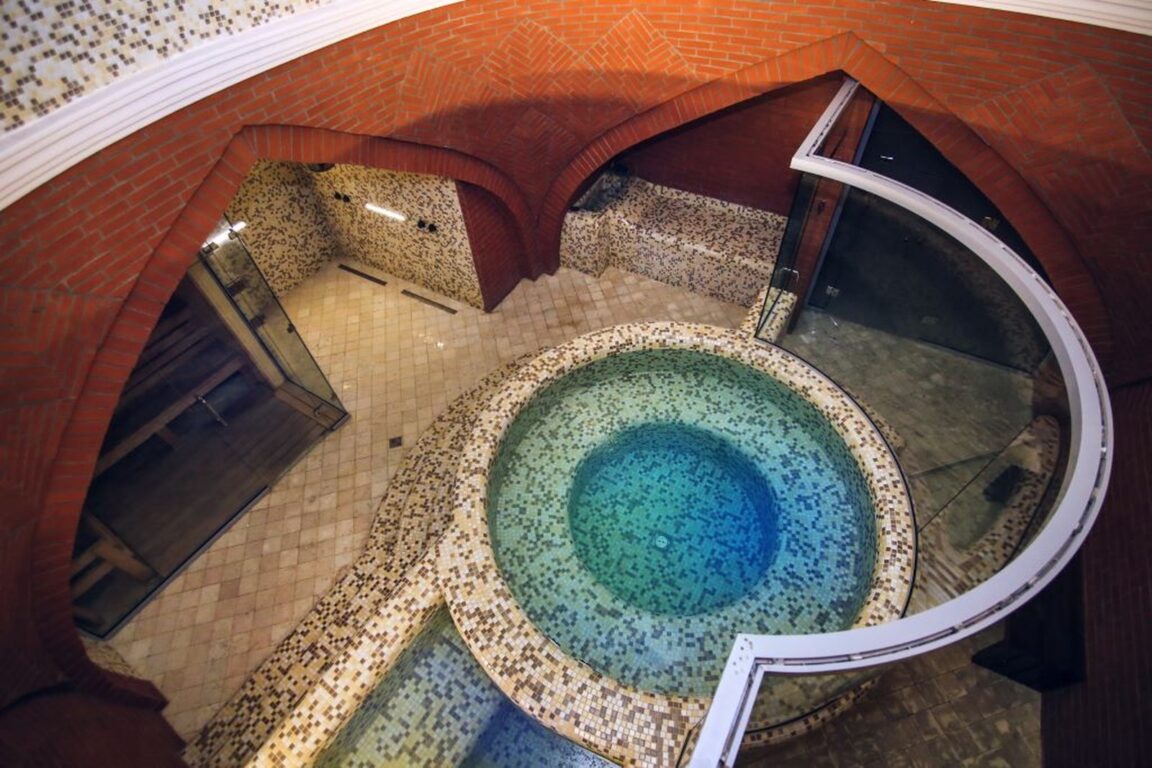
The split is simple. The public hall is the local, functional version: a shared, gender separate hall where you pay a few lari, bathe nude, wash, soak and leave clean, with no booking and no privacy. Bathhouse No. 5 is the main public option in the district in 2026, at about 10 GEL for men and 6 GEL for women, and it also has private rooms of its own. A private room is the visitor version: your own tiled room with a hot sulphur pool, a shower and a changing area, rented by the hour for the whole room, so the per person cost falls fast for a couple, a family or a small group, and mixed groups can bathe together in swimwear. Larger rooms add a cold plunge pool, a sauna and a resting area. First timers travelling together should book the private room, because it removes every etiquette uncertainty at once: you control the door, the temperature breaks and the pace. Solo travellers who want the unfiltered local ritual, and the lowest price in the district, should use the public hall and follow what everyone else does. A detailed district survey, with prices re-read from the bathhouses’ own booking pages in October 2026, is this Tbilisi sulphur baths guide, and the room prices in our Quick Facts were confirmed on Chreli Abano’s own booking site on the day this article was written.
What actually happens inside a private room?
You check in, are shown to the room, and the hour starts. The pattern that works is soak, rest, soak: ten to fifteen minutes in the hot pool, out to cool on the bench or in the cold plunge if your room has one, then back in. The water is hot enough that nobody sensible stays in for a full hour, and the resting intervals are where the deep, loosened feeling of the place comes from. Tea and food can be ordered to the room at Chreli Abano, which has a restaurant menu delivered to guests. About twenty to thirty minutes in, if you have booked the scrub, the mekise knocks and comes in, which is why regulars leave the door unlocked once they are settled. After the scrub, go back to the pool for a final short soak, shower, dress slowly, and expect to feel pleasantly unhurried for the rest of the day, one more reason the baths belong in the middle of a day rather than at its rushing start.
The kisa scrub: what is it, and should you book it?
Yes, book it, because the scrub is the part of the ritual that a soak alone does not give you. The kisa is a coarse mitt. The mekise has you lie on a warm stone bench, scrubs the whole body firmly with the mitt so that dead skin rolls away in visible grey threads, then washes you down in a cloud of soap foam and rinses you with bowls of warm water. It takes about 10 to 15 minutes per person, it is vigorous rather than gentle, and skin feels startlingly smooth afterwards. It costs about 10 to 30 GEL per person depending on the bathhouse, 30 GEL at Chreli Abano, and it is paid in cash, usually directly to the mekise, with a small tip of 5 to 10 GEL being common practice, so bring lari in cash even if the room itself was paid by card online. Tell the mekise if you have sunburn, eczema or broken skin, and skip the scrub entirely in those cases; the soak on its own is still the full bath. Travellers who have tried hammam culture elsewhere will recognise the family resemblance, and our guide to Budapest’s thermal baths makes a useful comparison for how another great bath city splits its public halls and its grand pools.
Which bathhouse should you book?
Chreli Abano is the polished first choice: the tiled facade, online booking and payment, rooms from the 130 GEL two person room up to the 600 GEL Royal Apartment, and named rooms including the Pushkin and Dumas rooms at 200 GEL for up to six people, a nod to the writers tradition links to these baths. Bathhouse No. 5 is the traditionalist’s choice, with the public halls and plainer private rooms, and it suits travellers who want the working bath rather than the spa version. Smaller bathhouses around Abano Street, including Gulo’s and the Royal Bath House, sit between the two in price and polish, with private rooms commonly in the 150 GEL range at the better known houses, and they are usually booked by phone or message rather than online. Whichever you choose, book evenings and weekends ahead, and consider a late afternoon slot in winter, when coming out of the heat into cold Old Town air and walking to dinner is one of the great small pleasures of a Tbilisi trip.
A paced bath day: Narikala, the gorge and one long lunch
Build the day around the bath instead of squeezing the bath into the day. Start late morning in the Old Town streets, take the cable car or the climb up to Narikala Fortress first, while legs are fresh, and look down over the domes you are about to disappear under. Come down through the Leghvtakhevi gorge, past the waterfall, which delivers you to Abano Street at street level. Book the bath for the early afternoon, the quietest reliable slot, with the scrub in the middle of the hour. Afterwards, do not schedule a museum. Take a long lunch or an early dinner in the Old Town, drink water and tea, and let the evening be a slow walk across the river and back. That is the whole itinerary, and it is enough: the baths are a half day experience wearing a one hour booking, and travellers who treat them that way rate them among the best things in the city, while travellers who rush in from a checklist tend to remember only that the water smelled of eggs. The sulphur smell, for the record, is real, it fades from skin after a shower, and it can linger in a swimsuit, so wear the older one.
What should you bring, and what should you know before you go?
- Bring: Swimwear for a private room, cash in lari for the scrub and tip, a hair tie, and a bottle of water for afterwards.
- Provided or rentable: Towels and sheets are available at the bathhouses for a few lari; Chreli Abano rooms are booked and paid online in advance.
- Health sense: The water is about 38 to 40 degrees. Take breaks out of the pool, skip the soak if you are pregnant, faint prone or have a heart condition, and ask a doctor first if you are unsure.
- Photos: Photography is for the street and the domes. Do not photograph inside shared bathing spaces.
- Timing: One hour is the standard booking and is enough with the scrub. Two hours suits a group rotating through one mekise.
Frequently Asked Questions
How much does a private sulphur bath room cost in Tbilisi?
At Chreli Abano, 130 GEL per hour for a room for one or two people, 160 GEL for three people and 200 GEL for rooms for up to six, with the VIP apartment at 500 GEL and the Royal Apartment at 600 GEL, priced per room rather than per person, as listed on the bathhouse’s own booking system on 19 November 2026.
What is a mekise, and what does the scrub cost?
The mekise is the bath attendant who performs the kisa scrub, a firm exfoliation with a coarse mitt followed by a soap foam wash, lasting about 10 to 15 minutes. It costs about 10 to 30 GEL per person depending on the bathhouse, 30 GEL at Chreli Abano, paid in cash.
Do I need to book the Tbilisi sulphur baths in advance?
For a private room, yes for evenings and weekends, ideally a day or two ahead; Chreli Abano takes bookings online. The public hall at Bathhouse No. 5 needs no booking.
What is the difference between the public hall and a private room?
The public hall is shared and separated by gender, costs about 6 to 10 GEL per person, and is a wash and soak like a local. A private room is your own pool, shower and changing space for the hour, costs from 130 GEL at Chreli Abano, and suits couples, families and mixed groups.
How hot is the water in the sulphur baths?
About 38 to 40 degrees Celsius, arriving from natural sulphur springs. Soak in intervals of ten to fifteen minutes with rests out of the water rather than staying in continuously.
Room prices, address and hours were read from Chreli Abano’s own booking system on 19 November 2026. Public hall and scrub price ranges reflect the district’s published prices as re-checked in October and November 2026; confirm at booking, as bathhouse prices change. Photo: a private sulphur bath room at Chreli Abano, Tbilisi, from the bathhouse’s own website, Chreli Abano.