 Kwame Mensah
Machu Picchu no longer sells a general admission ticket. Since June 1, 2024, every visit follows one of three circuits split into ten fixed routes, and the route on your ticket decides what you actually see: Circuit 1 stays on the upper terraces for the classic panorama, Circuit 2 pairs a version of that view with the temples and plazas of the citadel itself, and Circuit 3 works through the lower royal sector and carries the mountain climbs. A foreign adult pays S/152 for a standard route in 2026, or S/200 for a route that adds Machu Picchu Mountain, Huayna Picchu or the Great Cavern, with an S/11 conservation fee collected on top since May 1, 2026, for totals of S/163 and S/211. Tickets are sold only on the Ministry of Culture platform at tuboleto.cultura.pe, plus a limited in person batch in Aguas Calientes, and they are personal, dated and timed. Choose the route first and the rest of the trip, trains, bus and guide included, arranges itself around that choice.
Quick Facts
- System: 3 circuits and 10 routes, in force since June 1, 2024, per the Ministry of Culture site at machupicchu.gob.pe, checked November 19, 2026
- Standard foreign adult price: S/152, plus the S/11 SERNANP conservation fee charged since May 1, 2026, for S/163 in total
- Mountain route price: S/200 plus S/11, for S/211 in total, covering routes 1-A, 3-A and 3-C
- Only official online seller: tuboleto.cultura.pe, run by the Ministry of Culture
- In person fallback: A limited daily batch, about 1,000 tickets, sold in Aguas Calientes for the following day
- Bus pairing: Aguas Calientes to the gate costs about US$24 return or US$12 one way for a foreign adult, first buses from about 5:30 a.m.
- Ticket character: Named, tied to your passport, for one route, one date and one entry hour, and not transferable
- Prices checked: November 19, 2026, against Ministry of Culture and SERNANP reporting of the 2026 tariff schedule
What does each circuit actually show you?
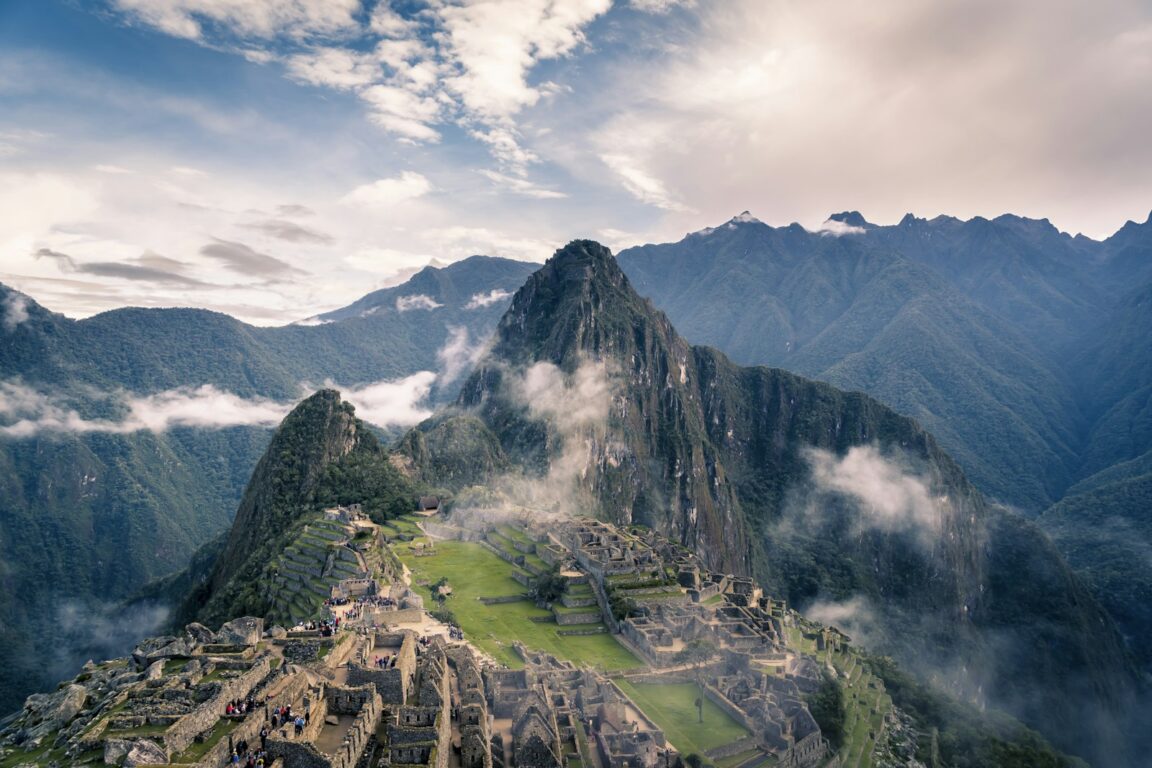
Circuit 1, the Panoramic circuit, never enters the main citadel. Its four routes work across the upper terraces around the Guardian’s House, which is where the postcard photograph is taken from. Route 1-B, the Upper Terrace route, is the pure viewpoint ticket: terraces, the classic angle on the ruins with Huayna Picchu behind them, and a shorter visit that suits travellers short on time or energy. Route 1-A adds the climb of Machu Picchu Mountain, the high peak opposite Huayna Picchu, for the widest aerial view of the whole sanctuary. Routes 1-C and 1-D, to the Intipunku Sun Gate and the Inca Bridge, are sold only in high season, and each trades citadel access for one specific walk. A Circuit 1 ticket is the right buy for a second visit, a photography focused morning, or anyone whose knees rule out the citadel stairs, but a first time visitor who books it expecting temples will leave disappointed.
Circuit 2, the Classic circuit, is the default first visit. Route 2-A, the Designed route, combines a lower terrace viewpoint, so the classic photograph is still possible, with a full pass through the urban sector: the Temple of the Sun, the main plaza, the Intihuatana stone and the Temple of the Three Windows area. Route 2-B, the Lower Terrace route, follows a similar line from a slightly lower terrace. If only one route is available on your date and it is a Circuit 2 route, take it without hesitation. Circuit 3, the Royalty circuit, starts low and stays low. Route 3-B, its designed route, covers the royal and religious buildings of the lower citadel in depth but gives up the high classic viewpoint. Its siblings carry the climbs: 3-A climbs Huayna Picchu, the steep peak in every photograph, 3-C continues to the Great Cavern on the far side of that mountain, and 3-D climbs the small Huchuy Picchu bump for a modest extra view. The official route maps and descriptions sit on the Ministry of Culture circuits and routes page, and they are worth reading before you pay, because the differences are permanent once the ticket is issued.
How and when are tickets released for sale?
The Ministry of Culture sells in release batches on TuBoleto rather than on a simple rolling window, and the most competitive dates, the June to August dry season peak and the year end holidays, can sell out for Circuit 2 within days of a release. The working method is unglamorous: create your account on tuboleto.cultura.pe in advance, have every traveller’s passport number, full name exactly as printed, and date of birth ready, and be online when a release opens for your month. Each ticket is issued against one passport, and the gate checks the document, so a typo is not a cosmetic problem. Buy the entry ticket before the train, not after: trains to Aguas Calientes run on several schedules a day and are comparatively flexible, while the route and hour you want at the citadel are the scarce resource. Travellers combining Machu Picchu with a wider Peru circuit can use the same book the anchor first logic in our Arequipa travel guide, which treats the White City as the altitude friendly warm up before Cusco rather than an afterthought.
The in person batch in Aguas Calientes exists as a safety valve, not a strategy. A limited number of tickets, reported at about 1,000 a day, are sold there for the following day, and in busy months the queue forms early and the best routes go first. It rescues travellers who arrive in the Sacred Valley without a ticket, at the cost of a night in Aguas Calientes spent queuing rather than resting, and with no guarantee of Circuit 2. Treat any website other than tuboleto.cultura.pe that claims to sell official entry with suspicion: resellers add markups, and some sell vouchers that were never registered. The ministry’s own information site, machupicchu.gob.pe, links the official sales channel and publishes the circuit rules in English and Spanish.
How do the bus, the entry hour and the route fit together on the day?
Your ticket names an entry hour, and the practical chain runs backwards from it. The shuttle buses climb the Hiram Bingham road from Aguas Calientes in about 25 to 30 minutes, leave from Avenida Hermanos Ayar from about 5:30 a.m., and then run continuously as they fill. A foreign adult pays about US$24 return or US$12 one way at the official booth, with reduced fares for children and Peruvian nationals. Buy the bus ticket the evening before for an early slot: the morning queue at the booth and the queue for the buses themselves are two separate waits, and only the second one is unavoidable. In high season, arrive at the bus line at least an hour before your entry hour for the first slots of the day, less in the middle of the day when the flow reverses. The walking alternative, a steep stair climb of roughly 90 minutes, saves the fare and spends the legs you need below the rim, so it suits the descent better than the ascent.
Inside the gate, the route is one way. Staff check tickets at internal control points, and you cannot backtrack to a viewpoint you skipped or drift onto a neighbouring route because the view looks better. That is why the circuit decision matters more than any other choice on the trip: a Circuit 1 ticket cannot be upgraded at the gate, and a Circuit 3-B ticket will not be waved up to the upper terrace for one photograph. Carry the passport used at booking, carry water, and note that single use plastic bottles and food are restricted inside the sanctuary. Guides are widely available at the gate and in Aguas Calientes, and while the rules on mandatory guiding have shifted over the years, a good guide remains the difference between reading the route map and understanding the city it crosses. Finish the day the way most Peru itineraries continue, south through Cusco toward the coast, where our Lima food guide covers the ceviche and Nikkei circuit that makes a far better final night than an airport hotel.
Which route should a first time visitor actually book?
Book Route 2-A first. It is the only standard priced route that gives both the classic viewpoint and the heart of the citadel, and it sells out first for exactly that reason. If 2-A is gone, 2-B is a close substitute on the same circuit. If both are gone and Huayna Picchu on 3-A is available, take it only if you genuinely want the climb: it is steep, stepped and exposed in places, the summit view back over the citadel is superb, and the route still covers the lower royal sector, but it is a poor trade for a traveller who mainly wanted the temples at a gentle pace. Choose 1-B for a short, view only visit, 1-A for the big mountain walk, and 3-B for a return visit focused on the lower city. In high season, when the ministry counts daily capacity in the thousands and the best routes vanish in each release batch, flexibility on dates beats flexibility on routes: shifting a trip by two days usually recovers a Circuit 2 ticket, while shifting routes changes the visit itself.
Frequently Asked Questions
How much does a Machu Picchu ticket cost in 2026?
A foreign adult pays S/152 for a standard route and S/200 for a route with Machu Picchu Mountain, Huayna Picchu or the Great Cavern. Since May 1, 2026, an S/11 SERNANP conservation fee is added, so the totals are S/163 and S/211. Student and child rates are lower, and the final amount is confirmed at checkout on tuboleto.cultura.pe.
Can I change my circuit or entry time after buying?
No, not in any practical sense. Tickets are issued for one named traveller, one route, one date and one entry hour, and they are not transferable. That is why the route research has to happen before payment, on the Ministry of Culture circuits page, rather than at the gate.
What happens if Circuit 2 is sold out for my date?
Try shifting the date first, then consider Route 3-B for the lower citadel or Route 1-B for the viewpoint, knowing exactly what each gives up. The Aguas Calientes in person batch for the following day is a last resort, with no guarantee of any specific route.
Is the Aguas Calientes bus included in the entry ticket?
No. The bus is a separate purchase, about US$24 return or US$12 one way for a foreign adult, from the booth on Avenida Hermanos Ayar. The first buses leave at about 5:30 a.m. and the ride takes roughly 25 to 30 minutes.
Do I need my passport to enter Machu Picchu?
Yes. The ticket is issued against a passport and the gate checks that the document matches the ticket. Book with the passport you will carry on the day, with the name spelled exactly as printed.
Featured image: The Machu Picchu citadel below Huayna Picchu, seen from the upper terraces in morning cloud. Photo by Willian Justen de Vasconcellos via Unsplash, Unsplash License, used with credit.