 Wei Chen
Croatia is closing the era of the anonymous old town apartment. Under the draft Hospitality and Catering Industry Act notified to the European Commission in 2026, every short-term rental unit in the country, hotels and campsites excepted, will need its own registration number before it can be advertised on a booking platform, with the system planned to take effect on 1 January 2027 and platforms required to refuse or remove listings that cannot display a valid number. That sits on top of rules that already bite today: a Croatian rental must be formally categorised as tourist accommodation, every guest must be registered through the eVisitor system, and an apartment in a shared building can require the written consent of two thirds of the co-owners, plus the immediate neighbours, before it is let to tourists at all. For a traveller booking in Split or Dubrovnik, the practical change is simple: the listings that survive will be the legal ones, and the cheapest unregistered stock is exactly what is being designed out.
Quick Facts
- The headline change: A unique registration number for each short-term rental unit, required for advertising on platforms, planned for 1 January 2027 under the draft Hospitality and Catering Industry Act.
- The legal engine: EU Regulation 2024/1028 on short-term rental data collection and sharing, which has applied at Union level since 20 May 2026 and which the Croatian act implements.
- Already in force: Rentals must hold a categorisation decision as tourist accommodation, register every guest in eVisitor, and meet tourist tax and tax registration duties. Unregistered letting is already illegal, just harder to police.
- The building hurdle: In multi-unit buildings, short-term letting can require written consent from at least two thirds of co-owners by ownership share, plus adjacent owners.
- What is not coming: Croatia has no national nightly cap and no minimum stay rule. The reform targets registration and consent, not a limit on how often a legal unit can be let.
- Where it bites hardest: The saturated historic cores, Dubrovnik’s Old Town and Pile, Ploče and Lapad districts, and Split’s Old Town, Varoš and Bačvice quarters.
- The traveller check: From 2027, look for the registration number on the listing itself. No number on the platform page means the unit is not cleared to be advertised.
What exactly must a Croatian rental display from 2027?
The registration number is a unique identification code issued per accommodation unit through a single national system, designed so authorities can match a platform listing to a real, categorised property and a real host. The draft act builds a single digital entry point that passes registration data between hosts, the authorities and the platforms, and it makes the platforms part of the enforcement: under the EU regulation, a listing should not be published without a valid number, and the number must be displayed in the listing. Fines in the draft cover both platforms that advertise unregistered units and the people responsible for them.
Two scope points matter for travellers. Hotels and campsites sit outside the registration number obligation, because they are already licensed through their own regimes, so this is a reform aimed squarely at apartments, rooms and holiday homes. And the number is per unit, not per host: a manager running twelve apartments in Split’s old town needs twelve numbers, one for each door, which is what makes the system traceable rather than decorative. The official notification of the draft, with the planned 1 January 2027 start, is published in the European Commission TRIS notification for the Croatian act.
What rules already apply to a Split or Dubrovnik apartment today?
It is a mistake to read the registration number as the start of regulation. A legal Croatian rental today already needs a categorisation decision from the competent local office, the decision that grades the unit and permits it to be offered as tourist accommodation at all. Every guest must be registered through eVisitor, the national guest reporting system, and tourist tax and income tax obligations follow from that record. What has been missing is not law but visibility: without a number on the listing, a platform, a guest and an inspector all struggled to tell the categorised apartment from the informal one in the same stairwell.
Government and coastal authorities have put the scale of the informal market in the tens of thousands of bed spaces, with one widely reported estimate of around 20,000 unregistered beds around Umag alone, a figure local reporting multiplies along the Adriatic. Whether or not any single estimate is exact, the direction is not disputed, and it explains the design of the reform: make the listing itself carry the proof, and the grey market loses its shop window. A traveller oriented summary of how the existing categorisation, eVisitor and consent layers fit together is kept at this Croatia short-term rental rules overview.
Why does the co-owner consent rule matter more in historic cores?
The consent requirement is the part of the package that changes buildings rather than listings. Where letting an apartment to tourists requires the written agreement of at least two thirds of the building’s co-owners by ownership share, together with the owners of the adjacent units, a single determined neighbour can no longer be simply outvoted by an absent majority, and an investor can no longer assume that buying the flat buys the right to run it as a hotel room. In the historic cores, where almost every rental sits in a shared residential building, this is the rule that decides which streets keep residents and which become dormitories.
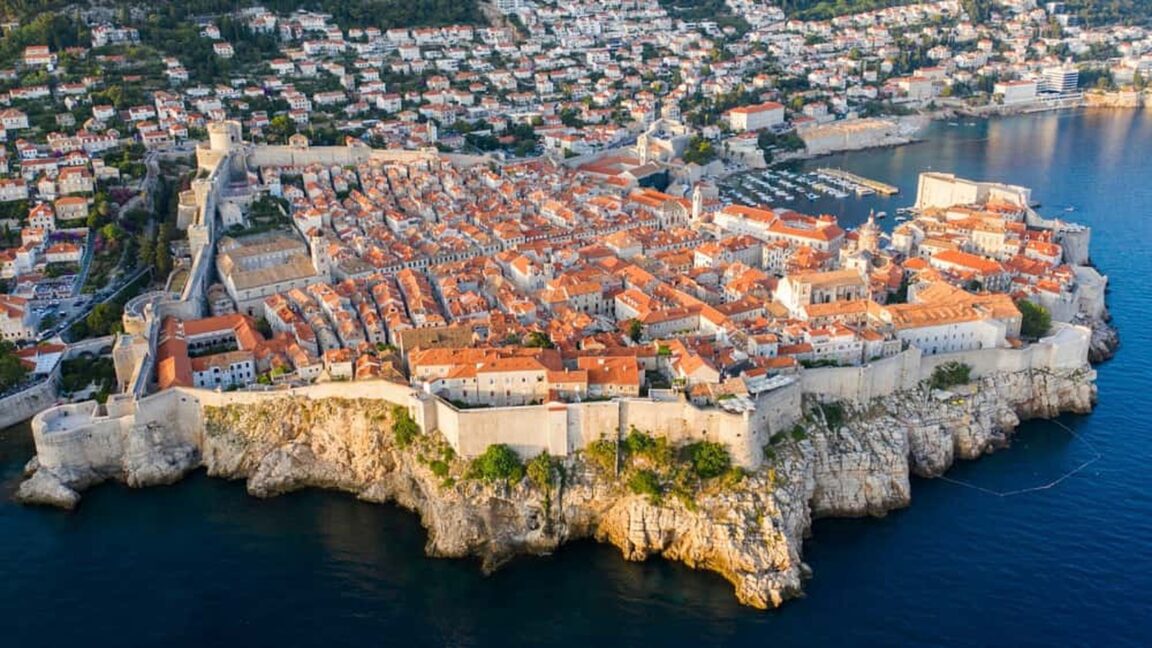
Dubrovnik’s walled Old Town is the extreme case, a tiny residential population inside one of Europe’s most visited monuments, with Pile, Ploče and Lapad absorbing the overflow. Split spreads the same pressure wider, through the palace quarter, Varoš and Bačvice. Travellers choosing between the two cities’ neighbourhoods before booking will find the ground level picture in this where to stay neighbourhood guide format useful as a method, even though its city is Bergen: read the quarter first, then the listing. In Croatia from 2027 the listing will also tell you, by the presence or absence of its number, whether the flat was ever cleared to be there.
How should a traveller book differently because of this?
For trips before the system starts, the checks are the old fashioned ones. Book through the platform rather than moving to a private payment channel, favour listings that name a registered business or show a categorisation, and be wary of a price far below the street’s going rate in the old town, which is the grey market’s main remaining advertisement. Keep the booking inside the platform’s messaging and payment rails, so a cancelled or misdescribed unit is the platform’s problem to solve rather than a cash loss.
For 2027 trips, add one mechanical check to the shortlist stage: the registration number should appear on the listing. A host who cannot display one is either not yet registered, in which case the listing should not be live, or is operating outside the system the whole reform exists to expose. Expect some supply at the budget end of Split and Dubrovnik to thin out as unregistered units leave the platforms, and expect the surviving stock to be easier to verify and, on the evidence of other cities that have run registration schemes, somewhat less chaotic at check-in, because the host on the listing is now an identifiable, accountable operator. Travellers weighing a Croatian old town stay against other regulated European city breaks can compare the pass and permit logic in the Lisboa Card 2026 museums and value guide, where the same principle applies: the official scheme is the one with the number attached.
Frequently Asked Questions
When does the Croatian rental registration number become mandatory?
The draft Hospitality and Catering Industry Act plans for the obligation to apply from 1 January 2027, implementing EU Regulation 2024/1028, which has applied at Union level since 20 May 2026. Confirm the final act’s dates before relying on them for a 2027 booking.
Does the registration rule apply to hotels in Croatia?
No. Hotels and campsites are excepted from the registration number obligation because they are licensed under their own regimes. The reform targets apartments, rooms and holiday homes.
Is short-term letting in Croatia legal before 2027?
Yes, when the unit is categorised as tourist accommodation, guests are registered through eVisitor and tax duties are met. Letting without categorisation is already illegal; the number makes that status visible on the listing.
What is the two thirds consent rule?
In multi-unit buildings, short-term letting can require written consent from at least two thirds of co-owners by ownership share, plus the owners of adjacent units. It is the rule most likely to remove old town apartments from the market.
Is there a limit on how many nights a Croatian rental can be let?
No national cap and no minimum stay rule exists in Croatia. The reform regulates registration and consent, not the number of nights a legal unit may be let.
How can I tell if a Split or Dubrovnik listing is legal?
From 2027, look for the unit’s registration number displayed on the platform listing. Before then, favour categorised, platform booked listings from identifiable operators, and treat a far below market old town price as a warning sign.
Photo: An aerial view of Dubrovnik’s walled Old Town in Croatia, its terracotta roofs enclosed by the city walls above the Adriatic. Credit: Geio Tischler, via Unsplash.