 LeVar Thomas
Wallace is the rare mining town where the whole downtown is the museum. Every building in the town sits inside a historic district listed on the National Register of Historic Places, a status Wallace earned after its citizens fought a freeway that would have demolished the centre, and won by getting the entire town listed instead. Today the brick streets under Interstate 90 hold a working silver town of a few hundred people, a mine tour run by retired miners, a bordello museum that tells its story without blushing, and the trailhead logic for two of the great rail trails of the American West. Come for the Sierra Silver Mine Tour, stay for a town that preserved itself by paperwork and stubbornness.
Quick Facts
- Where: Wallace is the county seat of Shoshone County in Idaho’s Silver Valley, on Interstate 90 in the panhandle, about an hour and a half east of Spokane.
- Historic status: the entire town lies within a National Register listed historic district. Local tradition puts it more strongly: every building in Wallace is on the National Register.
- Mine tour: the Sierra Silver Mine Tour runs from May 1 to October 15, with tours departing every 30 minutes from the ticket office at 509 Cedar Street. Adults USD 25, seniors USD 22, children 4 to 16 USD 12.50, under 4 free, family ticket USD 75.
- Tour format: a narrated trolley ride through historic Wallace, then an underground walk of about 1 hour 15 minutes total with a retired miner as guide. The mine holds about 50 degrees Fahrenheit, so bring a light jacket.
- Bordello museum: the Oasis Bordello Museum at 605 Cedar Street preserves a working brothel that operated until 1988, toured in season with unusual candour.
- Rail trails: the paved Trail of the Coeur d’Alenes runs through town on its 73 mile course across the panhandle, and the Route of the Hiawatha, 15 miles over seven trestles and through 10 tunnels, starts a short drive east.
- Centre of the Universe: a manhole cover downtown marks the spot the mayor proclaimed the Center of the Universe in 2004, on the principle that if it could not be disproved, it must be true.
What happens on the Sierra Silver Mine Tour?
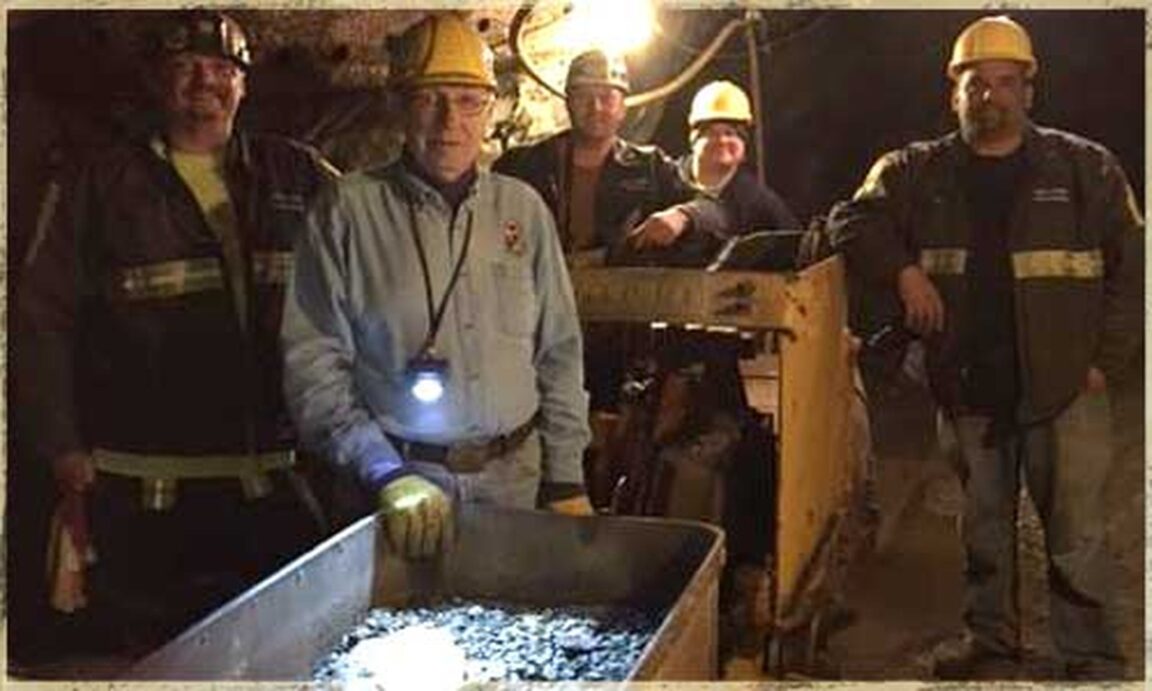
The tour starts in town, not at a mine mouth. You board a classic trolley at the Cedar Street ticket office and ride through Wallace with narration that orients you in the Silver Valley, the richest silver district on earth by local measure and one of the most productive in American mining history. Then you go underground into a real hard rock mine, in a hard hat, with a retired miner as your guide. That last detail is the tour’s whole character: the demonstrations of pneumatic drills and mining equipment come from a man who did this work for a living, and the explanations of how silver is taken out of these mountains carry the authority of practice rather than a script.
Practicalities shape the visit. Tours run seasonally, from the start of May to mid October, departing every half hour, with longer hours in the June to August peak and shorter days in the shoulder months. The underground temperature sits near 50 degrees Fahrenheit all year, which feels like a refrigerator after an August street, so the light jacket the operators recommend is not a suggestion to ignore. The full experience runs about an hour and a quarter. Book the mine as the fixed point of your Wallace day and let everything else, museums, lunch, the trail, arrange itself around it. Families should note the pricing structure: the family ticket for two adults and two or more children can undercut buying seats individually, and children under four go free.
How did a whole town get onto the National Register?
The story is the best exhibit in Wallace, and it is told on plaques and by locals with justified pride. When Interstate 90 was planned through the Silver Valley, the highway’s original route would have cut through downtown Wallace and demolished much of its historic core. The town’s response was to nominate the entire downtown to the National Register of Historic Places, which forced the freeway onto a viaduct that sails over the town instead. Drive in today and you pass above and beside a complete, intact mining era streetscape: brick commercial blocks, the Shoshone County courthouse, churches, hotels and houses, preserved not as a film set but as a functioning county seat.
That completeness changes how you visit. There is no single Wallace attraction to queue for and leave; the walk itself is the attraction, a few compact blocks where every facade has a date and a story. The Northern Pacific Depot, now a railroad museum, anchors one end, its chateau style roofline a reminder that ore and passengers once moved by rail. The Wallace District Mining Museum fills in the industry’s history above ground, a good primer before or after the mine tour. And at the intersection downtown, the decorated manhole cover marking the Center of the Universe gives the town’s humour its monument: proclaimed in 2004, defended ever since on impeccable Wallace logic. Small preserved towns reward this kind of slow looking, the same approach we took to Spearfish Canyon’s byway towns in the Black Hills, where the road and the settlements along it are one story.
What does the Oasis Bordello Museum add?
Honesty, mostly. Wallace’s bordellos operated openly for most of the town’s history, serving the mines, and the last of them, the Oasis, closed in 1988 when its occupants left ahead of a federal investigation, leaving rooms furnished, belongings in place and a time capsule nobody had planned. The museum tours those rooms as they were found, and its guides discuss the economics, the health checks, the relationships with local law enforcement and the lives of the women who worked there, plainly and without either prurience or embarrassment. It is one of the most unusual small museums in the West precisely because it refuses to tidy its subject away.
Pair it with the mine tour and you have Wallace’s complete social history in two stops: the work underground that created the wealth, and the service economy at street level that the wealth supported. Visitors who prefer their history comfortable may skip it; visitors who want to understand a mining town should not.
How do the rail trails fit a Wallace stay?
Wallace sits at the meeting point of two celebrated conversions. The Trail of the Coeur d’Alenes is a paved rail trail of about 73 miles running from Mullan, just east of Wallace, across the panhandle to Plummer, passing through town and down the valley beside the river and Lake Coeur d’Alene. From Wallace you can ride out and back in either direction as a day trip, with the eastern section climbing gently toward the Montana line and the western section rolling down the valley through other Silver Valley towns. The Route of the Hiawatha, reached from the Lookout Pass area east of town, is the showpiece: 15 miles, mostly downhill, through 10 tunnels including the long Taft Tunnel and over seven high trestles, with shuttle buses to return riders and bikes to the top. It is seasonal and ticketed, and it sells its summer days, so reserve it as you would the mine tour.
Stay overnight if trails are your purpose, because both rides reward an early start and a Wallace dinner afterwards. The town’s bars, cafes and historic hotels run on a mining town’s unpretentious lines, and the evening quiet under the viaduct, in a downtown that exists because its people refused to let it be demolished, is the right end to the day. It is the same floodplain patience, letting a landscape set the schedule, that governs our guide to Congaree National Park at the other end of the country.
Frequently Asked Questions
Is every building in Wallace really on the National Register?
The entire downtown lies within a National Register listed historic district, created when residents nominated the town to block a freeway demolition route. The freeway was built on a viaduct over Wallace instead, and the intact mining era streetscape survives as a working county seat.
How much does the Sierra Silver Mine Tour cost?
Adults USD 25, seniors aged 60 and over USD 22, children aged 4 to 16 USD 12.50, and children under 4 free. A family ticket for two adults and two or more children costs USD 75. Tours run from May 1 to October 15, departing every 30 minutes in season.
How cold is the Sierra Silver Mine?
About 50 degrees Fahrenheit year round. The operators recommend a light jacket, and the advice holds even on hot summer days, since the trolley ride and the underground section together run about 1 hour 15 minutes.
What is the Center of the Universe in Wallace?
A marked manhole cover at a downtown intersection. In 2004 the mayor proclaimed Wallace the Center of the Universe, arguing that since the claim could not be disproved, it must be true. The marker names local mining companies and is a free, quick photo stop.
Can I ride the Route of the Hiawatha from Wallace?
Wallace is the natural base for it. The Hiawatha trailhead sits a short drive east near Lookout Pass; the trail runs 15 miles through 10 tunnels and over seven trestles, is seasonal and ticketed, and uses shuttle buses to return riders to the top. Book ahead in summer.