 Lucas Meyer
Voyageurs National Park in northern Minnesota is a national park with almost no roads: of its roughly 218,000 acres, about 40 percent is water, spread across four big connected lakes, Rainy, Kabetogama, Namakan and Sand Point, with more than 500 islands and over 655 miles of undeveloped shoreline between them. You visit by boat. You sleep either on a houseboat, which requires a permit at $15 per night in season, or at one of more than 270 boat in campsites, houseboat sites and day use sites, every overnight stay reserved through Recreation.gov. Entry itself is free. The planning logic is therefore inverted from every road park you know: choose your lake first, choose your gateway visitor center second, and treat the boat, not the car, as the vehicle the whole trip hangs on.
Quick Facts
- Size and shape: about 218,000 acres in northern Minnesota along the Canadian border, roughly 40 percent water, with four large lakes: Rainy, Kabetogama, Namakan and Sand Point, plus Crane Lake at the southeast entry.
- Entry: free. There is no entrance fee to Voyageurs National Park, and the park is open year round.
- The gateways: four visitor centers serve the park: Rainy Lake, Kabetogama Lake, Ash River and Crane Lake, each tied to a different lake and launch area.
- Houseboats: overnight houseboat, sailboat and cabin cruiser stays require a permit, $15 per night, for the houseboat season of May 1 through October 31. Permits open the previous November 15 at 9 am Central on Recreation.gov.
- Campsites: more than 270 sites in total across campsites, houseboat sites and day use sites. All tent campsites require a reservation and nightly fees, with peak season running from the Friday before the Minnesota fishing opener through October 15, and non peak sites at $10 per night.
- Site types: small campsites hold up to 9 campers on 2 tent pads, large sites up to 18 on 4 tent pads, group sites 14 to 30 campers, and designated houseboat sites allow a maximum of 2 houseboats.
- The road rule: frontcountry campsites sit on the big lakes and require travel by private watercraft or water taxi. There is effectively no drive to camping inside the park.
Why is Voyageurs a water park in the other sense?
Most national parks are landscapes you drive through and walk into. Voyageurs is a landscape you float across. The park protects a segment of the historic voyageur fur trade route, a water highway of border lakes, and its interior, the Kabetogama Peninsula, is roadless, wrapped by Rainy, Kabetogama and Namakan lakes. That geography dictates everything practical. Distances are measured in miles of open water, and the National Park Service notes that some campsites lie as far as 27 miles from a launch. Weather is a routing decision, because big lakes build waves quickly. And the signature accommodation is not a lodge or a campground loop but a rented houseboat: a slow, self contained floating cabin that serves as transport, hotel and dock in one, moored each night at a designated houseboat site or at undeveloped shoreline at least 200 yards from a designated site or structure.
The four lakes and the Kabetogama entry logic
First timers do best starting on Kabetogama Lake, and the reasoning is structural. Kabetogama lies wholly within Minnesota, so there is no international border to keep track of on the water, unlike Rainy and Namakan, which straddle the Canada line. Its visitor center sits on the lake’s southern shore among resorts that rent boats and houseboats, so the supply chain for a first trip, rental, launch, supplies, orientation, is shortest here. From Kabetogama you can reach the park’s best known boat in sights, including the Ellsworth Rock Gardens on the northern shore and the narrows east into Namakan Lake, and continue to Kettle Falls, the historic hotel site between Namakan and Rainy, all without trailering to a second gateway.
What do the other gateways offer?
Rainy Lake, served by the Rainy Lake Visitor Center east of International Falls, is the largest water in the park and the classic houseboat lake, with ranger led boat tours departing in season and the broadest, wildest feel, along with the biggest water to respect in wind. Ash River, between Kabetogama and Namakan, is the hiker’s gateway: its visitor center area gives access to the Kab Ash Trail system and the trailheads for backcountry routes into the peninsula’s interior lakes. Crane Lake, the southeast entry, is the route into Sand Point Lake, narrower, rockier and quieter, and the gateway used by many anglers and by travellers continuing toward the Boundary Waters region. None of the four is the park’s front door in the singular sense: each opens a different lake, and your reservation only makes sense once the gateway matches it.
Houseboating: how does the permit and rental system work?
The park does not rent houseboats: private outfitters and resorts around the gateway communities do, and the National Park Service permit is a separate step the renter must hold for every night inside the park. The permit season runs May 1 through October 31 at $15 per night, and permits become available the previous November 15 at 9 am Central through Recreation.gov, the same release moment as campsite reservations, which tells you how competitive peak summer dates are. A qualifying houseboat, in the park’s definition, is a registered vessel with sleeping facilities, cooking and food storage facilities, and a no discharge toilet. Overnight, you moor at designated houseboat sites, capped at two houseboats per site, or at undesignated shoreline at least 200 yards from a designated site or structure. Days are unstructured by design: cruise, fish, swim, dock at day use and visitor destination sites for picnics and historic stops, then moor before dark. Travellers comparing water based parks can set Voyageurs beside the cliff lined lake country in our first timer guide to Pictured Rocks, where the boat is a tour rather than your hotel.
Boat in campsites: how do reservations and site types work?
Every tent campsite in Voyageurs requires a reservation and permit through Recreation.gov; dispersed camping is not the model here, and each night is spent at a specific reserved site. Peak season runs from the Friday before the Minnesota fishing opener through October 15, with reservations released the previous November 15 at 9 am Central; in the non peak season, sites cost $10 per night. Small campsites, the standard unit, hold up to 9 campers on 2 tent pads, large campsites hold up to 18 on 4 tent pads, and group campsites serve 14 to 30 campers. Backcountry campsites on the peninsula’s interior lakes hold up to 6 and add a hike from a boat accessed trailhead, while primitive campsites along the Kab Ash Trail are the one walk in exception. A typical frontcountry site is a private shoreline clearing, not a campground loop: tent pads, a fire ring, a picnic table, a privy and a bear proof food locker, with some sites adding a dock. Food storage discipline matters in this park: the Park Service actively warns visitors about preventing bear problems, and some island sites around Dryweed Island were closed through September 2026 for increased bear activity, a reminder to check current closures when you reserve. The land based counterpoint, for readers building a northern parks trip, is the carriage road cycling in our Acadia carriage roads family bike guide, where the network is gravel and the sites are reached by car.
How should a first trip be sequenced?
Reserve first, in November if you can, because the November 15 release is when houseboat permits and peak campsites for the following summer open together. Choose Kabetogama for a first houseboat or boat in trip, Rainy for scale, Ash River if hiking matters, Crane Lake for quiet. Rent from a gateway outfitter, stop at the matching visitor center for orientation, current conditions and bear guidance, and build each day around a single mooring or site move rather than a checklist of sights: on water this size, one move a day is a full and satisfying pace. Carry navigation for the marked channels, because these are rock reef lakes, and treat wind forecasts the way road trippers treat snow closures. Facts checked against National Park Service Voyageurs pages (nps.gov) on November 23, 2026.
Frequently Asked Questions
Is there an entrance fee for Voyageurs National Park?
No. Entry is free. The costs of a Voyageurs trip are the overnight permits: $15 per night for houseboats in the May 1 to October 31 season, and reservation plus nightly fees for tent campsites, with non peak campsites at $10 per night.
When do Voyageurs campsite and houseboat reservations open?
For the following summer season, reservations and houseboat permits open on November 15 at 9 am Central on Recreation.gov. Peak season itself runs from the Friday before the Minnesota fishing opener through October 15.
Which lake is best for first time visitors?
Kabetogama Lake is the usual recommendation: it lies entirely within Minnesota, has a visitor center and resort rental bases on its southern shore, and gives boat access to Namakan Lake and Kettle Falls without changing gateways.
Can you drive to a campsite in Voyageurs?
Effectively no. Frontcountry campsites on the big lakes require a private boat or water taxi, backcountry sites add a hike from a boat accessed trailhead, and only the primitive Kab Ash Trail sites are reached on foot from trailhead parking.
How many houseboats can use one houseboat site?
A maximum of two houseboats per designated site. Houseboats may also stay at undesignated, undeveloped shoreline, provided they are at least 200 yards from a designated site or structure.
What are the four visitor centers?
Rainy Lake, Kabetogama Lake, Ash River and Crane Lake. Each serves a different lake and launch area, so match your visitor center to the lake your permit and rental are based on.
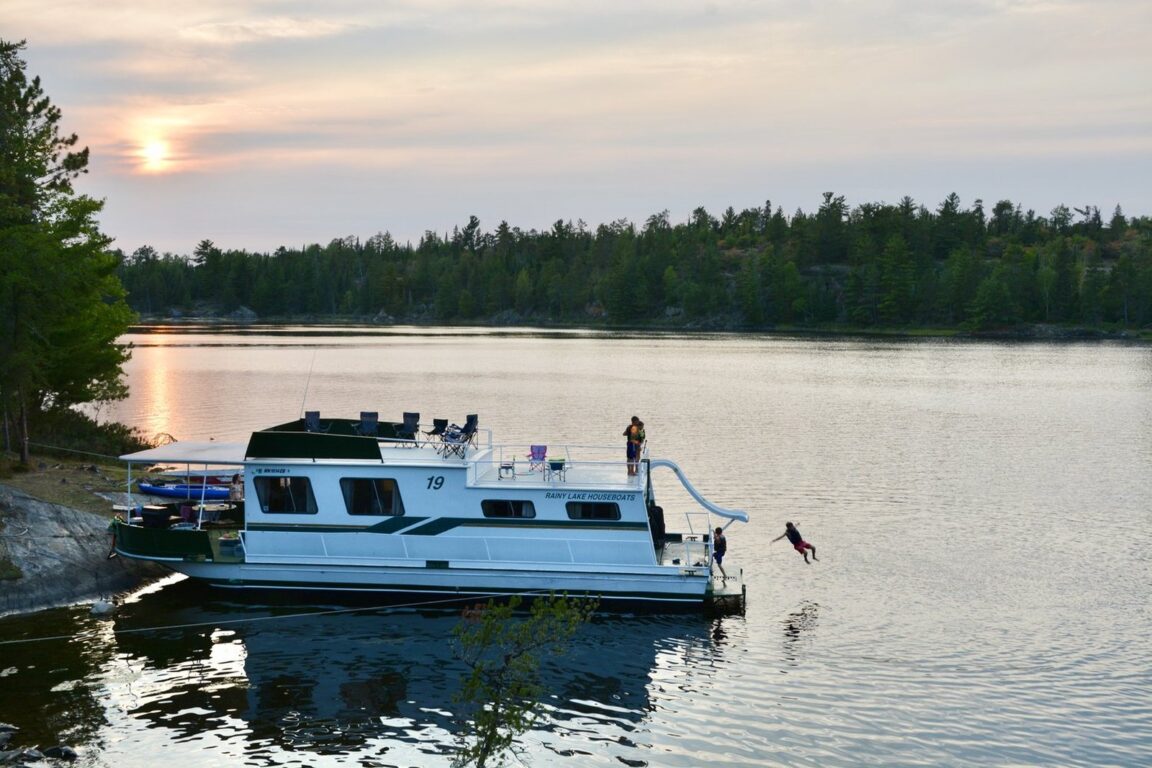
Featured image: a rented houseboat moored against a rocky, forested shoreline at sunset in Voyageurs National Park, a swimmer mid dive off the stern slide. Photo: Erik Bjorum, via the National Park Service official Voyageurs pages at nps.gov, used with credit. Native image 1500 px wide, resized to exactly 1600 px.