 Camille Baptiste
Paducah, Kentucky is a river town that turned fabric into a civic identity: this small city at the meeting of the Ohio and Tennessee rivers holds a UNESCO Creative City designation for Crafts and Folk Art, awarded in 2013, and its anchor is the National Quilt Museum, a 27,000 square foot museum at 215 Jefferson Street whose three galleries rotate contemporary quilts drawn from a collection of more than 700 works, all made after 1980. The museum fills roughly a city block downtown, and the town around it completes the picture: 50 floodwall murals narrating Paducah history along the riverfront, and the Lower Town Arts District, where working artists live and show work in Victorian streets a short walk away. Plan a full day, not a detour: the museum in the morning, the murals at midday, Lower Town in the afternoon.
Quick Facts
- The museum: the National Quilt Museum, 215 Jefferson Street, Paducah, Kentucky, a 27,000 square foot facility with three galleries of rotating exhibitions.
- Hours: Monday to Saturday 10 am to 5 pm, Sunday 1 pm to 5 pm, closed on Easter Sunday, Thanksgiving Day, Christmas Eve, Christmas Day, New Year’s Eve and New Year’s Day.
- Admission: general admission $15, seniors 62 and older and military $13, students $5, children 12 and under free with an adult, members free. Guided tours cost an additional $10 and run about 45 minutes on a published schedule.
- The collection: more than 700 quilts, all made after 1980, representing contemporary quilters from the United States and around the world.
- The designation: Paducah joined the UNESCO Creative Cities Network as a City of Crafts and Folk Art in 2013, one of only a handful of UNESCO Creative Cities in the United States.
- The murals: Paducah Wall to Wall, 50 painted panels on the downtown floodwall, covering three blocks from Jefferson Street to Washington Street, free and viewable at any hour.
- The neighbourhood: Lower Town Arts District, 26 blocks on the National Register of Historic Places, reshaped by an Artist Relocation Program that began in 2000.
Inside the National Quilt Museum: what does a quilt museum actually show?
The first correction the museum makes is to the word quilt itself. The works on these walls are contemporary art quilts: large scale, intensely worked pieces built from painting, hand dyeing, dense machine stitching and appliqué, made by named artists and judged at the level of any other studio art. The museum describes its mission plainly: it honors today’s quilters and inspires future ones, and its collection is deliberately modern, with every work made after 1980. Exhibitions rotate through the three galleries across the year, mixing selections from the permanent collection with touring and themed shows, so a repeat visit is a different museum. Kaleidoscopic symmetry pieces, landscape quilts built like paintings, and miniature quilts that compress the same ambition into inches all appear in the rotation.
How long does a visit take, and when should you go?
Budget one to two hours for the galleries, longer if a guided tour lines up with your arrival: tours run on Mondays and Thursdays at 11 am and 1 pm, and on Wednesdays, Fridays and Saturdays at 11 am, for an additional $10. The galleries are fully wheelchair accessible, wheelchairs are available at no charge, and parking on site is complimentary. McCracken County residents receive free admission on the first Monday of each month, and groups of ten or more pay a discounted $10 per person. The museum’s biggest week is spring, when the American Quilter’s Society QuiltWeek draws tens of thousands of visitors to Paducah; outside that week, the galleries are calm and the town is easy.
The floodwall murals: how a concrete barrier became the town history book
Paducah floods, or would, without its defences: after the 1937 flood put water into the second floors of downtown buildings, the U.S. Army Corps of Engineers built a protection system of earthen levee and concrete floodwall around the riverfront. In the mid 1990s the city commissioned Louisiana muralist Robert Dafford to paint that concrete, and the result, Paducah Wall to Wall, is 50 scenes across three downtown blocks, from Jefferson Street to Washington Street. Each panel takes a chapter: Indigenous history, riverboats and the steamboat era, the Civil War, industry, and the modern city, rendered at architectural scale with explanatory plaques at each scene. The murals work as the ideal second act to the museum: free, outdoors, available at any hour, and best walked slowly in the direction of the story, with the Ohio River on the other side of the wall reminding you why the wall exists.
Lower Town: what happens when a city pays artists to move in?
A few blocks from downtown, Lower Town is the experiment that made Paducah famous among planners. The neighbourhood’s Victorian housing stock was deteriorating when, in 2000, the city launched its Artist Relocation Program, offering incentives for artists to buy, restore and live in the historic houses, with studios and galleries woven into the residential streets. The district covers 26 blocks, is listed on the National Register of Historic Places, and supports dozens of working artists, with the Paducah School of Art and Design at its western edge adding students and exhibitions to the mix. For a visitor, the format is simple and unusual: walk residential streets, step into home studios and small galleries, and talk to makers in the rooms where the work is produced. It pairs naturally with the museum visit, because the same logic runs through both: Paducah treats craft as an economy, not a hobby. Travellers who enjoy American towns rebuilt around a single strong idea can compare Paducah with the festival streets in our guide to New Orleans second line parades and the historic core in our St. Augustine Nights of Lights guide.
How should you sequence a Paducah day?
Start at the museum at 10 am, when the galleries are quietest, and take a guided tour if the day offers one. Walk to the floodwall at midday and read the murals end to end, then lunch downtown among the mid 19th to early 20th century commercial buildings of the historic district. Spend the afternoon in Lower Town, checking studio hours as you go, since individual artists keep their own schedules. If your trip can flex, the first Monday of the month and the spring QuiltWeek are the two poles of the calendar: one quiet and local, the other the largest gathering in the quilting world. Facts checked against the National Quilt Museum (quiltmuseum.org) and Paducah visitor sources (paducah.travel) on November 23, 2026.
Frequently Asked Questions
Why is Paducah called Quilt City?
Because quilting is the town’s organising art form: it hosts the National Quilt Museum, the American Quilter’s Society and its annual QuiltWeek, and its UNESCO Creative City designation, awarded in 2013, rests substantially on that fiber art heritage.
How much does the National Quilt Museum cost?
General admission is $15, with seniors and military at $13, students at $5, and children 12 and under free with an adult. Guided tours add $10 per person and last about 45 minutes.
Are the floodwall murals free to see?
Yes. The 50 Paducah Wall to Wall panels stand on the public riverfront floodwall across three downtown blocks and can be viewed at any hour, with plaques explaining each scene.
What is the Lower Town Arts District?
A 26 block historic neighbourhood where an Artist Relocation Program begun in 2000 brought working artists to restore Victorian houses and open studios and galleries among the homes. It is listed on the National Register of Historic Places.
When is the museum closed?
The museum closes on Easter Sunday, Thanksgiving Day, Christmas Eve, Christmas Day, New Year’s Eve and New Year’s Day. Regular hours are Monday to Saturday 10 am to 5 pm and Sunday 1 pm to 5 pm.
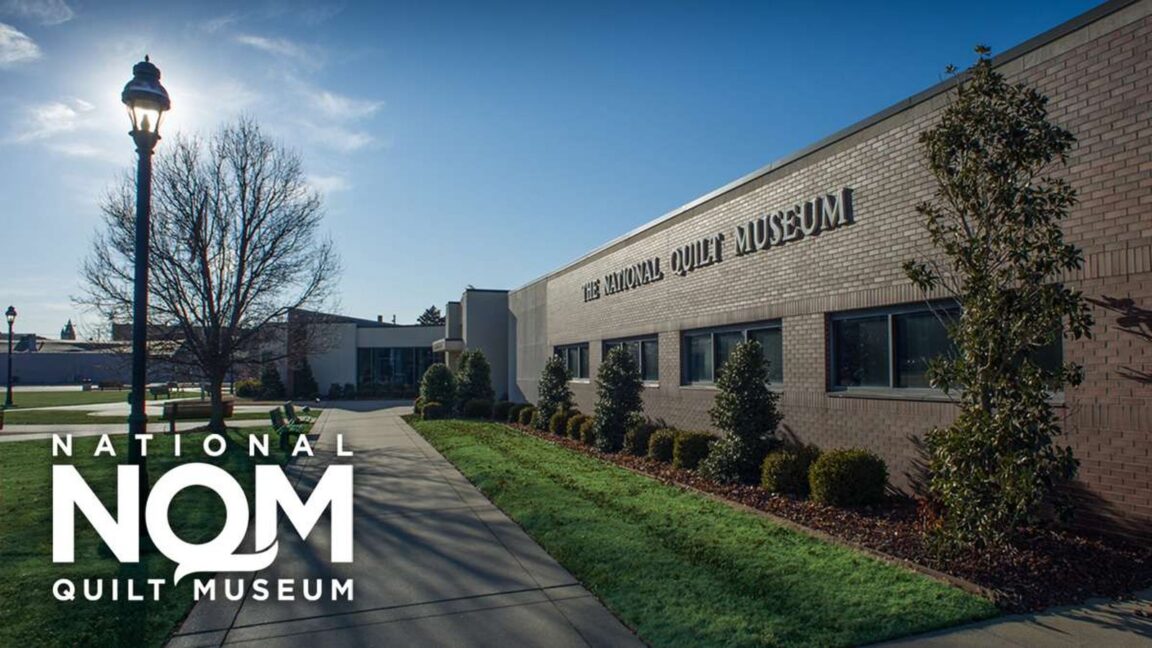
Featured image: the National Quilt Museum building on Jefferson Street in Paducah, Kentucky, its name lettered on the brick facade above the front walk. Photo: National Quilt Museum, via the museum’s official website quiltmuseum.org, used with credit. Native image 1200 px wide, upscaled to exactly 1600 px.