 Sofia Rossi
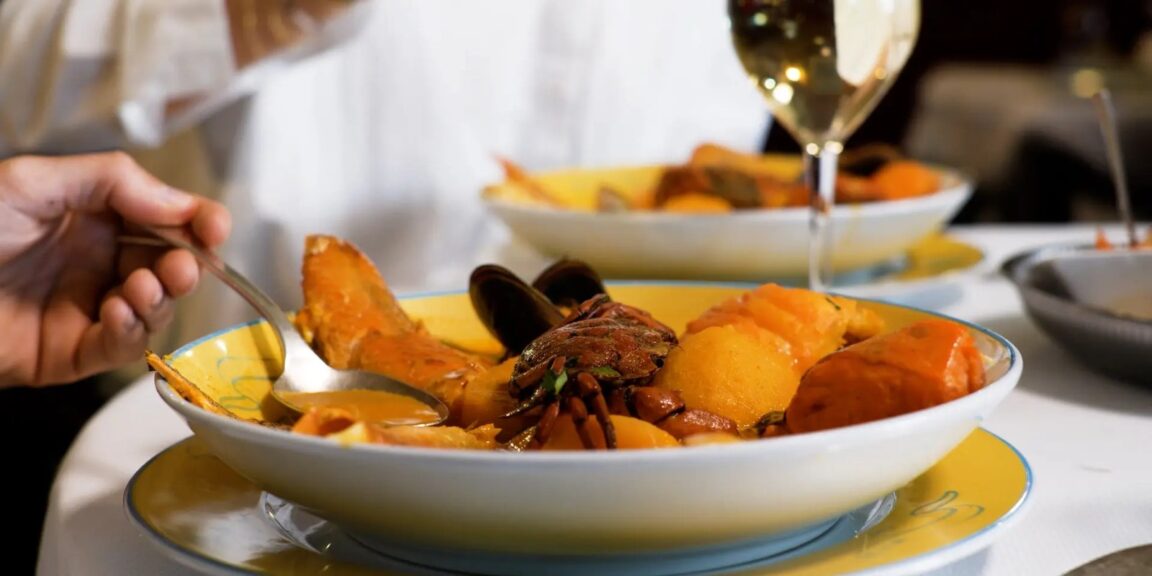
A real Marseille bouillabaisse is not a fish soup with a fancy name. Under the Bouillabaisse Charter drawn up in 1980, it must contain at least four fish from a fixed list of Mediterranean rock fish, rascasse must be among them in spirit if not always in the strict letter, the fish must be presented and cut up in front of the diners, and the broth and the fish must be served separately, broth first with rouille and croutons, fish second. If a Vieux Port menu offers you a single blended bowl, no fish list and a suspiciously low price, you are not looking at the charter dish, whatever the chalkboard says.
Quick Facts
- Dish: Bouillabaisse, Marseille’s saffron rock fish broth with the fish served separately
- The charter: The Charte de la Bouillabaisse Marseillaise, drawn up in 1980 by 11 Marseille restaurateurs to stop diluted imitations
- The fish rule: At least four kinds from the charter list, including rascasse (scorpionfish), conger eel, monkfish, John Dory, weever, gurnard and red scorpionfish
- The broth: Made from small rock fish, with olive oil, garlic, onion, fennel, tomato, potato and saffron
- The service: Two services, broth first over garlic croutons spread with rouille, then the fish, cut up at the table
- Where: Charter signatory restaurants around the Vieux Port and in the Calanques villages such as Les Goudes; expect a premium price and a minimum order for two in many houses
Why does bouillabaisse have a charter at all?
Most famous dishes survive on habit. Bouillabaisse needed paperwork because success created a counterfeit problem. The dish began as a fishermen’s boil, made on the shore from the bony rock fish that would not sell at market, cooked in seawater with whatever aromatics were at hand. As Marseille became a destination, restaurants across France and far beyond began selling any orange fish soup under the name, often made with frozen fish, no rock fish at all and none of the ritual that makes the original distinctive.
In 1980, 11 Marseille restaurateurs, the Vieux Port house Le Miramar among the names most often associated with the founding group, signed a charter that defined the dish in writing. The Marseille Tourist Office still publishes the charter recipe and its rules today, which is why travellers can check the standard against a primary local source rather than against restaurant marketing. The charter does three jobs at once. It fixes the ingredients, it fixes the method, and it fixes the service. A kitchen can season to its own taste, but it cannot call a shortcut version by the protected name and stay inside the agreement.
Which fish must a real bouillabaisse contain?
The charter list is a lesson in the local reef. At least four of the following must appear: rascasse, the red scorpionfish Scorpaena scrofa that lives among the rocks of the Calanques; white rascasse; chapon, another scorpionfish; baudroie, monkfish; fielas, conger eel; vive or araignee, weever; saint-pierre, John Dory; and galinette, gurnard. Sea cicada and spiny lobster appear in luxurious versions. The small, less noble rock fish that never reach the plate are not wasted. They are the broth, simmered down with the aromatics to make the liquid the whole dish stands on.
Rascasse is the non-negotiable flavour. It is an ugly, spiny, bony fish that yields little elegant flesh, and that is precisely the point. Its bones and head give the broth its deep, iodine rich body, the taste of the reef itself. A bouillabaisse built on sea bass, salmon or any convenient white fish may be a pleasant soup, but it has left Marseille behind. When you order, ask which fish are in today’s pot. A charter kitchen will answer with a list that changes with the morning catch. A vague answer about mixed seafood is the clearest warning sign the Vieux Port gives you.
Freshness is the charter’s second quiet rule. The fish should be local, whole and shown to the table before cooking in traditional service, so diners can see the catch is real and fresh. That presentation is theatre with a purpose. It proves the species, it proves the fish were not frozen fillets, and it sets up the second service, when the same fish return cooked and are portioned in front of you.
What is the two-service rule, exactly?
Bouillabaisse is served in two acts, and the order matters. First comes the broth, strained, saffron gold and steaming, ladled over thick slices of toasted bread rubbed with garlic. Onto each crouton goes rouille, the rust coloured sauce of olive oil, garlic, saffron and chilli, somewhere between a mayonnaise and a paste. Some diners float the rouille croutons on the broth, others eat them alongside. Both camps agree the broth is a course in itself, not a sauce waiting for fish.
Second comes the fish, brought on a platter with the potatoes that cooked in the broth, and cut up and served in front of the diners. That tableside cutting is written into the charter tradition, not left as a courtesy. It is the moment the kitchen proves the fish on the platter are the fish you were shown, portioned fairly between the table. Skipping it, or delivering pre-plated anonymous chunks, breaks the ritual even if the flavours survive.
For travellers used to one-bowl fish stews elsewhere in France, the separation can feel fussy. It is actually practical. Delicate and firm fish cook at different rates and fall apart if they sit in hot broth through a long meal. Serving the broth first keeps it scalding and clear, and serving the fish second keeps each species intact enough to taste on its own terms. Our guide to what to eat in Lyon shows the same French pattern in another city, a codified dish defended by the rooms that serve it properly.
How can you spot an imitation on the Vieux Port?
Price is the first signal, and locals state it bluntly. Real rock fish, bought whole that morning, cooked to order and served in two courses for a table, cannot be cheap. Charter houses price bouillabaisse per person, commonly require a minimum of two diners, and sit at the top of the Vieux Port price range. A bargain bouillabaisse advertised on a multilingual board with a photo menu is selling the name, not the dish. Check the day’s menu at the restaurant itself rather than trusting a listed price from a previous season, because fish prices move and honest houses move with them.
Postcode is the second signal. The densest cluster of charter cooking faces the Vieux Port quays, with respected outliers in the little fishing quarters toward Les Goudes and the Calanques. Location alone guarantees nothing, since the port also holds the city’s highest concentration of tourist traps, but a kitchen a long way inland claiming Marseille’s charter dish deserves an extra question or two about where its rock fish come from.
The third signal is language. Charter cooking talks about species, not seafood. Menus and waiters name rascasse, conger and John Dory, mention the morning market and explain the two services before you commit. Imitations talk about the chef’s special soup. Ask three questions before you order: which fish, how is it served, and is the fish cut at the table. The answers will sort the port faster than any review score.
What should you order around it?
Very little, and that is deliberate. A full bouillabaisse for two is a meal’s whole architecture, broth, fish, potatoes, bread and rouille arriving in waves. A light starter at most, a green salad if the table insists, and a local white wine are the traditional frame. Cassis, the small appellation just east of Marseille, is the classic pour, its dry whites built for exactly this kind of saffron and shellfish cooking. Dessert, if it happens at all, tends toward fruit and the city’s navettes, the orange blossom boat shaped biscuits named for the boats of the port.
Timing helps too. Bouillabaisse is lunch cooking in spirit, tied to the morning fish market on the Quai des Belges, where the day’s catch is sold at the water’s edge. Ordering it at a proper house takes time, both in the kitchen and at the table. Treat it as the day’s main event rather than a quick stop between sights, and book ahead in season, since the fish are bought for the covers the kitchen expects. Travellers heading west along the coast afterwards can compare another defended French table in our three days in Bordeaux, where the quays play the same role the Vieux Port plays here.
Frequently Asked Questions
What is the Bouillabaisse Charter in simple terms?
It is the agreement signed in 1980 by 11 Marseille restaurateurs defining a real bouillabaisse: at least four fish from a set list of Mediterranean rock fish, a saffron broth made from small rock fish, rouille and croutons, the fish served separately from the broth and cut up in front of the diners.
Which fish is essential in a bouillabaisse?
Rascasse, red scorpionfish, is the essential species. Its bones and head give the broth its characteristic depth. The charter list also includes conger eel, monkfish, John Dory, weever, gurnard and red scorpionfish, and a charter pot uses at least four kinds in total.
Why is bouillabaisse served in two courses?
The broth is served first, over garlic croutons with rouille, so it stays hot and clear. The fish are served second, on a platter with the broth cooked potatoes, and portioned at the table. The separation keeps each fish intact and is part of the charter service.
Why is bouillabaisse so expensive in Marseille?
Because the ingredients and labour are real. Whole fresh rock fish bought that morning, several species per pot, a broth made from additional fish, and a two course tableside service for a minimum of two diners all cost money. A cheap version has cut at least one of those corners.
Can one person order bouillabaisse alone?
Often not in charter houses, which commonly set a minimum of two people per order because the pot is built around whole fish in quantity. Solo travellers should ask when booking. Some houses will confirm a single portion on quieter days, but it is never guaranteed.
Image credit: A bouillabaisse served at the table, whole fish, crab, mussels and potatoes in saffron broth with a glass of white wine. Photo by Marseille Tourist Office (OTLCM), via marseille-tourisme.com, the city’s official tourism authority and publisher of the charter recipe, used with credit.