 Lucas Meyer
There is no self guided visit to Antelope Canyon, and understanding that single rule is the whole key to Page, Arizona. The canyon’s two famous sections, Upper and Lower, sit on Navajo Nation land and are a Navajo Tribal Park accessible by permit only, which in practice means one thing: you enter with an authorised Navajo tour operator, at a booked time, or you do not enter at all. Upper Antelope is the ground level walk through the section famous for its midday light beams, reached by vehicle from the operator’s base. Lower Antelope is the ladder section, a descent into a narrower, twisting slot that you climb through on stairs and ladders. Choose Upper for ease and the beams, Lower for adventure and sculpted walls at close range, book the midday slots first in beam season, and treat every other detail, from the time zone to the tripod rules, as fine print that decides the day.
Quick Facts
- Access: guided tours only. Antelope Canyon is on Navajo Nation land, is a sacred site and a Navajo Tribal Park, and can be accessed by permit only, per Antelope Canyon Navajo Tours, the Navajo operator at the Upper canyon.
- Upper Antelope: also called The Crack; in Navajo, Tse bighanilini, the place where water runs through rocks. Ground level, no climbing, famous for light beams in spring and summer.
- Lower Antelope: entered by stairs and climbed through on ladders, narrower and more physical, with tours of about an hour.
- A live price benchmark: Ken’s Tours, the official Navajo operator for Lower Antelope, lists its General Tour at $80.50 for 50 to 60 minutes in groups of up to 15, checked on the operator’s site today. Prices vary by operator and season; always confirm at booking.
- Base town: Page, Arizona, minutes from both canyon entrances, with the operators’ check in offices in or near town.
- The trap: the Navajo Nation observes daylight saving time while Arizona does not, so a tour time and a hotel clock can disagree by an hour in summer. Confirm which time your operator uses.
Upper versus Lower: which canyon fits which traveller?
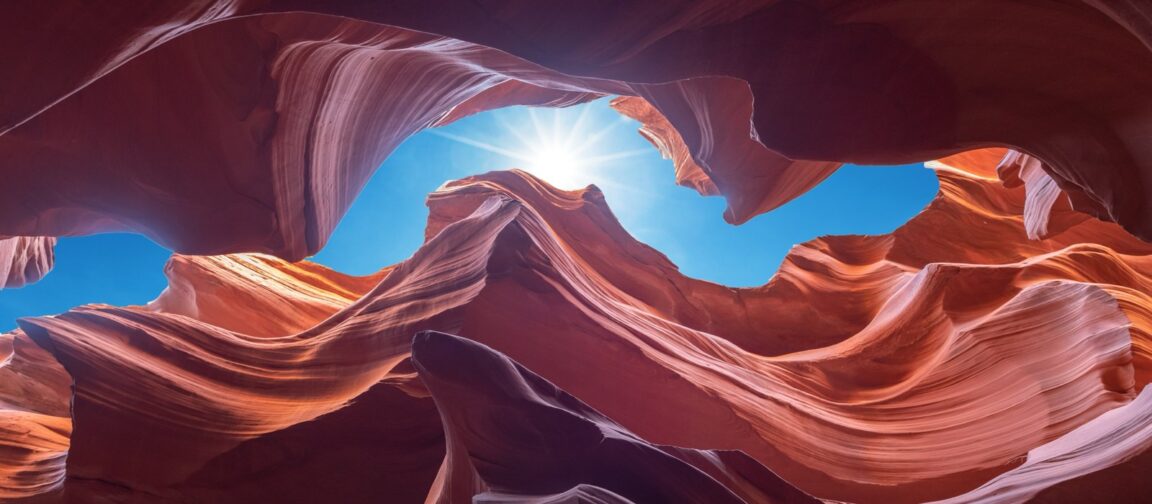
The two sections are separate products, sold by different authorised operators, and they feel different underfoot. Upper Antelope is a flat, sandy corridor about a quarter of a mile long at ground level: you ride from the check in point to the entrance in the operator’s vehicle, walk in one end and out the other, and walk back. There is no climbing, which is why operators recommend it for families and for visitors who need easy travel. Its fame is the light: in spring and summer, when the sun stands high, shafts of light fall through openings in the slot roof and land on the sand floor, and the walls run through a palette of orange, rose and violet as the light changes. Lower Antelope is a descent. You go down stairs at the entrance and move through a longer, narrower slot, climbing ladders between levels, ducking and turning as the walls swirl overhead. The light is softer and more even, the photography is about curves and texture rather than beams, and the crowds are usually thinner. Neither is better; they are different instruments. Travellers doing a wider Southwest loop can compare the planning style with our guide to day trips from Las Vegas to Valley of Fire and Red Rock Canyon, where timed entry logic plays a similar role.
The permit logic, stated plainly
Visitors sometimes arrive in Page expecting a trailhead and a fee booth. There is neither. The permit is your tour booking: the operators hold the authorisation to bring visitors into the tribal park, their guides are members of the Navajo Nation, and the check in, transport and guiding are one package. Antelope Canyon Navajo Tours, run by the Begay family from land at the Upper canyon, puts it plainly: the canyon is a sacred site of the Navajo people, entering is treated as a solemn event deserving of respect, and all of its guides are fully authorised members of the Navajo Nation. Practical consequences follow. Book ahead online, because walk up availability in season is the exception. Arrive at check in early, typically 30 to 45 minutes before departure, with the booking name matching your identification. And expect rules inside: no bags on some tours, no video on standard tours, and behaviour set by the guide, whose canyon this is.
The photo tour myth, cleared up
Older guidebooks describe dedicated photography tours at Upper Antelope, with tripods, hours of time and premium prices. That product has largely disappeared. Standard sightseeing tours today move at the group’s pace, guides help visitors with phone and camera settings and point out the named formations, and tripods are not permitted on regular tours. If photography is your purpose, the honest modern strategy is different: book Lower Antelope or a smaller group departure, travel in the shoulder season when groups are smaller, and work handheld at high ISO in the even light, where the walls themselves are the subject. Anyone selling you guaranteed empty canyon photography time on a standard ticket is selling a myth.
Light beams: the season and the hour
The famous beams need three things at once: a high sun, a clear sky and dust in the air, which is why they are a spring and summer phenomenon, roughly from late March into early October, and strongest around midday when the sun is directly overhead. Midday departures in that window sell out first, sometimes weeks ahead in peak season, and operators price them accordingly. Outside beam season the canyon does not close or disappoint; the colour deepens, the crowds thin and many photographers prefer the quieter, moodier light of autumn and winter. What no season guarantees is access in bad weather: slot canyons are carved by flash floods, and tours are cancelled when rain threatens anywhere in the drainage, sometimes on a morning that looks clear in Page. Build a spare half day into a Page stay if the canyon is the reason for the trip.
What does it cost, and what else should you budget?
Use the operator’s own listing as your benchmark and distrust round numbers quoted second hand. Ken’s Tours lists the Lower Antelope General Tour at $80.50, about an hour underground in groups of up to 15, with longer Deluxe and multi canyon options above it. Upper Antelope sightseeing tours from the authorised operators are priced in a similar premium band and rise for prime midday beam season departures. On top of the ticket, budget for the Navajo Nation Parks and Recreation permit fee, which operators either include or itemise, for parking at some check in points, and for the fact that Page hotel prices climb steeply in spring and autumn. The canyon is a premium priced hour, and it is also, for most visitors, the single most memorable hour of a Southwest trip; budget it as the headline, not the add on. Drivers stringing together scenic roads will find the same fuel and distance discipline in our Spearfish Canyon byway guide useful for the wider road trip.
Frequently asked questions
Can you visit Antelope Canyon without a tour?
No. Both Upper and Lower Antelope Canyon are on Navajo Nation land within a Navajo Tribal Park, access is by permit only, and the permit takes the form of a booking with an authorised Navajo tour operator. There is no trailhead, walk in entry or self guided option.
Which is better, Upper or Lower Antelope Canyon?
Upper is flat, easy and famous for midday light beams in spring and summer. Lower is narrower, involves stairs and ladders, and rewards visitors with swirling walls and usually smaller crowds. Choose Upper for accessibility and beams, Lower for adventure and texture.
When do the light beams appear?
Mainly from late spring through summer and into early autumn, around midday, when the sun is high enough to shine directly into the slot. Clear skies are required, and the midday departures in that season sell out first.
Are tripods and photo tours still available?
Not in the old form. Dedicated photography tours with tripods have largely been discontinued, and standard tours do not permit tripods. Guides on regular tours do help with settings and viewpoints, and smaller or off season departures give photographers the most working room.
What time zone is my tour in?
This is the classic Page trap. Arizona does not observe daylight saving time, but the Navajo Nation does, so in summer the canyon runs an hour ahead of Page hotel clocks. Your booking confirmation states the check in time standard; follow it exactly and arrive early.
What happens if it rains?
Tours are cancelled when flash flooding threatens, even if the rain is falling miles away in the drainage rather than over Page. Operators typically offer rebooking or refunds under their own policies. A spare half day in Page is cheap insurance.
How should you choose an operator and a time slot?
Start from the canyon, not the brand. Decide Upper or Lower first, then compare the authorised operators for that section on three points: group size, departure time and what the ticket includes. Smaller groups move more slowly and give everyone more time at the named formations, which matters more than small price differences. For Upper in beam season, the late morning to early afternoon departures are the prize and should be booked as soon as your Page dates are fixed; for Lower, earlier departures often mean cooler temperatures on the ladders and softer, more even light on the walls. Check whether the Navajo Nation Parks and Recreation permit fee is included in the quoted price or added at checkout, confirm the check in location, since some operators meet in Page and others at the canyon, and read the cancellation terms before paying, because weather cancellations are a normal feature of slot canyon travel. Finally, screenshot your confirmation and the stated check in time standard. In Page, the traveller with the screenshot is never the one arguing at the desk.