 Aiko Tanaka
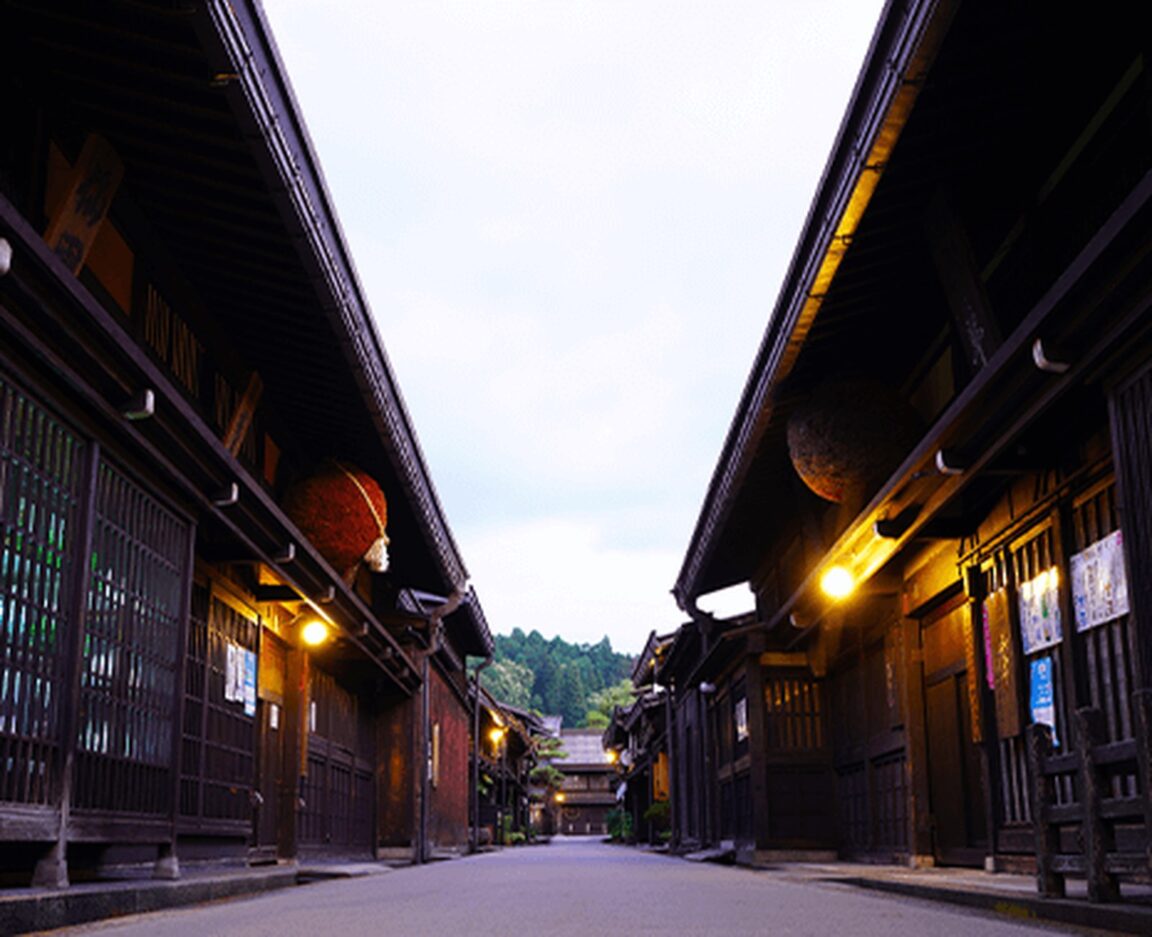
Takayama rewards travellers who set an alarm. This mountain town in the Hida region of Gifu Prefecture kept the merchant core that most Japanese cities lost: three streets of dark timber townhouses in the Sanmachi Suji preservation district, sake breweries marked by hanging balls of cedar leaves, and two morning markets that have run for centuries and still close at noon. The sequence that makes the town work is simple and non negotiable: be at the Miyagawa riverside market as the stalls open, cross to the smaller Jinya-mae market and the old government house, then walk the sake streets of Sanmachi as the breweries lift their shutters. Everything in Takayama is inside a fifteen minute walk of everything else, so the only real planning is order and timing.
Quick Facts
- Where: Takayama, Gifu Prefecture, in the Japanese Alps; the old town is about a 12 minute walk from JR Takayama Station, per the city’s tourism office.
- The markets: two morning markets daily, opening at 7:00 am from April to November and 8:00 am from December to March, both closing at noon.
- Miyagawa market: about 60 stalls and shops along roughly 350 metres of the Miyagawa River, between the Kajibashi and Yayoibashi bridges.
- Jinya-mae market: the smaller, older market in front of Takayama Jinya, dating back more than 300 years, where the sellers are local farmers.
- Takayama Jinya: the only surviving Edo period government house of its kind in Japan; entry is 500 yen for adults, with those aged 18 and under free, per the current fee schedule.
- The sake streets: Sanmachi Suji, three preserved merchant streets where seven sake breweries stand within a few hundred metres, marked by sugidama cedar balls.
- The festivals: the Takayama Festival runs in spring (April 14 to 15) and autumn (October 9 to 10), with ornate floats displayed year round in the Festival Floats Exhibition Hall.
The Miyagawa Morning Market: start at the river
The bigger of the two markets lines the east bank of the Miyagawa River, and arriving at opening is a different experience from arriving at ten. In the first hour the shoppers are local, the stallholders are still arranging pyramids of apples, pickles, mountain vegetables and spices, and the coffee and snack stands fire up for the early crowd. The stalls on the river side sell farm produce and food, while the shops across the lane sell crafts, including sarubobo, the faceless red dolls that are Hida’s good luck charm, and ichii itto bori wood carvings worked from single pieces of yew. Graze as you go: grilled skewers, warm puddings and Hida beef sushi appear as the morning builds. Stall counts shrink in rain and deep winter, sometimes to a fraction of the full sixty, which is another reason to go early and take the market as it comes.
Jinya-mae and Takayama Jinya: the government’s market and house
Five minutes west, the square in front of Takayama Jinya fills with the second market, the older of the two by most accounts, with roots more than 300 years back to farmers selling under the eyes of the authorities. Only farmers may sell here, which keeps its character distinct: smaller, more agricultural, heavy on pickles, fruit and home made preserves. Behind it stands the Jinya itself, the local governor’s office and residence from the years when the Tokugawa shogunate ruled the Hida region directly, in official use from 1692 to 1969 and now the only surviving building of its type in the country. The visit repays an hour: tatami offices, the rice storehouses that held tax paid in grain, and the formal garden. It opens at 8:45 am, so the natural rhythm is market first, house second. Travellers combining Takayama with Kyoto should read our profile of Hiiragiya Ryokan, the six generation Kyoto inn, for the same Edo merchant world at its most refined.
Sanmachi Suji: reading the sake streets
By mid morning, turn east again into Sanmachi Suji, the preservation district of three parallel streets, Kamiichinomachi, Kamininomachi and Kamisannomachi, that formed Takayama’s commercial centre in the Edo period. The architecture is the message: continuous dark wooden lattice fronts, low eaves built for snow country, and narrow water channels running under the eaves along the street. Merchant wealth here came from timber, carpentry and brewing, and the breweries are the streets’ living monuments. Seven sake breweries stand in the old town, some founded in the Edo period, each announcing itself with a sugidama, a great ball of cedar leaves hung over the door; a green ball means the new sake has arrived, and it browns as the sake matures. Several breweries offer tastings at the counter, and the cold, clear mountain water that made Hida sake is the same water in the channels at your feet. Shops generally open around 9:00 am and many close one weekday, often Tuesday or Wednesday, so a Monday to Friday visit should expect a shutter or two.
The merchant houses: Kusakabe and Yoshijima
Two great merchant houses in the neighbouring preservation streets show what the money built. The Kusakabe Folk Museum, an 1879 merchant’s house rebuilt after a fire with deep, snow shedding eaves and a vast earthen floored hall, displays Hida folk crafts inside a merchant’s architecture. Next door, the Yoshijima Heritage House, a former sake brewery residence from 1908, is famous among architects for the light falling through its high window onto the great beams. Both are designated Important Cultural Properties. Together they take an unhurried hour and explain Sanmachi better than any plaque: this was a working town that got rich and built beautifully, then was lucky and stubborn enough to keep it.
The festival floats: why this town is rich
Takayama’s wealth has a parade. Twice a year, in spring for the Sanno Festival and in autumn for the Hachiman Festival, districts of the town haul out enormous festival floats, yatai, lacquered, gilded and topped with mechanical puppets, in a celebration counted among Japan’s most beautiful. The floats explain the merchant economy in a single object: each neighbourhood poured its fortune into out building the next street. Outside festival days, four of the autumn floats stand in the Festival Floats Exhibition Hall at the Sakurayama Hachimangu shrine, at the north end of the old town, with admission around 1,000 yen; check the hall’s current hours and price on the day. If your dates touch April 14 to 15 or October 9 to 10, book rooms far ahead and reverse the day’s logic: floats first, everything else around them.
How should you plan the Takayama morning?
Sleep in town, not on a day trip, if you possibly can; the markets belong to overnight guests. Set out by 7:00 am in the long season, walk the Miyagawa stalls as they open, cross to Jinya-mae and enter the Jinya at 8:45 am, then give Sanmachi and the breweries the rest of the morning, with the merchant houses and the floats hall after lunch when day visitors crowd the lanes. Getting here is part of the pleasure: the JR Hida limited express from Nagoya climbs a river gorge into the Alps, and buses connect onward to Shirakawa-go. For the costs attached to a Japan trip’s city stays, see our explainer on Kyoto’s accommodation tax rise and its new per night tiers, which shows how the small charges add up across a multi stop itinerary.
What should you eat while you walk?
Takayama’s old town is built for grazing, and three tastes define it. Hida beef, the local wagyu raised in the mountains of Gifu, appears as nigiri sushi on a rice cracker at street stalls, as skewers, and in its full form as steak or shabu shabu in the town’s restaurants; the street versions are the morning market’s natural sequel. Mitarashi dango, skewered rice dumplings grilled and glazed with soy rather than the sweet sauce used elsewhere in Japan, are the older, humbler snack and the one locals queue for. Finally, the sake itself: buy the small cup at a brewery counter, taste two or three houses across the morning rather than six, and let the sugidama over the door tell you which brewery is pouring its newest batch. Eat and drink in that order, beef, dango, sake, and the Edo streets will have fed you the way they fed travellers on the old roads into the Alps.