 Camille Baptiste
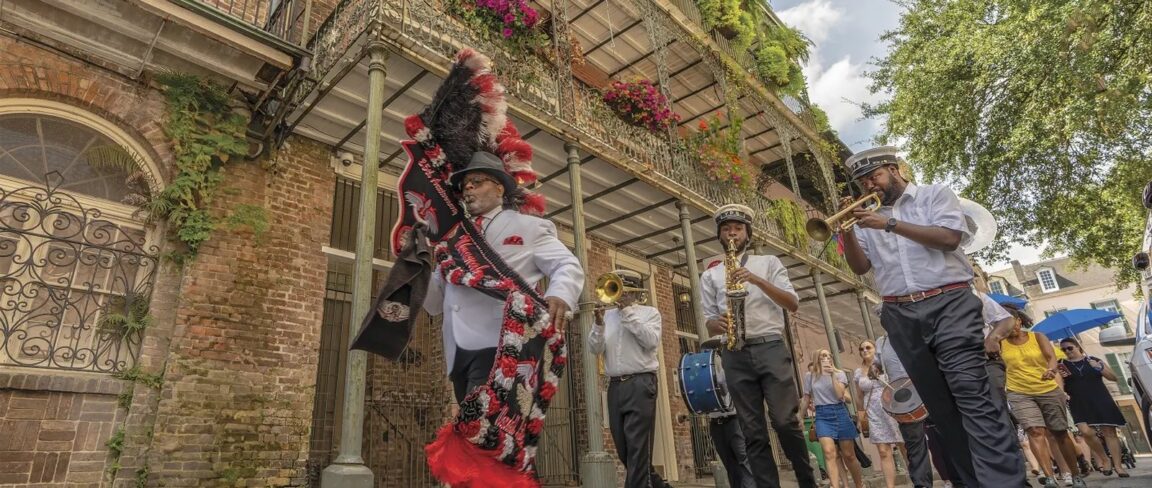
A second line is a parade with the audience inside it. The first line is the host Social Aid and Pleasure Club, in new suits made for the day, and the brass band it has hired; the second line is everybody else, the neighbours, friends and visitors who fall in behind the band and dance the route through the club’s own neighbourhood. There is no ticket, no barrier and no grandstand. The parades roll on Sunday afternoons through a season that runs from late August into June, each club parading once a year on its own announced route, and the way a visitor joins respectfully is simple: find the route in advance, arrive before step off, follow behind the band rather than beside the club, and keep moving when the parade moves.
Quick Facts
- What it is: A Sunday street parade hosted by a Social Aid and Pleasure Club, with a brass band as the first line and the dancing crowd behind it as the second line.
- The season: Most Sundays from late August through June, with gaps including the Jazz Fest weekends; summer heat thins the calendar.
- Timing: Parades typically step off around noon or 1pm and roll for about four hours, covering several miles with scheduled stops at bars and club landmarks.
- Where routes are published: WWOZ 90.7 FM’s Takin’ It to the Streets programme publishes the season schedule and the route sheet for each parade in the days before it rolls; the route sheet is the document to trust.
- Cost: Nothing. Second lines are free, public and unticketed; bring cash for the vendors and bars along the route.
- The clubs: Social Aid and Pleasure Clubs grew from nineteenth century benevolent societies that provided financial support, burials and social functions for their members, and each club still parades its own neighbourhood once a year.
Where does the second line tradition come from?
The clubs came first. In the late 1800s, Black benevolent societies in New Orleans organised to do what no insurer or institution would do for their members: pay for funerals, support families in sickness and bury their dead with dignity and music. The jazz funeral grew from that duty, sombre on the way to the cemetery and joyful on the way back, and the anniversary parades grew alongside it. The modern Social Aid and Pleasure Club still does the mutual aid work, still buries its members, and once a year puts on new suits, hires a band and parades the streets it comes from. That is why a second line is not a performance laid on for tourists. It is a neighbourhood institution taking its annual walk, and visitors are welcomed into the second line precisely because joining the crowd behind the band is the tradition’s own design.
The route is the meaning. A club’s route sheet reads like a map of its life: it starts at a clubhouse, a lounge or a recreation centre, and it stops at the bars, corners and homes that matter to its members, with named stops honouring other clubs and memorial dirges played for members who have died. The Sudan club’s route this season, for example, started at the Treme Recreation Community Center at 900 North Villere Street at noon, stopped for the Dumaine Street Gang and the Black Men of Labor, and played dirges for named members along the way before disbanding at Hunter’s Field. Read the route sheet before you go and the parade stops being a spectacle and becomes a story you are walking inside.
How do you find this Sunday’s parade?
Start with WWOZ. The community radio station’s Takin’ It to the Streets programme is the definitive public record of the culture: it publishes the full season schedule each year, interviews club members ahead of their parades, and posts each parade’s route sheet in the days before it rolls. Check the schedule early in your trip to confirm a parade is on, then check the route sheet again on Saturday or Sunday morning, because routes and times can shift and the route sheet is the last word. This Sunday, 22 November 2026, the Nine Times second line was listed rolling from 3301 Higgins Boulevard from noon to 4pm, which is the standard shape of the day: a midday step off and an afternoon of walking.
Build the Sunday around it rather than squeezing it in. Parades cover three to five miles at dancing pace with stops, in neighbourhoods such as Treme, Central City, the Seventh Ward and Uptown, well beyond the French Quarter’s tourist grid. The food culture you pass is part of the same city fabric explored in New Orleans East’s Vietnamese food scene, another New Orleans tradition that rewards visitors who leave the Quarter. Arrive at the start point twenty to thirty minutes early, position yourself near the start rather than trying to intercept mid route, and let the parade collect you.
How do you follow without intruding?
The etiquette is physical before it is anything else. The first line belongs to the club and the band: do not walk in front of the band, do not cut through the club’s ranks for photographs, and do not step into the space the club’s dancers and standard bearers are working in. Your place is behind the band, in the second line, where dancing is not merely allowed but expected. Keep pace, keep moving at the stops only when the parade moves, and give the club’s members, its royalty and its elders the right of way at every halt. Photograph from within the crowd rather than by stopping the procession, and ask before close portraits of people in their suits; those suits represent a serious annual expense carried by the members themselves.
Two situations call for a gear change. The first is a funeral. A jazz funeral’s outward leg is a burial, sombre and slow, and the celebration begins only after the interment; if the parade you have found is a funeral rather than a club anniversary, match its register and do not dance the dirge. The second is the memorial stops inside ordinary parades, where the band plays a dirge for a named member and the crowd quiets. Follow the crowd’s lead in both cases and you will not go wrong. Practical comfort matters too: shoes you can walk and dance miles in, water carried with you, sun protection, and cash in small bills for the rolling vendors and the bars at the stops. The brass band thread that runs through all of this is the same living music culture traced in Floyd, Virginia’s bluegrass town tradition, where the music also belongs to the community first and the visitor second.
What should you do at the stops?
Stops are the parade’s punctuation, usually at a bar or a club landmark, and they last long enough for drinks, food from vendors and a rest in the shade. Use them as the neighbourhood uses them: buy something, stay close enough to hear the band restart, and be ready to move when the music does, because the parade does not wait for stragglers. If you lose the parade at a stop, do not chase it by car or cut across blocks to its front; walk the published route to the next stop, or accept the disband point as your rejoining place.
Frequently Asked Questions
When is second line season in New Orleans?
The club parade season runs most Sundays from late August through June, stepping off around noon or 1pm and rolling for roughly four hours. It pauses on some Sundays, including the Jazz Fest weekends, and thins out in the summer heat. WWOZ’s Takin’ It to the Streets schedule is the authoritative calendar.
How do I find the route for a specific Sunday?
WWOZ publishes each parade’s route sheet in the days before it rolls, with the start point, the stops and the disband point. Check it again on the morning of the parade, because the route sheet is the final version and routes can change.
Can visitors really join in, or should we watch from the sidewalk?
Joining is the point. The second line is by definition the crowd that follows the band, and visitors are welcome in it. Stay behind the band and the club, keep moving, dance as much as the music asks, and leave the first line’s space to the club.
What should I wear and bring?
Shoes built for several miles of walking and dancing, light clothes for the season, water, sun protection and small bills in cash for vendors and bars along the route. Leave anything you cannot carry for four hours; there is no bag check at a street parade.
Is a second line the same as a jazz funeral?
They share roots and bands, but they are different events. A club’s annual second line is a celebration from step off. A jazz funeral is a burial first, sombre on the way out and joyful only on the way back, and it calls for a visitor’s quiet respect until the music turns.
Sources: Sudan Social and Pleasure Club 2026 route sheet, via secondlines.com; Second Line Parade Season, with WWOZ Takin’ It to the Streets schedule information. Checked 22 November 2026.