 Maya Chen
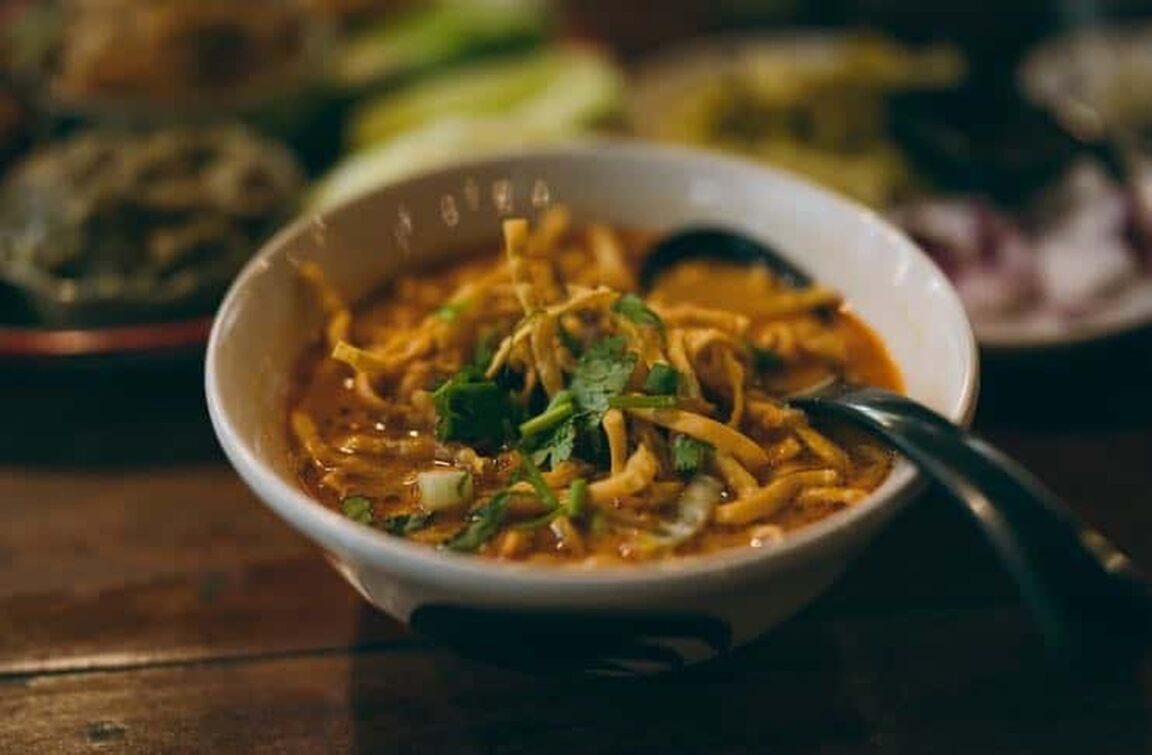
A proper bowl of khao soi in Chiang Mai has two kinds of noodle in one bowl, soft boiled egg noodles under the curry and a crisp fried nest of the same noodles on top, and it comes with a side plate you are expected to use: pickled mustard greens, sliced shallots, a lime wedge and roasted chilli paste. The respected shops are morning businesses. Arrive late and the pot may simply be finished, which is why khao soi is best planned as a breakfast discipline rather than a casual lunch.
Quick Facts
- Dish: Khao soi, egg noodles in a coconut curry broth, usually with a chicken drumstick or beef
- The two texture rule: Soft boiled noodles below, deep fried crisp noodles above, in every authentic bowl
- The side plate: Pickled mustard greens, raw shallots, lime and roasted chilli paste, all functional, none decorative
- Origins: Brought to the Lanna north by Chin Haw, Yunnanese Muslim caravan traders, with Burmese and Indian influences
- Timing: Famous shops such as Khao Soi Khun Yai run short hours, around 10am to 2pm, and close on Sundays
- Heat level: Warm and spiced rather than fiery. You adjust the fire yourself with the chilli paste
Why does khao soi have two textures of noodle?
The double noodle construction is the dish in miniature. Flat egg noodles are boiled soft and laid in the bowl, the curry is ladled over them, and then a tangle of the same noodles, deep fried until crisp, is set on top. The crisp nest is not garnish. It slowly softens at the edges where it meets the broth while staying crunchy at the centre, so the bowl changes texture as you eat. A bowl served with only soft noodles, or with a token sprinkle of fried strands, has skipped the step that makes khao soi khao soi.
The name itself points back to hand production. Khao soi is linked to the cutting of noodle dough into strips, soi meaning cut, from the era when cooks rolled sheets of wheat and egg dough and sliced them by knife. That handmade heritage is also why the noodles are flat and slightly uneven in good shops, rather than the round, machine uniform strands of a Bangkok noodle soup.
Where did this dish actually come from?
Khao soi is a border dish, and its flavour only makes sense on a map. Chiang Mai was the capital of the Lanna kingdom, oriented for centuries toward Burma, Yunnan and Laos as much as toward Bangkok. The strongest influence is credited to the Chin Haw, Yunnanese Chinese Muslim traders who ran caravan routes into the north and settled in Chiang Mai in the late 19th and early 20th centuries, founding the Chang Phuak mosque in 1877. Through Burma the dish absorbed the coconut noodle soup tradition seen in ohn no khao swe, and in Lanna kitchens it settled into its present form.
That history explains the curry itself. Northern Thai food generally uses very little coconut milk, which makes khao soi the great exception, a Muslim style curry built on dried spices such as turmeric, coriander seed and black cardamom, fried as a paste and loosened with coconut milk. It tastes closer to a gentle Burmese or Indian curry than to a central Thai green curry, and that difference is the first thing to appreciate when the bowl lands.
For the rest of the city around the bowl, our three days in Chiang Mai itinerary sequences the old city temples and night bazaars, and our Bangkok noodle guide makes a useful contrast in how different the capital noodle culture is.
How are you meant to use the side plate?
The small plate beside the bowl is a toolkit, and using all of it is the local method. Pickled mustard greens are the most important item: their sour, fermented bite cuts straight through the coconut richness, and a bowl without them tastes flat by the halfway point. Sliced raw shallots add a sharp, clean crunch. A squeeze of lime lifts the whole curry. Roasted chilli paste, added a little at a time, is how you set your own heat, because the base curry is deliberately moderate.
The practical order that works: taste the broth plain first, so you know the kitchen seasoning, then add lime and a spoonful of pickled greens, stir, and only then work chilli in gradually. Break the crisp noodles down into the broth in stages rather than crushing the whole nest at once, so some crunch survives to the last spoonful. None of this is etiquette theatre. Each element corrects a specific heaviness in a coconut curry, and the dish was designed around the corrections.
Why do the good shops sell out by lunch?
Khao soi is a batch dish with a short natural life. The curry is made in the morning, the noodles are portioned for the day, and a small shop has no interest in holding either into the evening. Long running names illustrate the pattern: Khao Soi Khun Yai, in an alley near Wat Khuan Khama on the north side of the old city, is listed with hours of 10am to 2pm, Monday to Saturday, closed Sundays, and queues form well inside that window. Khao Soi Lam Duan Fah Ham, east of the Ping River on Charoen Rat Road, is the other name locals repeat, known for a deeper, more coconut forward broth. The historic cluster around the Ban Haw Mosque in the Chang Khlan area is the Chin Haw heartland of the dish.
So the morning only reputation in the board brief is really a sell out logic. A shop that opens at ten and closes when the pot is empty will often be done by early afternoon, and on busy days the beef or chicken option you wanted goes first. Plan khao soi as the anchor of a morning: temple visits early, the bowl before noon, and the rest of the day built after it. Travellers who treat it as a fallback dinner are the ones who conclude, wrongly, that the dish is hard to find.
Prices at local shops have historically sat in the range of a few dozen baht a bowl, far below tourist restaurant pricing, but menus change and this guide does not print a figure it cannot verify on the day. What you can rely on is the value structure: this is everyday food priced for the neighbourhood, and a high price tag in Chiang Mai usually buys air conditioning rather than a better bowl.
How do you spot a weak bowl?
Three faults show up repeatedly. A broth that tastes of raw curry powder means the paste was not fried properly in coconut cream until the oil separated. A broth that is sweet before it is savoury has been sugared toward tourist taste. And a missing or token side plate means the shop has simplified the dish into curry noodles, which is a different and lesser thing. The protein tells a story too: chicken khao soi traditionally arrives as a whole drumstick braised tender in the curry, not diced breast meat dropped in at the end.
Frequently Asked Questions
Is khao soi very spicy?
The base curry is warmly spiced and moderate. Heat is adjusted at the table with roasted chilli paste, so you control the final level. If you add nothing, most visitors find it mild to medium.
What is the difference between khao soi gai and khao soi neua?
Gai is chicken, traditionally a braised drumstick, and neua is beef, usually slow cooked chunks in a slightly deeper broth. Both use the same coconut curry base, egg noodles and side plate.
Why is khao soi served with pickled mustard greens?
The sour pickles cut the richness of the coconut curry and reset your palate between spoonfuls. They are a functional part of the dish, not an optional garnish, and a proper serving always includes them.
What time should I go for the best bowl?
Go in the morning or at the start of a shop short lunch window. Famous shops open around 10am, sell out of popular options by early afternoon and may close entirely on Sundays.
Is khao soi the same as laksa?
No. Both are coconut noodle soups, but khao soi uses flat egg noodles, a dried spice curry paste with turmeric and black cardamom, a crisp fried noodle topping and the pickled greens side plate. The flavour profile and construction are distinct.
Image credit: A bowl of khao soi topped with crisp fried noodles, with condiment dishes behind it. Photo by Kittitep Khotchalee, via Unsplash (hosted copy via New York Street Food), Unsplash License, used with credit.