 Maya Chen
Three days in Chiang Mai divide cleanly: one day inside the moated Old City for its temples, one day for the mountain temple of Doi Suthep and the city night markets, and one day for the elephant question, which deserves a day and a decision framework rather than a booking made at a hotel desk. Chiang Mai, the former capital of the Lanna kingdom in northern Thailand, holds more than 300 temples, and its Old City contains over 30 of them within about a square mile of lanes. This itinerary walks the temples in a sensible order, eats where the city eats at night, and then sets out exactly how to choose an elephant day that is genuinely ethical, which means no riding, no performances, and elephants free to decline contact.
Quick Facts
- Old City shape: A moated, roughly square historic core, about 1.5 kilometres a side, walkable end to end
- Key temples: Wat Chiang Man (oldest, founded 1296), Wat Chedi Luang, Wat Phra Singh, plus Wat Phra That Doi Suthep on the mountain above the city
- Temple entry: Most Old City temples are free or charge a small fee; Wat Phra Singh is listed at 40 baht (checked 14 November 2026)
- Entry document: Thailand Digital Arrival Card (TDAC) must be filed online before arrival; see the internal guide linked below
- Night markets: The Night Bazaar on Chang Klan Road runs nightly; the Saturday and Sunday Walking Streets are the bigger weekly markets
- Ethical elephant rule: No riding, no shows, no bathing line ups run for cameras; look for observation based, sanctuary led days, detailed below
- Best season: The cool season, November to February; air quality can drop badly in the burning season, roughly February to April
Day 1: the Old City temple walk
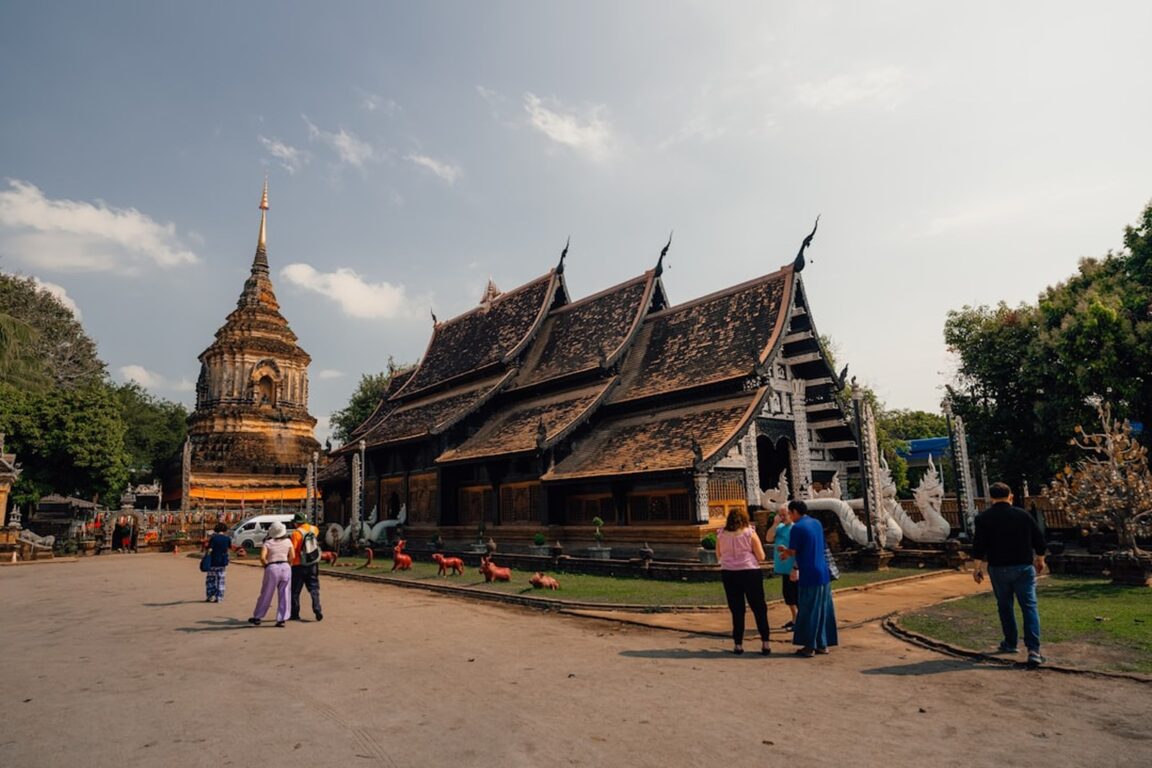
Start early, near 7am if you can, when the Old City belongs to monks on their morning rounds and the temples are empty of tour groups. Begin at Wat Chiang Man, in the quiet northeast of the Old City, the oldest temple in Chiang Mai, founded by King Mangrai in 1296 when the city itself was established. Its chedi is buttressed by a ring of elephant sculptures, unique in Thailand, and the grounds hold two revered Buddha images, one crystal and one marble. It is the right overture: small, shaded and historically first.
Walk southwest to Wat Chedi Luang, in the center of the Old City. Its great ruined chedi, built up through the 14th and 15th centuries and partly collapsed by an earthquake in 1545, once held the Emerald Buddha, now in Bangkok. Even reduced, it dominates its grounds, and the temple runs a monk chat program where visitors can talk with young monks practicing English, one of the most worthwhile hours in the city. Entry here is free, and the grounds reward an unhurried circuit.
Finish the core three at Wat Phra Singh, on the western side, the most revered temple in Chiang Mai. The Lai Kham chapel at the rear holds the Phra Singh Buddha image and some of the finest surviving Lanna murals in Thailand, 19th century paintings of daily life and Buddhist stories. Entry is listed at 40 baht. Around these three, the Old City lanes offer a dozen smaller temples to absorb at walking pace, among them Wat Lok Moli just north of the moat, with its fine teak viharn, and Wat Suan Dok to the west, where white royal chedis stand in a field below the mountain. Dress for temples all day: cover shoulders and knees, remove shoes before entering buildings, and never point your feet at a Buddha image.
Day 1 evening and Day 2 morning: markets and the mountain
Chiang Mai eats and shops at night. The Night Bazaar on Chang Klan Road, east of the Old City, runs every evening with stalls, food courts and the Anusarn Market eating area. On weekends the city upgrades: the Saturday Walking Street on Wua Lai Road, by the silver temple Wat Sri Suphan, and the Sunday Walking Street, which closes Ratchadamnoen Road through the Old City from Tha Phae Gate, are the bigger, more local markets, stronger on crafts, street food and music. Time the three days to include a Sunday if you can. Eat khao soi, the curried noodle soup that is the city signature dish, at least twice, from different stalls, and graze rather than sitting for one large meal.
Give the second morning to Wat Phra That Doi Suthep, the golden temple on the mountain west of the city, reached by a winding road and then a climb of 306 naga flanked steps, with a funicular option beside them. This is northern Thailand most sacred temple, founded in 1383, and from its terrace the whole city spreads below. Go early for clear views and smaller crowds, and pair the descent with Wat Pha Lat, the forested temple hidden on the same road, all streams, statues and quiet, which most visitors drive straight past. Readers arriving from the capital will find our first time in Bangkok itinerary the natural companion piece, and anyone filing entry paperwork should read our explainer on Thailand Digital Arrival Card before flying.
Day 2 afternoon: the honest middle of the trip
Keep the second afternoon deliberately lighter. Options that hold up: a Thai cooking class built around a market visit, the lanes and cafes of Nimmanhaemin west of the Old City, or a traditional massage after two days of walking. This pacing is not filler. Day 3, the elephant day, starts early and runs long, and travelers who stack every hour of day 2 tend to sleepwalk through the day that matters most to get right.
Day 3: the ethical elephant call, a framework not a sales pitch
Chiang Mai is the center of Thailand elephant tourism, and the marketing language is unreliable: camps that offer riding routinely describe themselves with words like sanctuary and ethical. The distinction is behavioral, not verbal. Elephants are trained to accept riders and perform through control methods no visitor sees, which is why genuine welfare organizations draw the line at the activities themselves, not at how gently they are presented. Use this checklist, in order, before booking anything.
- No riding, in any form: No bareback, no seat, no short ride, no photo on an elephant. Any venue offering riding has answered the question already.
- No performances: No shows, painting, football, tricks or scheduled bathing spectacles where elephants perform a routine for an audience.
- Elephants choose contact: In an ethical day, visitors observe, walk alongside at a distance the elephants set, and help prepare food; the elephants can walk away. Bathing, if it happens at all, is the elephants entering water on their own terms, not a line up scrubbed for cameras.
- Hooks and chains are a warning: Visible bullhooks in use and elephants chained at rest are signs the welfare model is control based, whatever the brochure says.
- Numbers and space: Ask how many elephants, how much land, and what the visitor to elephant ratio is. Small groups on real acreage cost more, and that price difference is the welfare budget made visible.
- Ask what your money funds: A credible sanctuary explains its rescue history, veterinary care, mahout employment terms and land costs plainly, and its reviews describe watching elephants, not riding them.
The established observation based sanctuaries in the Chiang Mai region, of which Elephant Nature Park is the best known example, run days built on watching herds behave as herds: feeding at a platform, walking the grounds, river time the elephants enter freely. Book directly, book ahead in the cool season, and expect to pay meaningfully more than a riding camp charges. That gap is not a markup; it is the difference between elephants as an attraction and elephants as residents. If budget forces a choice, a half day at a genuine sanctuary is worth more, in every sense, than a full day at a camp that rides.
Where to stay and how to move
Stay inside or just outside the Old City moat for temple days on foot; the east side near Tha Phae Gate suits market nights, while the quieter northern lanes suit early risers. Songthaews, the red shared trucks, handle Doi Suthep and cross town trips cheaply, and ride hailing apps cover the rest. Renting a bicycle suits the flat Old City grid. What not to do is rent a car for this itinerary: every day here is either walkable, a single mountain road, or a sanctuary transfer that operators include.
Frequently Asked Questions
How many temples should I actually visit?
Three majors in the Old City, Wat Chiang Man, Wat Chedi Luang and Wat Phra Singh, plus Doi Suthep on the mountain, and then whichever smaller temples catch your eye at walking pace. Chiang Mai has over 300 temples; depth beats count, and temple fatigue is real by the sixth viharn.
How do I know an elephant sanctuary is really ethical?
Apply the activity test, not the name test: no riding, no shows, no forced bathing, elephants free to walk away, small groups, and plain answers about rescue, land and veterinary care. Venues that call themselves ethical while selling rides are the ones to avoid.
Which night market is best?
The Sunday Walking Street is the city best market, local, craft heavy and food rich, followed by the Saturday Walking Street near the silver temple. The Night Bazaar runs nightly and is the fallback on weekdays, more commercial but always available.
What should I wear to temples?
Cover shoulders and knees, carry a light scarf or sarong as backup, and wear shoes that slip off easily, since footwear comes off at every temple building. Some temples lend wraps, but do not rely on it.
When should I avoid Chiang Mai?
The burning season, roughly February to April, can bring seriously poor air quality from agricultural burning across the region. The cool season from November to February is the reliable window for clear mountain views and comfortable walking.
Is one day enough for elephants and Doi Suthep together?
No. Doi Suthep fits a morning; a sanctuary day is a full day with early pickup. Combining them means cutting the sanctuary short, which usually means choosing a nearer, weaker camp. Give the elephants their own day, as this itinerary does.
Temple entry notes checked 14 November 2026. Elephant welfare criteria reflect the published guidance of international animal welfare organizations; verify any venue current activities directly before booking, as offerings change.