 Omar Haddad
Two days in Doha hinge on one piece of planning: the two great museums close on different days. The Museum of Islamic Art closes on Wednesdays and the National Museum of Qatar closes on Tuesdays, so a two day stay almost always has one full museum day and one day built around the souq, the Corniche and the modern skyline. This itinerary puts Souq Waqif at the center, sequences the museums around their closing days, and uses the evenings, when Doha genuinely comes alive, for the West Bay skyline and the newer districts of The Pearl and Lusail. Done in this order, two days feel complete rather than compressed.
Quick Facts
- Anchor: Souq Waqif, the restored historic market in central Doha, free to enter, beside its own Gold Line metro station
- Museum of Islamic Art (MIA): Open 9am to 7pm, Thursday 9am to 9pm, Friday 1:30pm to 7pm, closed Wednesday; non-resident adult admission QAR 100, free for Qatar and GCC residents and for children 16 and under (Visit Qatar and Qatar Museums, checked 14 November 2026)
- National Museum of Qatar (NMoQ): Same hours pattern, closed Tuesday; last entry 45 minutes before closing
- Pass option: The Discover Qatar One Pass, QAR 70, covers MIA, NMoQ and the 3-2-1 Qatar Olympic and Sports Museum with unlimited entry for five days from first use, which undercuts a single non-resident MIA ticket
- Souq hours pattern: Traditional shops roughly 9am to 1pm and 4pm to 10pm, Saturday to Thursday; Friday afternoons and evenings only; restaurants run later
- Metro: Souq Waqif station on the Gold Line; Msheireb, the interchange for all lines, is one stop away
- Best season: November to March, when evenings are cool enough for outdoor dining and long Corniche walks
Day 1 morning: the National Museum of Qatar
Start with the building that explains the country. The National Museum of Qatar, designed by Jean Nouvel and opened in 2019, wraps its galleries around the restored palace of Sheikh Abdullah bin Jassim Al Thani, with an exterior of interlocking discs modeled on the desert rose. Inside, eleven galleries tell Qatar story in three chapters: the natural formation of the peninsula and its wildlife, the pearl diving and trading society that preceded oil, and the modern state. It is the right first museum because everything else in Doha, the souq trade, the dhows in the harbor, the skyline money, makes more sense afterwards.
Arrive at the 9am opening and allow a full morning. Note the closing logic before you finalize dates: NMoQ closes on Tuesdays, so if day 1 is a Tuesday, swap the two museums and start with MIA instead, provided it is not a Wednesday, when MIA closes. On Fridays both museums open only at 1:30pm, which turns a Friday into a souq morning and museum afternoon by default. This single check, made when booking flights, is worth more than any other tip in this guide.
Day 1 afternoon and evening: Souq Waqif, properly
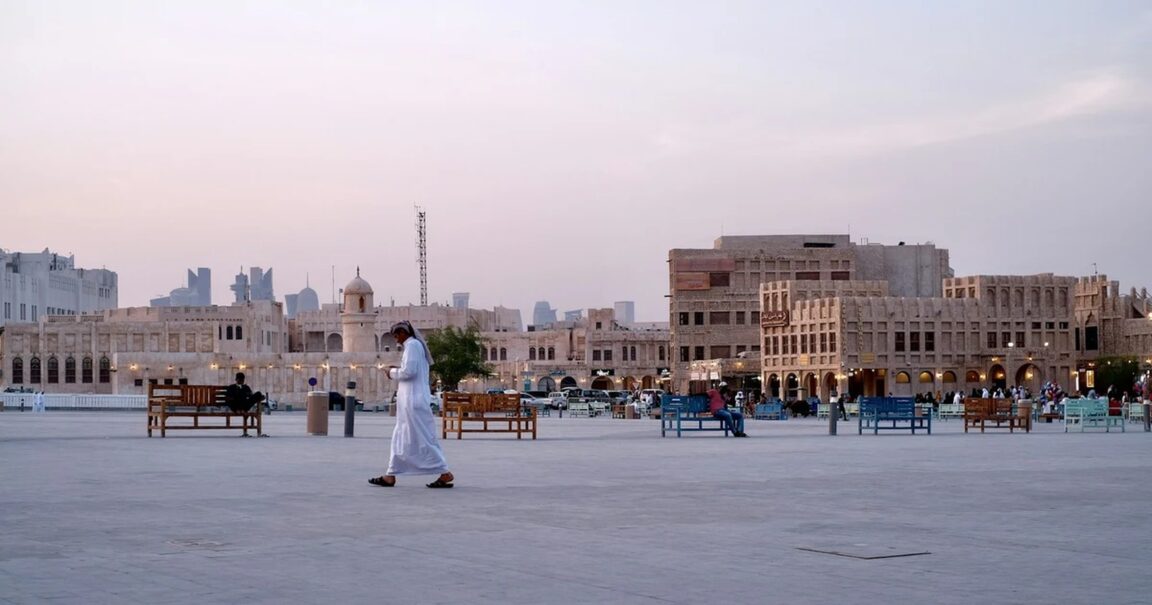
From the museum, the Corniche leads north to Souq Waqif, and the afternoon reopening of the shops, around 4pm after the midday closure, is the time to arrive. The souq has traded on this site for at least a century and was restored between 2006 and 2008 in traditional style, with mud rendered walls and exposed wooden beams. It remains a working market, loosely organized by trade, and two to three hours is a first visit minimum.
Walk it by sections. The spice lanes sell saffron, sumac, dried black lemons and cardamom; the perfume shops will blend oud and attars while you wait; textiles, carpets and brass dallah coffee pots fill the handicraft lanes. The Falcon Souq is the section visitors remember, a block of shops where falcons, Qatar national bird, sit on perches, with the Souq Waqif Falcon Hospital beside it, a working clinic that opened in 2008. Nearby are the camel pen and the Emiri Stables, home to the Arabian horses of the heritage police who patrol the souq. The Gold Souq, a separate street of jewelers a short walk away, prices by weight at the day rate plus a making charge.
Eat in the souq. Machboos, the spiced rice dish cooked with chicken, lamb or fish, is the national plate; karak, the sweet cardamom tea, costs a few riyals everywhere and fuels the evening. The souq restaurant lanes include the Moroccan restaurant Argan, which holds a Michelin Bib Gourmand in the MICHELIN Guide Doha, alongside Persian, Syrian and Yemeni dining rooms and sweet shops selling kunafa. Stay after dark. The squares fill, the light softens on the restored facades, and the contrast across the bay, West Bay glass towers behind a market of mud and timber, is the defining Doha photograph.
Day 2 morning: the Museum of Islamic Art and MIA Park
The Museum of Islamic Art sits on its own island at the southern end of the Corniche, a short walk from the souq, in a stepped limestone tower designed by I. M. Pei and opened in 2008. Its collection spans Islamic art from the 7th to the 20th centuries across three continents: manuscripts, ceramics, metalwork, textiles and jewelry, displayed in dark, quiet galleries that make individual objects glow. Allow two to three hours, and do not skip the upper windows, which frame the West Bay skyline as deliberately as any artwork.
Admission for non-resident adults is QAR 100, checked on 14 November 2026, with free entry for residents and for children 16 and under. Travelers visiting both museums should price the Discover Qatar One Pass at QAR 70, which covers MIA, NMoQ and the 3-2-1 museum for five days and is the better buy for this itinerary. Afterwards, MIA Park, the green curve of land around the museum, is the city best free hour: skyline views, coffee kiosks and, at the northern end, the monumental 7 sculpture by Richard Serra.
Day 2 afternoon: the Corniche, the dhow harbor and Msheireb
Walk or ride the Corniche north from MIA Park. Traditional wooden dhows moor in the harbor near the souq, the working ancestors of the pearling fleet the National Museum describes, and short harbor cruises run from the waterfront for a skyline view from the water. On land, Msheireb Downtown, the regenerated district directly behind the souq, shows the other direction of Qatari architecture: a modern quarter built around courtyards, shade and tram lines, with the Msheireb Museums in restored heritage houses explaining the city social history. It is the natural bridge between the old Doha of the morning and the new Doha of the evening.
Travelers building a wider Gulf or regional route will find our Salalah, Oman guide a useful contrast in Arabian Peninsula travel, and our Istanbul food guide covers the other great market and mosque city that pairs naturally with Doha on a longer itinerary.
Day 2 evening: West Bay, The Pearl and Lusail, the spread explained
Doha modern growth runs north, and the final evening should follow it. West Bay, directly across the water from the souq, is the business skyline: the tapered Tornado Tower, the Aspire Torch further west by the stadium district, and a wall of glass best seen lit from the Corniche. Beyond it, The Pearl is a man made island district of marinas, apartment towers and waterfront restaurants, built for strolling and dinner. Further north again, Lusail is the newest city, built around the stadium that hosted the 2022 World Cup final, with the crescent shaped Katara Towers and the Lusail Boulevard dining strip.
Choose one for dinner rather than touring all three. The Pearl suits a marina side table and an easy walk; Lusail suits travelers who want to see the newest Qatar and eat on the boulevard. Either way, the geography lesson of the two days completes itself: souq and museums in the historic south, skyline in the middle, new cities to the north, all of it strung along one bay.
Practical notes: dress, heat and timing
Dress modestly in the souq and museums, covering shoulders and knees; it is both the local expectation and the comfortable choice. Ask before photographing people, especially families, while lanes, buildings and falcons are fair subjects. In summer, invert the day: museums and malls in the afternoon, souq after 7pm, and carry water. The Doha Metro is clean, cheap and air conditioned, and the Gold Line puts the souq, Msheireb and the museum district within a stop or two of each other.
Frequently Asked Questions
Which museum closes on which day?
The Museum of Islamic Art closes on Wednesdays and the National Museum of Qatar closes on Tuesdays. Both open 9am to 7pm on normal days, until 9pm on Thursdays, and from 1:30pm on Fridays. With two days, plan one museum per day around those closures.
Is the One Pass worth it for two days?
Yes, for non-residents visiting both museums. A single non-resident adult MIA ticket is QAR 100, while the Discover Qatar One Pass costs QAR 70 and covers MIA, NMoQ and the 3-2-1 museum with unlimited entry for five days from first use. Prices checked 14 November 2026.
How much time does Souq Waqif need?
Two to three hours for a first visit, longer with dinner. Arrive as shops reopen around 4pm, walk the trade lanes and the Falcon Souq, then eat in the souq and stay for the evening atmosphere, which is the best part.
Can I walk between the souq and the museums?
Yes. MIA is about a ten minute walk south along the Corniche from the souq, and the National Museum is a further walk or a short metro or taxi ride south. The Corniche itself is one of the city best walks in the cool season.
When is the best time of year to visit Doha?
November to March, when daytime heat eases and evenings are genuinely pleasant outdoors. From June to September, plan around the heat with indoor afternoons and evening sightseeing.
What should I buy in Souq Waqif?
Spices and dried limes, dates, oud and blended perfume oils, textiles and brass coffee pots are the classic purchases, plus gold by weight in the Gold Souq. Bargaining is normal for souvenirs and carpets, polite and unhurried.
Museum hours, closing days and admission checked 14 November 2026 against Visit Qatar and Qatar Museums information. Recheck before travel, as one off closures for events and maintenance do occur.