 River Callahan
Two days in Banff succeed or fail on one booking: the Parks Canada shuttle. Moraine Lake Road is closed to personal vehicles all year, Lake Louise parking fills before sunrise in season, and every shuttle seat requires a reservation made in advance. This itinerary therefore works backwards from the lakes. Day 1 belongs to the Banff townsite itself, its evenings, and Johnston Canyon at a sensible hour; day 2 is the lakes day, built around a reserved shuttle from the Lake Louise Park and Ride, with one lake done properly instead of two done in a rush. Everything below uses the Parks Canada rules as published for the 2026 season, checked on 14 November 2026.
Quick Facts
- Moraine Lake Road: Closed to personal vehicles year round; access only by Parks Canada shuttle, licensed commercial operators, transit, bicycle or on foot (Parks Canada, checked 14 November 2026)
- Shuttle reservation: Required for all Parks Canada shuttles; book through the Parks Canada Reservation Service online or by phone at 1-877-737-3783
- Release pattern: Reservations launched 15 April 2026 at 8am MDT with 40 percent of seats; the remaining 60 percent are released at 8am MDT two days before each departure day
- Shuttle seasons 2026: Lake Louise Lakeshore 15 May to 12 October; Moraine Lake 1 June to 12 October, weather permitting
- Check in: At the Lake Louise Park and Ride, at the Lake Louise Ski Resort, during your one hour departure window; free all day parking for reservation holders; boarding pass issued at check in
- Costs on top: A non-refundable reservation fee of CA$3.50 online or CA$5.50 by phone applies once per reservation, up to 10 seats; a national park pass is also required and is not included in the shuttle ticket
- Base: Banff townsite, inside Banff National Park, about 90 minutes from Calgary
Before the trip: the booking sequence that makes day 2 possible
Reserve in this order. First, the shuttle: choose a departure window, a one hour slot, and a first destination, Lake Louise or Moraine Lake, knowing the reservation includes unlimited use of the Lake Connector shuttle between the two lakes that day, so the first destination choice sets the order, not the access. If the advance allocation is gone, the system is built for a second attempt: 60 percent of seats release at 8am MDT exactly two days before departure, and that rolling window is how most flexible travelers ride. Set the alarm for it; seats typically sell out well in advance of the day itself, and Parks Canada advises against trying to secure a seat on the day of travel.
Second, the park pass: your shuttle ticket does not include national park admission, and both are required. Third, for a sunrise attempt at Moraine Lake, note the separate Alpine Start shuttle, which must be reserved by 3pm the day before departure and does not run on a walk up basis. None of this is bureaucracy for its own sake; it is how a very small lakeshore survives a very large number of admirers.
Day 1: the Banff townsite, walked properly
Banff town sits in the Bow Valley under Cascade Mountain, which fills the end of Banff Avenue, and its virtue for this itinerary is that it needs no vehicle at all. Spend the morning on the town own terms: the Banff Avenue shops and bakeries, the Bow River path out to Bow Falls, and the short climb up Tunnel Mountain, about two hours return, for the view back over the townsite, the Bow Valley and Mount Rundle. The Cave and Basin National Historic Site, where the hot springs discovery led to the creation of Canada first national park, gives the town its origin story in an hour.
Save Johnston Canyon for the middle of day 1, and go in with a plan. The canyon catwalks, suspended over a limestone gorge to a series of waterfalls ending at the Upper Falls, are one of the park most popular walks, which is why the honest advice is timing: arrive early in the morning or later in the afternoon rather than at midday, use Roam Transit where the seasonal service runs, and walk the full route to the Upper Falls, since most of the crowd turns back at the Lower Falls and the canyon quiets noticeably beyond it. In winter the same walk becomes an ice walk, with frozen falls and cleats; our guide to Banff in winter covers that version in full.
Day 1 evening: how the townsite does night
Banff evenings are a strength of basing in town rather than at the lakes. The Banff Upper Hot Springs are the classic end to a walking day, a soak in mineral water above the town as the light goes. Dinner on and around Banff Avenue and Bear Street runs from distillery dining rooms to Cajun brunch spots turned evening kitchens; book ahead in summer, when the town is full. Walk the Vermilion Lakes road at sunset if energy remains, where Mount Rundle reflects in still water minutes from the center. Then an early night: the lakes day starts with a check in window, not a lie in. Travelers extending east afterwards will find our Quebec City in winter itinerary a useful second Canadian chapter, opposite in season and character.
Day 2: the lakes, one done right
Drive or ride to the Lake Louise Park and Ride at the Lake Louise Ski Resort and check in during your reserved one hour window to receive your boarding pass; parking there is free for reservation holders. Board for your reserved first lake. The discipline of this itinerary is depth: whichever lake comes first gets the unhurried hours, a real walk rather than a shoreline photograph, and the second lake gets the Lake Connector and a focused visit, not a duplicate checklist.
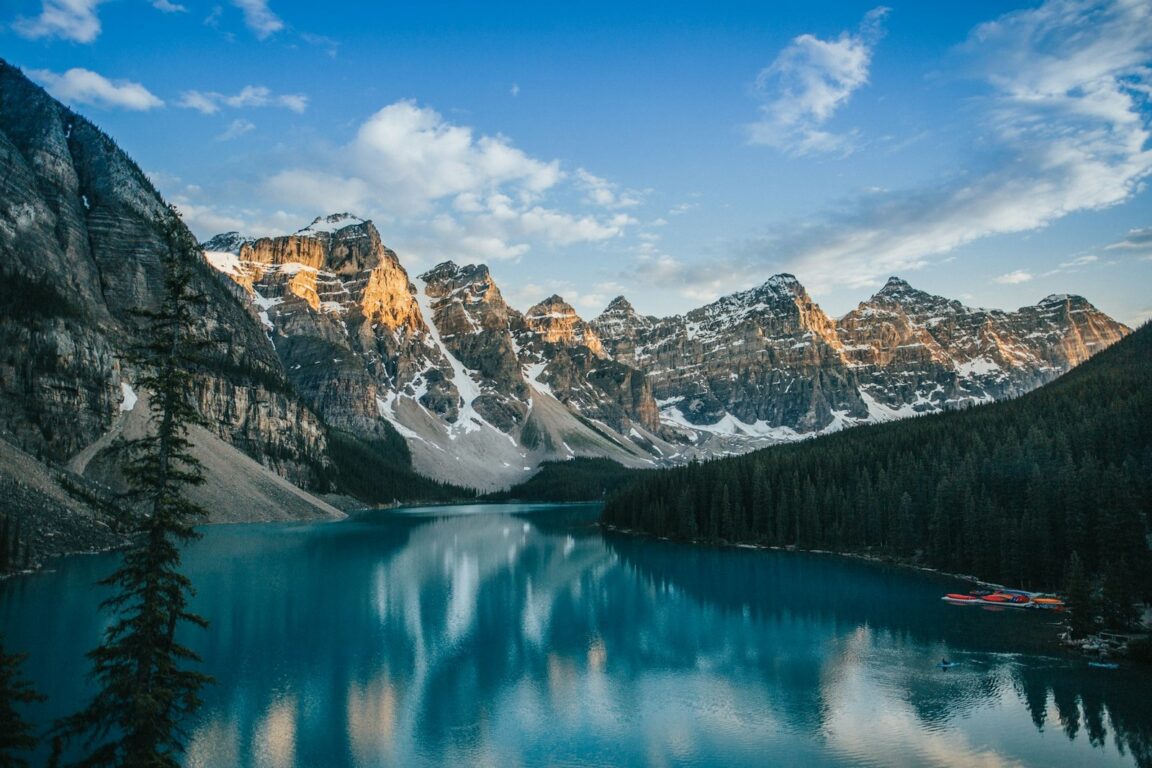
At Lake Louise, walk the flat lakeshore trail toward the far end of the lake, where the crowds thin within ten minutes, beneath the Victoria Glacier. With time and legs, the Lake Agnes Tea House walk, about 7 kilometres return with roughly 400 metres of climbing, reaches a historic teahouse beside a small alpine lake, and fit walkers continue to the Big Beehive for the straight down view onto the lake. At Moraine Lake, the short Rockpile climb gives the canonical view over turquoise water to the Valley of the Ten Peaks, and Consolation Lakes offers an easier, flatter walk; Larch Valley is the September prize, when the larches turn gold, noting that Parks Canada sometimes requires tight groups of four on trails in bear country, so check bulletins and carry bear spray on every trail.
Timing rules for the day: expect to wait at least 30 minutes for shuttles at busy points, keep your boarding pass, and plan the last return rather than discovering it. The reservation is valid only for its date. If the weather closes in, the lakes in cloud are still worth the ride; the Rockpile and lakeshore walks are short enough to seize any clear hour.
If the shuttle is sold out: the honest fallbacks
First, the two day rolling release at 8am MDT is a genuine second chance, not a formality. Second, Roam Transit Reservable Super Pass holders connect to Moraine Lake through the Lake Connector, with proof of purchase required. Third, licensed commercial operators run their own tours to both lakes. What does not work: driving to Moraine Lake anyway, because the road is closed to personal vehicles year round with no parking workaround, or relying on Lake Louise lakeshore parking in high season, which is limited, paid in season and typically full very early. A lakes day that fails entirely is still a good Banff day: Lake Minnewanka and Two Jack Lake, minutes from town, deliver mountain water without the reservation system.
Frequently Asked Questions
Can I drive to Moraine Lake?
No. Moraine Lake Road is closed to personal vehicles year round. Access is by Parks Canada shuttle with a reservation, licensed commercial operators, transit connections, bicycle or on foot. This has been the rule since 2023 and continues through the 2026 season.
When do shuttle reservations open and how do I get one?
For 2026, reservations launched on 15 April at 8am MDT with 40 percent of seats, and the remaining 60 percent release at 8am MDT two days before each departure day. Book through the Parks Canada Reservation Service online or at 1-877-737-3783. A reservation is required; same day attempts are not recommended.
What does the shuttle reservation include and cost?
It includes your departure from the Lake Louise Park and Ride to your chosen first lake and unlimited Lake Connector travel between Lake Louise and Moraine Lake that day. A non-refundable reservation fee of CA$3.50 online or CA$5.50 by phone applies once per reservation for up to 10 seats, and shuttle fares apply per person. A national park pass is separate and also required.
Where do the shuttles leave from?
All regular shuttles start at the Lake Louise Park and Ride, in the Lake Louise Ski Resort parking area. You must check in there during your one hour departure window to receive your boarding pass; parking is free for reservation holders. You cannot board at the lakes without checking in first, Alpine Start departures excepted.
When do the lakes operate in 2026?
Lake Louise Lakeshore shuttles run 15 May to 12 October 2026, and Moraine Lake shuttles run 1 June to 12 October, weather permitting. Outside those dates, plan on the townsite, Johnston Canyon and the year round Roam services instead.
Is two days enough for Banff?
It is enough for the townsite, Johnston Canyon and one proper lakes day, which is the trip most first visitors actually want. It is not enough for the Icefields Parkway or Yoho as well; those need a third and fourth day, and the shuttle system rewards travelers who book the lakes first and build around them.
Shuttle rules, seasons, fees and reservation windows checked 14 November 2026 against Parks Canada, Visiting Lake Louise and Moraine Lake and its shuttle FAQ. Recheck Parks Canada before travel, as seasons are weather dependent.