 Elena Vasquez
The Kong: Skull Island film village at Trang An is not a separate attraction with its own gate. It is a stop on the Trang An boat routes in Ninh Binh, reached only from the water, and the practical secret is choosing the right route at the wharf: Route 2 is the sailing most closely associated with the film locations, and recent route guides also list the film village on Route 3. Buy the standard Trang An ticket at the wharf counter, tell the ticket seller you want the Kong stop before you board, and expect the whole outing to take about three hours. Everything else in this guide follows from that one decision.
Quick Facts
- Where: Trang An boat wharf, about 7 km west of Ninh Binh city and about 100 km south of Hanoi
- Ticket: 300,000 VND per adult since 1 January 2026; children 1 m to 1.3 m pay 150,000 VND; children under 1 m ride free
- Hours: Ticket office about 7:00 am to 4:00 pm; last boats return around 6:00 pm
- Boat: Shared sampan seating four passengers, hand rowed; the fare covers the boat and the rower
- Film link: Parts of Kong: Skull Island (2017) were filmed on these waterways in 2016
- Heritage status: Trang An Scenic Landscape Complex, a UNESCO mixed cultural and natural World Heritage Site since 2014
- Time needed: About 3 hours on the water, plus transfers
What the film village actually is
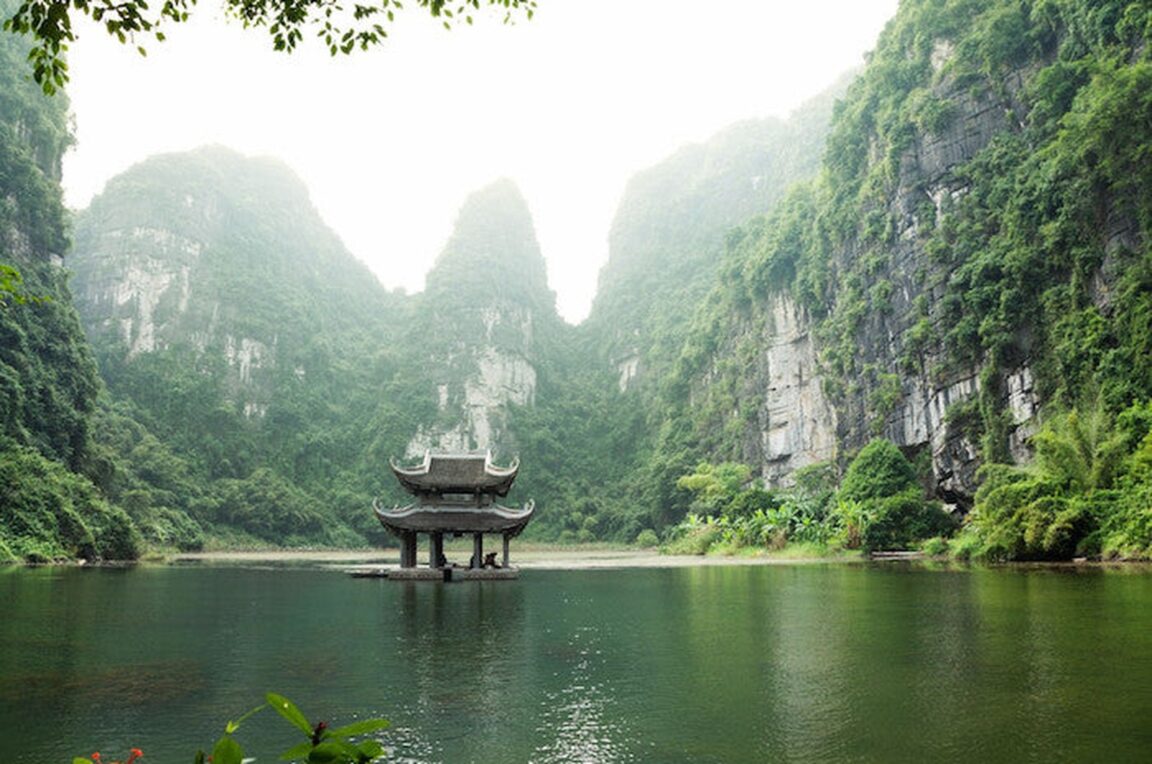
Trang An carries three layers at once, and the film layer is the thinnest of them. The oldest layer is archaeological: the flooded karst valleys hold evidence of human occupation reaching back thousands of years, which is one reason UNESCO listed the complex as a mixed property rather than a purely natural one. The second layer is dynastic. Hoa Lu, the tenth century capital, sits beside the complex, and the Tran kings later used the Trang An waterways and the Vu Lam Palace area as a base during resistance against Mongol Yuan invasions. The third layer is modern cinema. In 2016 the production of Kong: Skull Island shot on these rivers, using the limestone towers and still water as the island world of the film, released in 2017.
The film village stop recreates the look of the island settlement built for the shoot: a small clearing with rustic structures in the style of the fictional village, set against the karst. Treat it as a photo stop inside a much older landscape, not as a theme park. The set dressing has changed over the years and parts of the original construction were removed after filming, so what stands on the clearing today is best understood as the maintained film location stop on the boat route. The rower and the wharf signage are the authority on the day: if the film stop matters to you, confirm at boarding that your route is calling there, because route stop sequences shift with water levels and weather.
Which boat route reaches the Kong stop?
Route 2, the film route
Route 2 is the route most guides tie to Kong: Skull Island. It runs about 10 km in roughly two and a half to three hours, passes four caves including Lam Cave, Vang Cave, Thanh Truot Cave and Dai Cave in recent route descriptions, and calls at temples including Cao Son and Suoi Tien, with the film village as its finale in several published route accounts. It is the busiest route and the best balance for a first visit that has the film stop as its headline.
Routes 1 and 3, and the newer Route 4
Route 1 is the cave heavy option, with nine caves and three spiritual sites including Trinh Temple and Tran Temple, and it suits travellers who want the fullest overview of the complex. Route 3 is built around one very long passage, Dot Cave, which runs for more than 1,000 metres, and some current route guides also list the Kong film set on this sailing, so it is a genuine alternative if Route 2 boats are queued out. A shorter Route 4 of about one and a half to two hours appears in recent route comparisons for travellers combining Trang An with other Ninh Binh stops. You choose one route per ticket and cannot combine routes in a single ride, so decide at the counter, not on the water.
Tickets, timing and the wharf routine
The adult fare rose to 300,000 VND on 1 January 2026, and many older guides still quote the previous 250,000 VND, so budget on the higher figure. The ticket covers admission and the shared boat on any route. Buy at the ticket counter beside the main wharf: the official ticketing guidance is to buy at the counter, walk up purchase is standard, and counter tickets carry different refund terms from e-tickets, which recent guidance describes as non refundable and non changeable. An optional guide service is quoted at 300,000 VND per tour in current price lists, and a tip for the rower is customary rather than included.
Timing matters more than route choice for the quality of the day. Boats leave from about 7:00 am, and the first sailings get the stillest water, the clearest reflections and the shortest queues at the cave mouths. By late morning the wharf is at its busiest, especially on weekends and Vietnamese holidays. Heavy rain and high water can suspend boats or close individual routes, as happened during storm disruption in September 2026, so check operating status the day before and again on the morning of the visit in wet season. Allow two to two and a half hours for the road transfer from Hanoi, and confirm with any driver that the destination is Trang An wharf, because Trang An and Tam Coc are separate boat stations about 7 km apart.
Photo rules and on the water etiquette
Photography for personal use is part of the outing, and the film village clearing, the cave mouths and the temple landings are the natural stops. Three rules keep it smooth. First, stay seated and keep cameras inside the boat line through the low caves, where ceilings drop close to the water and the rower is steering by memory and touch. Second, ask before photographing rowers and other passengers at close range, and expect the rower to pause at the recognised viewpoints rather than on request mid channel. Third, leave drones at the hotel: this is a protected heritage landscape with controlled airspace in practice, and the boat routes give you the compositions the site is known for, from water level. Dress codes apply at the temple stops on every route: cover shoulders and knees for Trinh Temple, Tran Temple and the other shrines, even though you are arriving by boat.
What pairs with the Kong sailing?
The natural pairing is the rest of Ninh Binh, sequenced so the boat comes first. Hoa Lu, the ancient capital, is about 5 km from the wharf and takes an unhurried hour. Bai Dinh Pagoda, the vast modern temple complex, fills a half day on its own. Hang Mua, the Lying Dragon Mountain viewpoint, is the sunset option, with about 500 stone steps to the ridge. For food, plan a goat meat lunch, the Ninh Binh speciality, and read our guide to eating your way through Ninh Binh before you order. For the caves and temples in depth, our companion piece on visiting the Trang An Grottoes compares the three sampan circuits stop by stop.
Common mistakes to avoid
The first mistake is buying a Tam Coc ticket when you wanted Trang An: the two systems are different wharves, different routes and different landscapes, and only Trang An carries the Kong stop. The second is arriving at midday in high season and losing the best light to the queue. The third is carrying no small cash: tips, drinks and the Hoa Lu or Bai Dinh entrance fees are separate from the boat ticket. The fourth is treating the film village as the whole point. The Kong stop takes minutes; the caves, temples and flooded valleys around it are a World Heritage landscape that was significant for a thousand years before the film crew arrived.
Frequently Asked Questions
Is the Kong Skull Island set a separate ticket?
No. The film village is a stop on the Trang An boat routes and is included in the standard ticket, which costs 300,000 VND per adult in 2026. There is no separate film set gate or fee.
Which Trang An route is best for the Kong location?
Route 2 is the sailing most closely associated with the film locations and is the best first choice. Some current guides also list the film village on Route 3, so confirm the stop at the counter before boarding.
How long does the boat trip take?
Plan on about three hours for Routes 1, 2 and 3, and one and a half to two hours for the shorter Route 4. Add transfer time from Ninh Binh city or Hanoi on top.
Can I book Trang An tickets in advance?
Tickets are sold at the wharf counter and walk up purchase is standard. Recent guidance notes that advance e-tickets cannot be refunded or changed, while counter tickets can be refunded at 80 percent until you pass the gate, so buying on the day is the flexible option.
What should I wear and carry?
Carry a hat, water and small cash, and wear clothes that cover shoulders and knees if you plan to enter the temples on the route. In the caves, keep hats and cameras low and stay seated.
Is Trang An the same as Tam Coc?
No. They are separate boat stations about 7 km apart, with different routes and scenery. Tam Coc runs through rice fields; Trang An runs through flooded valleys, more caves and the film location stop.
Prices and route details checked 16 November 2026 against current Trang An ticketing and route guidance. Route stop sequences can change with water levels, so confirm the film village stop at the counter on the day.