 Priya Nair
The Old Chief Joseph Gravesite is a 5.1 acre cemetery on the west side of Highway 82, just north of Wallowa Lake and about a mile south of Joseph, Oregon, and visiting it properly means understanding whose ground it is before you plan the logistics. This is a sacred and sensitive site for the Nez Perce people, a National Historic Landmark held in trust for the tribes, where Old Chief Joseph, the leader who refused to sell the Wallowa homeland, was reburied in 1926. There is no entrance fee, no reservation and no permit. What the site asks for instead is conduct: stay on the paths, leave everything on the graves untouched, keep dogs out, and come between dawn and dusk.
Quick Facts
- Site: Old Chief Joseph Gravesite and Cemetery, a Nez Perce National Historical Park site and National Historic Landmark
- Size and setting: 5.1 acres on the west side of Oregon Highway 82, north of Wallowa Lake
- Cost: Free; no fees, reservations or permits for the general public, per the National Park Service
- Hours: Pay homage between dawn and dusk; the site is closed after dark
- Dogs: Not allowed within the cemetery boundaries
- Trust and care: Held in trust by the Bureau of Indian Affairs for the Umatilla and Nez Perce Tribes, managed by Nez Perce National Historical Park under tribal direction
- Adjacent: Iwetemlaykin State Heritage Site, with short trails, directly next door
- Town base: Joseph, Oregon, about 1 to 1.5 miles north
Whose grave this is, and why it moved
Old Chief Joseph, known in Nimíipuu as Tıwi Teqıs, was the principal leader of the Wallowa Band of the Nez Perce who refused to sell his homeland or sign the 1863 treaty that would have cut the 1855 reservation by about 90 percent and ceded the Wallowa country. The National Park Service records his dying instruction to his son, the younger Chief Joseph: this country holds your father body; never sell the bones of your father and mother. He died in 1871 and was buried between the forks of the Wallowa and Lostine rivers.
The grave did not rest there. After the Wallowa Band was forced out of the valley in 1877, the original grave was looted, twice in the accounts preserved by the park and the state heritage site, and his skull was carried off as a souvenir. In 1926 his remains were reburied at the present cemetery north of Wallowa Lake, where a tall stone marker carries the legend: To The Memory of Old Chief Joseph, Died 1870. The one year difference between the marker inscription and the 1871 death date in park accounts is part of the site record, and the marker is the version carved in stone. The cemetery also holds graves of Nez Perce families including the McFarland family, and of local settlers the Nez Perce chose to honour, among them sheep rancher Frank McCully, a friend of Chief Joseph. In 1985 the site was declared a National Historic Landmark as the Wallowa Lake Site.
How to visit: the conduct is the ticket
The National Park Service publishes the etiquette for this cemetery as plainly as any ticket terms, and it deserves to be quoted in spirit before any itinerary. Walk or stand on pathways or between graves, not directly on top of them. Prepare and consume food and drink outside the cemetery boundaries. Do not take rubbings or markings from headstones, and do not handle the headstones. Leave all items on the graves in place and undisturbed: offerings and memorial objects placed by families and tribal members are not souvenirs and not litter. Dogs are not allowed within the cemetery boundaries at all, which is stricter than most park sites and catches visitors out. Adults should accompany children inside the cemetery. Recreation belongs outside the boundaries, and the park is closed after dark. Damage or suspected violations can be reported to the National Park Service at the number posted on its site page.
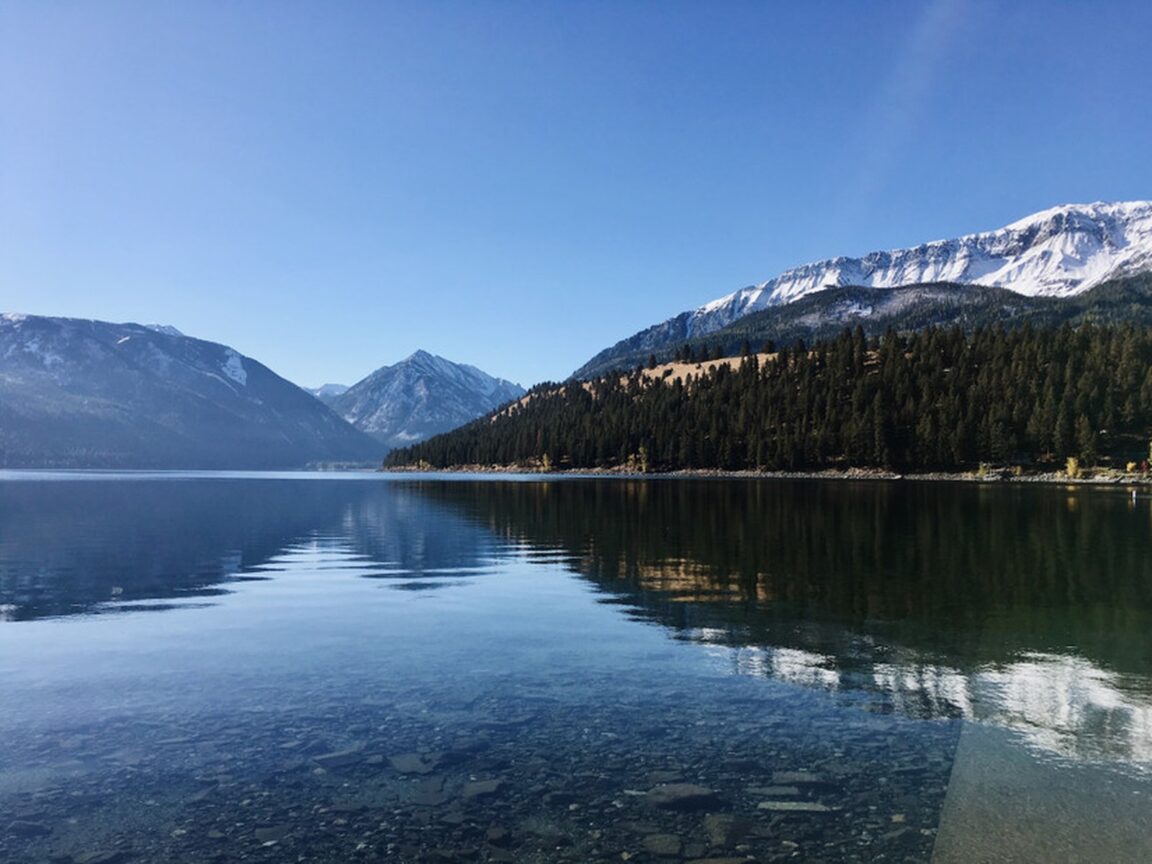
None of this makes the visit stiff. It makes it legible. Read the interpretive signs on Old Chief Joseph and the Nez Perce National Historic Trail, stand at the marker, and look south over Wallowa Lake, which is the homeland geography the whole story is about: the lake, the moraines and the Wallowa Mountains behind them.
Iwetemlaykin: the walk next door
Directly adjacent, Iwetemlaykin State Heritage Site is the place to walk after the cemetery. Its name means at the edge of the lake in Nimíipuu, and its grassy slopes are part of the terminal moraine of the glacier that formed Wallowa Lake. The state acquired the property in 2007 and the park opened in 2009. Short trails cross the moraine grassland, pass Knights Pond, and connect toward the gravesite, with views to Chief Joseph Mountain. Where the cemetery asks for stillness, Iwetemlaykin gives the landscape room to breathe, and the two together make the essential pairing of this visit: gravesite first for the history, heritage site second for the land it happened in. Note that older trail guides record the interpretive signs at Iwetemlaykin as removed in 2019, so carry the story with you from the gravesite panels and the museum in town rather than expecting signage on the walk.
The wider Nez Perce homeland circuit from Joseph
Joseph itself was renamed in 1880 in honour of Chief Joseph, and the town carries the next layer of the visit. The Wallowa County Museum in Joseph holds Nez Perce history books and photographs, including historic images of Chief Joseph, local encampments and Wallowa Lake, and photographs of the 1926 reburial are among the records visitors ask for. The Nez Perce Wallowa Homeland visitor facilities in the town of Wallowa, up the valley, extend the story with exhibits and the longhouse and dance arbor grounds used for the annual Tamkaliks celebration. Further afield, this gravesite is one component of Nez Perce National Historical Park, a park spread across dozens of sites in Oregon, Washington, Idaho and Montana, with its main visitor centre about 106 miles north of the gravesite. For the lake itself, our guide to visiting the Wallowa Lake Tramway covers the gondola up Mount Howard, and our Wallowa Lake moraine hikes guide walks the same glacial ridges that frame Iwetemlaykin, from the active side.
Frequently Asked Questions
Is this the grave of the famous Chief Joseph?
It is the grave of his father, Old Chief Joseph, the Wallowa Band leader who refused the 1863 treaty and died in 1871. The younger Chief Joseph, who led the 1877 flight, is buried in Washington. The town of Joseph is named for the younger chief.
Does the gravesite charge entry or require a permit?
No. The National Park Service states that the general public does not need to pay entrance fees, make reservations or obtain permits at the Old Chief Joseph Gravesite.
Can I bring my dog?
Not into the cemetery: dogs are not allowed within the cemetery boundaries. The adjacent Iwetemlaykin State Heritage Site trails are the dog friendly part of the visit, under state park rules.
What are the opening hours?
The National Park Service asks visitors to pay homage between dawn and dusk. The site is closed after dark.
How do I get there from Joseph?
Take Main Street, which becomes Highway 351 and the Wallowa Lake Highway, south for about 1.5 miles. The memorial and gravesite are on the west side of the highway, just north of Wallowa Lake.
What else should I see nearby?
Walk the Iwetemlaykin trails next door, visit the Wallowa County Museum in Joseph for photographs and local Nez Perce history, and continue to Wallowa Lake itself. The homeland visitor facilities in the town of Wallowa complete the circuit.
Site details, fees and conduct rules checked 16 November 2026 against the National Park Service page for the Old Chief Joseph Gravesite.