 Jordan Ellis
Stay in the village of Joshua Tree if the west entrance and the classic boulder fields are the trip, stay in Twentynine Palms if you want the quieter north entrance, dark skies and lower rates, and stay in Palm Springs only when the resort itself is half the point of the weekend, because it puts the better part of an hour of highway between your bed and the park each morning. That is the whole decision, and everything below is the detail that supports it: Joshua Tree National Park has three entrances and no lodging, food or fuel inside its boundary, so the town you sleep in decides which gate you use, how early you reach the rocks, and what your evenings look like.
Quick Facts
- West Entrance: At Joshua Tree village, five miles south of Highway 62 on Park Boulevard; the busiest of the three gates
- North Entrance: At Twentynine Palms, three miles south of Highway 62 on Utah Trail; the park headquarters and newest visitor centre are in town
- South Entrance: At Cottonwood Spring, off Interstate 10 about 25 miles east of Indio; the Colorado Desert side of the park
- Park entry: $30 per private vehicle for a seven day pass; the park is open 24 hours a day and takes no entrance reservation
- Inside the park: No hotels, restaurants, shops or fuel; every bed and breakfast is in a gateway town
- Dark skies: The park is a designated International Dark Sky Park, and Twentynine Palms markets its night skies as a reason to stay
- Facts checked: November 23, 2026, against the National Park Service and the Joshua Tree National Park Association
Why does the entrance matter more than the hotel?
Because the park’s geography punishes the wrong base. Park Boulevard, the paved spine, runs from the West Entrance through the heart of the Mojave Desert section, past Hidden Valley, Barker Dam and Skull Rock, and out through the North Entrance at Twentynine Palms. The National Park Service puts the drive between the west and north gates at about 45 minutes through the park, and the two towns sit about 25 miles apart on Highway 62 outside it. A traveller sleeping in Joshua Tree village who wants a dawn start at Arch Rock, near the north end, faces the same road logic in reverse. None of this is a problem if the base matches the plan; all of it is friction if it does not. Choose the sights first, then the town that serves them.
What is staying in Joshua Tree village actually like?
The village is the park’s creative front porch. Along Highway 62 and down Park Boulevard toward the west gate, a loose strip of small desert boutiques, design led motels, vacation rentals in converted homestead cabins, coffee bars, vintage shops and galleries serves the climbers, artists and weekenders who have made the town a byword for high desert style. The Joshua Tree Visitor Center at 6554 Park Boulevard, open from 7:30 a.m. to 5 p.m., anchors the strip, and the West Entrance, the busiest gate in the park, is five minutes south. Evenings here are sociable by desert standards: dinner in town, live music when it is on, and a short drive back to a rental with a hot tub under very dark skies.
The trade offs are price and availability. The village’s stock of rooms is small, its best properties book out on spring and autumn weekends, and rates reflect the brand the town has become. Travellers who want the west gate without the village premium look one town west to Yucca Valley, a larger, more workaday community on the same highway with chain hotels and lower rates, about 15 minutes further from the entrance. Yucca Valley lacks the village’s charm and gains a supermarket, fuel and everything practical, which for families and longer stays can be the smarter bargain.
What does Twentynine Palms offer that the village does not?
Space, murals and the quiet gate. Twentynine Palms, about 20 minutes east along Highway 62, is a working desert city, home to the park headquarters, the Marine Corps Air Ground Combat Center and a downtown that tells its own story on its walls: the Oasis of Murals project has covered buildings across town with large scale paintings of desert history and wildlife, 26 of them by the count of the local visitor guides, with a map available at the visitor centre. The Joshua Tree National Park Visitor Center in Freedom Plaza, at 6533 Freedom Way, open 8 a.m. to 5 p.m., is the park’s newest front door, and the North Entrance on Utah Trail is three miles south of the highway.
Lodging runs from reliable chain hotels on the highway to historic inns around the Oasis of Mara, the palm oasis where the park’s visitor complex sits and where Serrano, Chemehuevi and Cahuilla people lived long before the town existed. Rates generally undercut the village, parking is easy, and the north gate rarely queues the way the west gate does on a Saturday morning. For photographers and stargazers the case is stronger still: the town promotes its dark skies, the surrounding desert is emptier, and dawn at Arch Rock or the Fortynine Palms Oasis trail starts minutes from bed. What Twentynine Palms does not have is the village’s boutique density; dinner choices are fewer and evenings are quieter, which many travellers count as a feature.
When does Palm Springs justify the longer drive?
When the stay is a resort stay with a park day inside it, rather than a park trip with a bed attached. Palm Springs and the Coachella Valley offer what the high desert towns cannot: full service resorts with large pools, spas, golf and a deep restaurant scene, plus the mid century architecture trail. The cost is the commute. From Palm Springs, the West Entrance is reached by Interstate 10 and Highway 62 through Yucca Valley, the better part of an hour in weekend traffic, and the Cottonwood South Entrance, off Interstate 10 east of Indio, is the valley’s own gate into the park’s Colorado Desert side, with the Cholla Cactus Garden and Pinto Basin rather than the famous boulder piles. A Palm Springs base works beautifully for one park day, ideally entering at Cottonwood and exiting at Twentynine Palms in a through drive. It works badly for a three day park intensive trip, where the daily commute eats the cool morning hours that are the whole point of desert travel. Winter visitors should also know the valley floor and the park differ in temperature: the high desert around the north gates sits higher and runs noticeably colder at night than Palm Springs.
What about camping, and the south entrance?
Camping is the fourth base, and for many travellers the best one. The park’s campgrounds, including Jumbo Rocks, the largest, sit among the boulder formations themselves, so dawn and dusk, the two finest hours, happen outside your tent rather than beyond a gate queue. Sites are primitive, water is limited to specific campgrounds and visitor centres, and the popular grounds book through Recreation.gov in season. The South Entrance at Cottonwood serves the park’s quieter Colorado Desert half and the road to the Salton Sea; its nearest beds are in Indio and the Coachella Valley, which makes it a through route or a valley based day rather than a base of its own. Travellers planning the season itself should read our companion piece on Joshua Tree in winter, and those extending into Arizona can pair the trip with our Sedona hiking and wellness guide.
So, which base should you book?
Book Joshua Tree village for a first trip built on Hidden Valley, Barker Dam and Skull Rock, and for the fullest evening scene. Book Twentynine Palms for value, quiet, dark skies and the north side sights, and for any trip where dawn photography matters. Book Yucca Valley when the village is full or priced out of reach. Book Palm Springs when half the party wants the resort more than the rocks, and give the park one well planned through day. Whichever base wins, buy the seven day pass, download offline maps, fill the tank and the water bottles in town, and be through a gate by sunrise once during the stay. The desert rewards exactly that one decision more than any hotel amenity.
Frequently Asked Questions
Which Joshua Tree entrance is least crowded?
The North Entrance at Twentynine Palms. The National Park Service identifies the West Entrance, at Joshua Tree village, as the busiest of the three, and directs diverted traffic to the north gate, about 25 miles east, when the west side closes or queues.
Can you stay inside Joshua Tree National Park?
Only by camping. The park has no hotels, lodges, restaurants or fuel stations. Its campgrounds sit among the rock formations, and gateway towns hold every roofed bed, from Yucca Valley in the west to Twentynine Palms in the east.
How far is Palm Springs from Joshua Tree National Park?
Plan on the better part of an hour to the West Entrance via Interstate 10 and Highway 62, longer in weekend traffic. The park’s South Entrance at Cottonwood, off Interstate 10 about 25 miles east of Indio, is the Coachella Valley’s closest gate.
Is Twentynine Palms worth staying in, or just a pass through?
Worth staying in. Beyond the north gate and the park visitor centre at Freedom Plaza, the town has the Oasis of Murals, the Oasis of Mara, historic inns and some of the darkest skies in the gateway communities, usually at lower rates than Joshua Tree village.
Do I need a reservation to enter Joshua Tree?
No entrance reservation exists. The park is open 24 hours a day, and a $30 seven day vehicle pass is bought at the gate or ahead on Recreation.gov. Reservations apply to campgrounds, not to entry.
Which base is best for stargazing?
Twentynine Palms and the park campgrounds. The park is an International Dark Sky Park, and the eastern gateway’s emptier desert and distance from the Coachella Valley’s glow make its nights the darkest of the three towns.
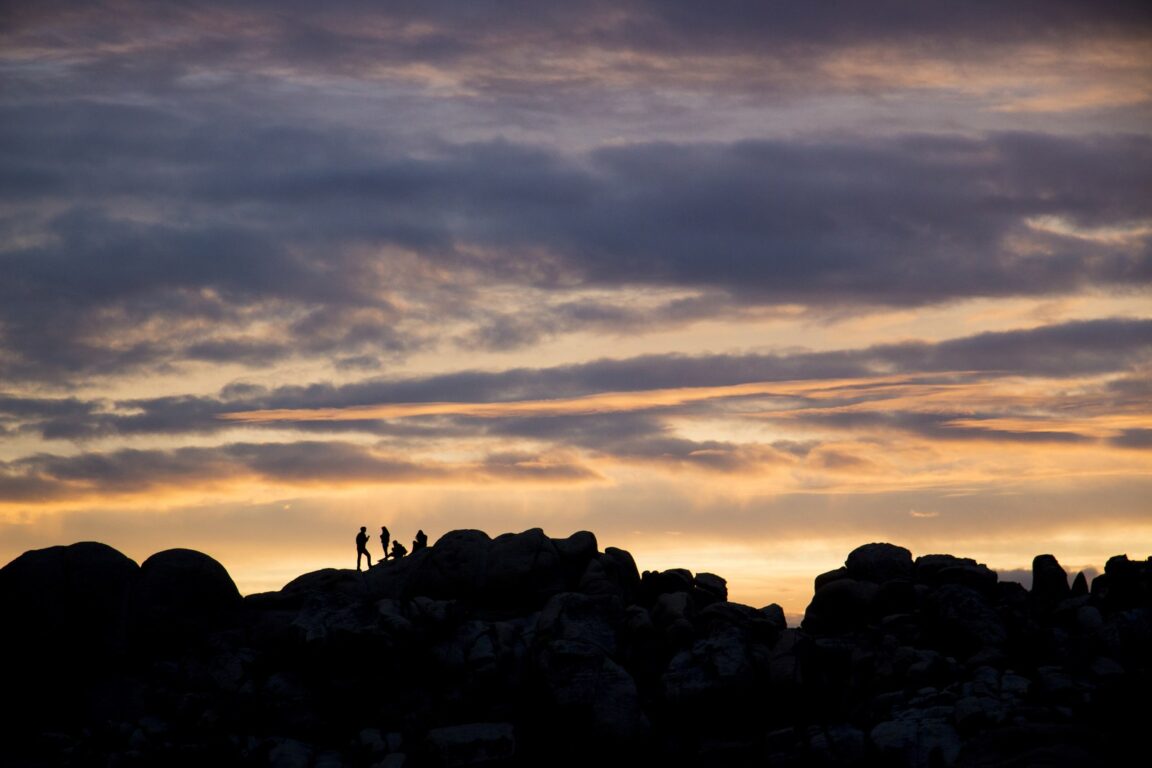
Image: Visitors silhouetted on the rounded boulders of Jumbo Rocks at sunset in Joshua Tree National Park. Photo: Brad Sutton, National Park Service, via npgallery.nps.gov, public domain, used with credit.