 Jordan Ellis
Winter is when Joshua Tree National Park makes the most sense. The boulder fields that bake through summer become walkable all day, the two deserts that meet here show their clearest light, and the nights, the longest of the year, belong to the stars. The practical shape of a winter trip is simple: enter early through the quieter North Entrance at Twentynine Palms if the West Entrance queue is building, work Park Boulevard in a deliberate order with Barker Dam before Skull Rock, and stay in the park after dark at least once for the night sky programmes and the darkness itself. Entry costs $30 per vehicle for seven days, there is no timed entry reservation to arrange, and the season’s only real enemies are cold nights and short days, both of which planning handles easily.
Quick Facts
- Park: Joshua Tree National Park, southeastern California, where the Mojave Desert and the Colorado Desert meet
- Entrance fee: $30 per private vehicle for 7 days, $25 per motorcycle, $15 per person on foot or by bike, per the National Park Service fees page checked on November 19, 2026
- Park annual pass: $55 for 12 months; America the Beautiful passes also accepted
- Reservations: No timed entry or day use reservation for the park itself; many campgrounds book ahead on Recreation.gov in the October to May season
- Entrances: West Entrance near the town of Joshua Tree, North Entrance at Twentynine Palms, South Entrance at Cottonwood off Interstate 10
- Signature stops: Barker Dam loop, 1.1 miles; Skull Rock, roadside on Park Boulevard with a 1.7 mile nature trail; Hidden Valley loop, 1 mile; Keys View overlook
- Night sky: An International Dark Sky Park, with ranger night sky programmes in season and the longest nights of the year in winter
- Services: No food, fuel or reliable water inside the park; fill up in Joshua Tree, Twentynine Palms or Yucca Valley
- Prices checked: November 19, 2026, against National Park Service sources
Why does winter suit Joshua Tree better than any other season?
Joshua Tree is really two parks stacked against each other. The western half is the higher, cooler Mojave Desert, the country of the Joshua trees themselves and of the stacked granite boulder fields. The eastern half drops into the lower, hotter Colorado Desert, where the light is harsher and the plants change completely. Summer heat closes the argument in both halves by late morning. Winter reopens it. Daytime temperatures sit in the range where a full day of walking is comfortable in a light jacket, the air is at its clearest after weather fronts pass, and the boulders hold golden light for a larger share of the day because the sun never climbs high. The trade off is real and worth stating plainly: nights at the Mojave campgrounds can fall to freezing, the wind can be sharp on exposed ground, and the day is short, so a winter itinerary is built backwards from sunset rather than forwards from breakfast.
Crowds follow the same logic. Spring, with its wildflower gamble, is the park’s busiest season. Winter outside the holiday weeks is calmer, and the calm shows up exactly where it matters, in the entrance queues and in the small parking lots at the signature stops. The park is open around the clock, so a winter visitor who plans around the light gets the boulder fields in the morning, the wide views in the middle of the day and the sky at night, with each part of the day doing different work.
Which entrance should a winter visitor use, west or north?
The two northern entrances serve the same corridor and charge the same fee, but they behave very differently on a winter weekend. The West Entrance, five miles south of Highway 62 in the town of Joshua Tree, is the natural gate for anyone arriving from Los Angeles or Palm Springs, and it is the busiest gate in the park. On peak season mornings the queue there can back up well beyond the entrance station. The North Entrance at Twentynine Palms, reached on Utah Trail three miles south of Highway 62, draws a fraction of that traffic and usually moves faster, and it lands a driver on the same Park Boulevard corridor a few miles east of the West Entrance route. The National Park Service fees page lists the standard pass at $30 per vehicle, $25 per motorcycle and $15 per person, each valid for seven days, and a digital pass bought ahead on Recreation.gov removes one stop from the morning entirely. Entrance stations take cards, and the park repeats one warning worth obeying: do not trust a GPS routing inside the park, where coverage is limited and desert tracks look like roads on a screen.
The South Entrance at Cottonwood, on Interstate 10 east of Indio, serves a different park altogether in feel: the Colorado Desert, the Cottonwood Spring oasis and the long Pinto Basin Road north to the boulder country. It is the right gate for a visitor crossing the park south to north, or for the Cholla Cactus Garden at first light, but a first winter trip based in Joshua Tree or Twentynine Palms belongs to the northern corridor.
What is the right order for Barker Dam, Skull Rock and the boulder stops?
Park Boulevard runs between the West and North entrances past nearly everything a first visit needs, and the order that works in winter is the order that respects parking and light. Start at Barker Dam. The 1.1 mile loop leaves a small lot that fills early, walks a corridor of boulders to a historic dam built by early cattlemen and later raised by ranchers, and passes a panel of petroglyphs on the return leg, which visitors are asked to view from a distance and never touch. After winter rain the reservoir behind the dam can hold water, and the still pool reflecting the boulders is one of the park’s quietest sights. Go early, when the light is low and the lot still has space, and the loop takes well under an hour.
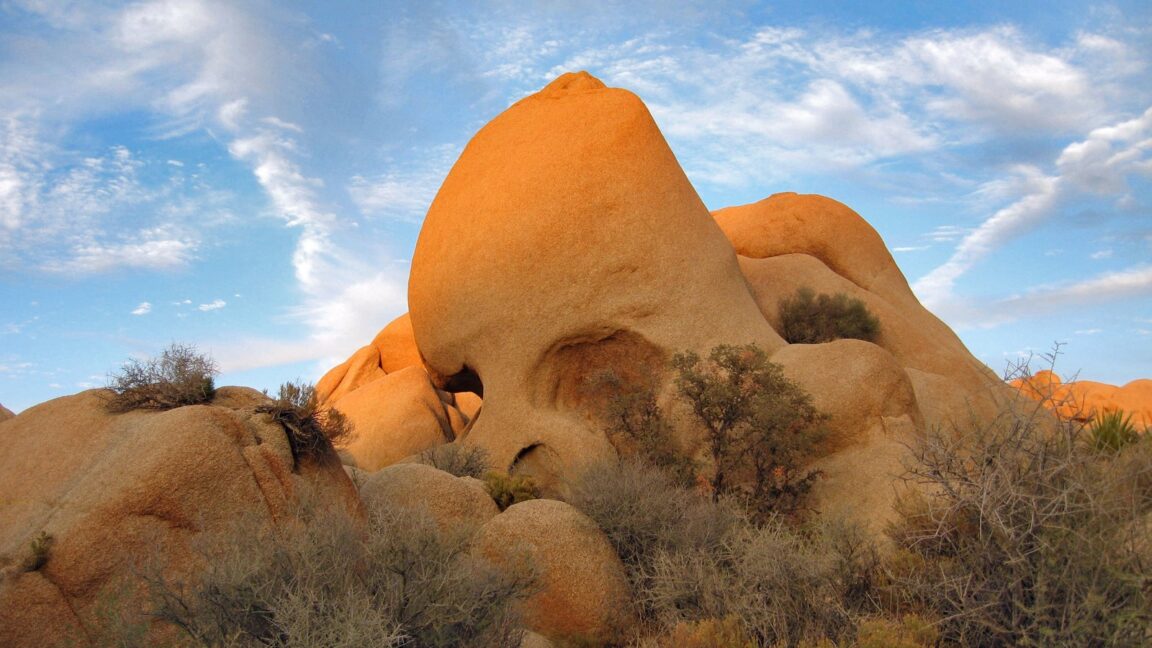
Skull Rock comes second, and it asks almost nothing of a schedule. The granite formation, its eye sockets hollowed by pooled rainwater over thousands of years, stands directly beside Park Boulevard east of the Jumbo Rocks Campground, visible from the road itself. Drivers short on time can see it from the pullout, but the better version is the 1.7 mile Skull Rock Nature Trail, which loops from the campground through the surrounding boulder piles and gives the formation its context. Between the two, the Hidden Valley loop, a one mile walk inside a ring of boulders once rumoured to hide cattle rustlers, and the climbing walls around Intersection Rock fill the middle of a winter day without any single stop demanding more than an hour. Readers working through the California and Arizona desert parks in one trip can pair this corridor with our Organ Pipe Cactus guide, which uses the same early start, one corridor logic on the borderlands desert.
Where does the winter day end, and what is Keys View for?
Keys View is the park’s exclamation point and the correct last stop of a winter afternoon. The overlook sits at 5,185 feet on the crest of the Little San Bernardino Mountains and looks straight down the Coachella Valley, with the Salton Sea to the southeast, Palm Springs below, and the line of the San Andreas Fault running visibly along the valley floor. On the clearest winter days, which are the park’s best viewing days of the year, the view reaches to Signal Mountain in Mexico. Winter serves this viewpoint twice over: the cold, washed air gives the longest sightlines, and the early sunset means a visitor can watch the light leave the valley and still be back at a gateway town in time for dinner, or stay put and let the second half of the winter programme begin.
What makes the winter night sky here different?
Joshua Tree is designated an International Dark Sky Park, and winter is its strongest season for the simple reason that the night is longer than the day. By early evening the sky is fully dark, and the winter constellations, with Orion standing over the boulder fields, are up at family friendly hours rather than after midnight. The park runs ranger led night sky programmes in season, and the schedule is posted on the park’s own calendar, which is the source to check on the week of a visit because programme nights shift with staffing and weather. No programme is needed to justify staying, though. The rules that matter are the park’s: it is open 24 hours, entrance passes are valid after dark, and the established viewpoints and campground edges away from headlights give the full effect. Bring the warm layers the night demands, because the same desert that felt mild at noon drops fast once the sun is gone, and let eyes adjust for a full twenty minutes before judging the sky.
Desert night skies reward comparison, and travellers building a dark sky road trip can set this park against our Death Valley dunes in season guide, where the darkness is deeper still and the winter logic much the same.
Where should a winter visitor sleep, and what should they carry?
The park’s campgrounds split between reservation sites, which in the October to May season book on Recreation.gov up to six months ahead and sell out on spring weekends, and first come, first served grounds that reward an early arrival on a weekday. Jumbo Rocks, set inside the boulder fields on Park Boulevard, is the classic winter base for the corridor this article describes. Everyone else sleeps in the gateway towns: Joshua Tree village and Twentynine Palms for the northern corridor, Yucca Valley for the widest choice of motels and supplies. What to carry is a short, non negotiable list. The park sells no food and no fuel and offers water at only a handful of points, so vehicles enter with a full tank and every walker carries water even on a cool day, plus a real insulating layer for any plan that touches dawn or dark. Winter in Joshua Tree is not extreme, but it is a desert wearing its cold season honestly, and it treats the prepared visitor very well.
Frequently Asked Questions
How much does Joshua Tree cost to enter in winter?
The fee is the same all year: $30 per private vehicle, $25 per motorcycle or $15 per person on foot or by bike, each valid for seven days, per the National Park Service fees page checked on November 19, 2026. A Joshua Tree annual pass costs $55, and America the Beautiful passes are accepted. There is no separate timed entry reservation for the park.
Which entrance has the shortest queue?
Usually the North Entrance at Twentynine Palms. The West Entrance near the town of Joshua Tree is the busiest gate in the park and can back up on peak season weekend mornings. Both entrances serve the same Park Boulevard corridor, so the North Entrance costs a driver almost nothing in extra distance.
Is Joshua Tree worth visiting after dark in winter?
Yes, and winter is the best season for it. The park is an International Dark Sky Park, it is open 24 hours, and winter nights are the longest of the year, so full darkness arrives by early evening. Ranger night sky programmes run in season; check the park calendar on the week of a visit for dates.
How cold does Joshua Tree get in winter?
Days are mild enough for all day hiking in a light jacket, but nights at the higher Mojave campgrounds can drop to freezing, and exposed viewpoints are windy. Snow occasionally dusts the boulders and the Joshua trees. Pack a genuine insulating layer for dawn and after dark plans.
Can the main stops be seen in one winter day?
Yes. Enter early, walk Barker Dam before its small lot fills, continue to Skull Rock and the Jumbo Rocks boulders, add the Hidden Valley loop, and finish at Keys View for sunset. The short winter day is the binding constraint, so the order matters more than the distance, which is modest.
Featured image: Skull Rock, the granite formation on Park Boulevard in Joshua Tree National Park. Photo from the National Park Service official site (nps.gov, NPGallery), NPS Photo by Robb Hannawacker, US Government work, public domain, used with credit.