 Jonas Lindqvist
Iceland’s best soak is not a lagoon with a swim up bar. It is the neighbourhood swimming pool, the sundlaug, where entry costs a fraction of the famous lagoons, the water is geothermally heated, and the price of admission is learning the rules: shoes off at the door, a thorough shower without a swimsuit before entering the water, and a slow rotation through the hot pots, the heitir pottar, where most of the social life of the pool actually happens.
Quick Facts
- The institution: Almost every Icelandic town has a public pool, and Reykjavik alone runs eight, including Laugardalslaug, Vesturbaejarlaug and the 1937 Sundholl
- The non negotiable rule: Shower thoroughly, with soap and without a swimsuit, before entering the water; staff may send back anyone who skips it
- The hot pots: Outdoor tubs labelled by temperature, typically running from about 38 to 44 degrees Celsius, used for sitting and talking, not swimming
- The hardware: A typical big city pool combines a 50 metre outdoor pool at Laugardalslaug with hot pots, a cold tub, steam room and slides
- The prohibitions: No phones or cameras in changing rooms or pool areas, no alcohol, and children under 10 must be accompanied by a swimmer aged 15 or older at Reykjavik pools
- The kit: Swimsuit and towel, both rentable at many desks; soap is provided in the showers
What exactly is a sundlaug?
Sundlaug is simply Icelandic for swimming pool, but the word undersells the institution. Iceland’s pools are heated with geothermal water, most have outdoor sections that stay open through winter, and they function as the country’s front rooms: the place neighbours meet, politics gets argued, and a town’s news circulates. The City of Reykjavik’s own pool pages list eight pools across the capital, from Laugardalslaug, the largest, in the Laugardalur valley, to Vesturbaejarlaug, the small neighbourhood pool west of the centre, and Sundholl Reykjavik, the 1937 indoor pool just off the main shopping street. Beyond the capital, the pattern repeats at village scale, which is why a pool visit anchors so many Ring Road evenings: wherever the day ends, there is almost certainly a sundlaug within a short drive.
The contrast with the lagoons is the point of this guide. The Blue Lagoon and its newer rivals are spas, priced and paced like attractions. A sundlaug is infrastructure, priced like a bus ride, and the experience is better for it: no booking slot, no silica mask ritual, and water that locals return to several times a week.
Why is the naked shower rule absolute?
Every first timer hears about the shower rule, and every account understates how ordinary it feels in practice. Icelandic pools use very little chlorine, and the system only works because every swimmer washes thoroughly, with soap, without a swimsuit, before entering the water. Posters in the showers show the zones to wash with special care. Changing rooms and showers are separated by gender, nudity there is unremarkable, and private cubicles exist at larger pools for anyone who wants one.
The so called shower police are pool staff doing a mundane job. Attendants do check, and a swimmer who walks dry haired toward the pool door can expect to be politely redirected to the showers. The routine takes two minutes: shoes off before the changing room, clothes and phone locked away, towel left on the racks by the showers, wash, swimsuit on, then out to the water. After swimming, shower again and dry off in the wet area, so the changing room floor stays dry for the next person. Treat the sequence as the ticket price and it stops feeling like a test.
How does the hot pot rotation work?
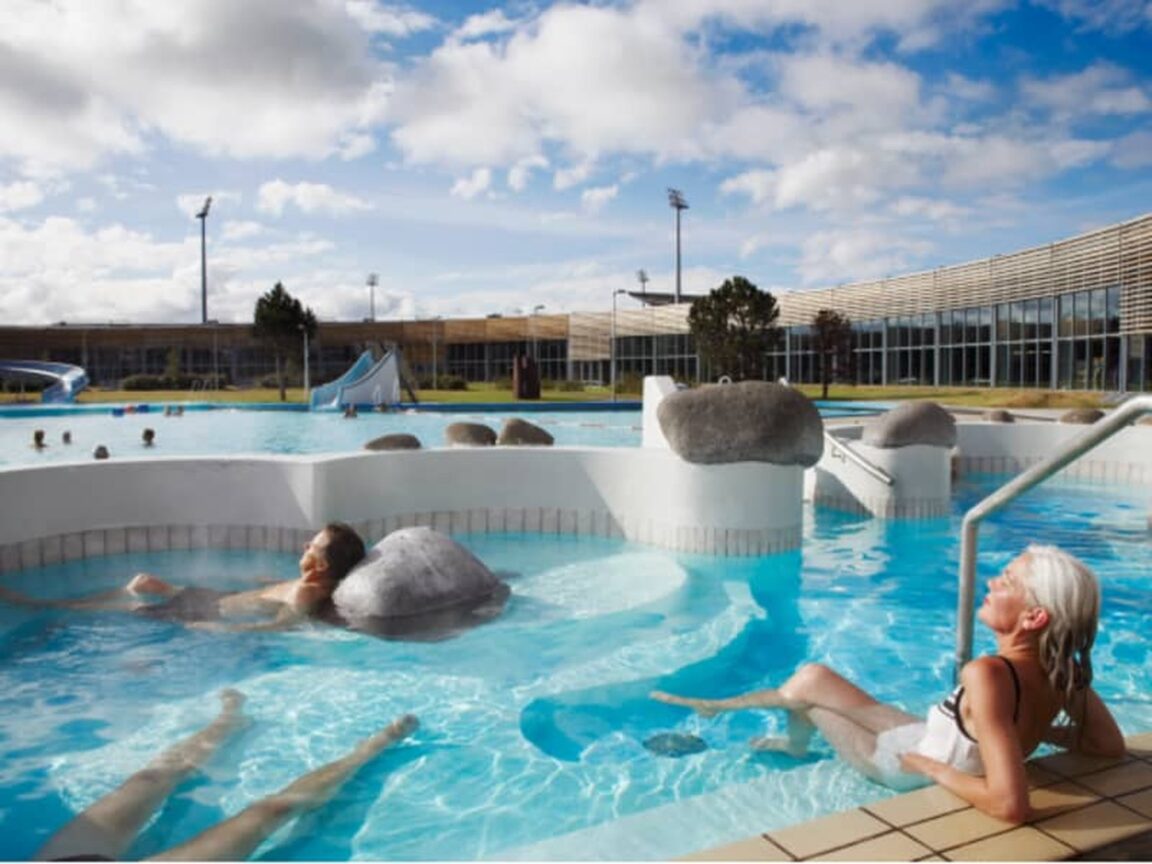
The heitir pottar, the hot pots, are where a sundlaug visit is actually spent. Most pools have several, labelled with their temperatures, and the local pattern is to start in a cooler pot and work upward, sitting rather than floating, head above the water, conversation low. Pots are social space: quiet talk about weather, news and football is normal, loud groups are not, and squeezing into a full pot without a nod is a small rudeness everyone notices.
Between pots, the cold tub earns its place. A short plunge, even a few seconds, resets the body for the next round of heat, and many pools pair the pots with a steam room and sauna for the same circuit. Children have their own paddling pools and slides, and the lane pool runs on its own etiquette: watch a lane’s pace before joining it. A full visit, done properly, takes an hour to ninety minutes, and rushing it misses the point entirely.
Which pools anchor a Ring Road trip?
Start in Reykjavik. Laugardalslaug is the full works: a 50 metre outdoor pool, indoor pools, children’s pools and water slides, numerous hot pots and a steam bath, per Visit Iceland’s listing. Sundholl is the atmospheric choice, a 1937 building with an indoor pool, hot tubs and a rooftop terrace. Vesturbaejarlaug is the neighbourhood original, small, friendly and a short walk from the centre. The Reykjavik City Card includes entry to the city’s pools, which makes a multi pool stay in the capital close to free at the margin.
On the road, the rule is to swim where the day ends. Akureyri’s pool in the north, Hofsos in the Skagafjordur area, and the village pools of the Eastfjords and the south coast all follow the same template: outdoor pool, two or three hot pots, a slide if the town is ambitious. Opening hours shrink in winter and village pools may run a split day, so the working habit is to check the town pool’s own page in the morning and aim for the early evening session, when the pots fill with locals and the light, in winter, may include the aurora overhead. Swimming pool culture in Iceland is inscribed on UNESCO’s list of Intangible Cultural Heritage, and an evening in a town pot is the fastest way to understand why.
When is the best time of day to go?
Pools run long days, commonly from early morning to 22:00 in the capital, and the character changes by the hour. Early morning belongs to lane swimmers and regulars doing lengths before work, and it is the quietest time to learn the routine without an audience. Midday is family time, with the children’s pools at their busiest. Early evening is the social peak, when the hot pots fill after work and the conversation is best; arrive before the rush if a seat in the hottest pot matters. In winter, an evening visit carries the bonus that the pools stay open in full darkness, and on clear nights the northern lights regularly appear over the outdoor pots, a sight the lagoon spas charge handsomely to frame. In summer the same late hours come with daylight close to midnight, and a 21:00 soak in bright sun is its own novelty. Whichever hour is chosen, build in the full routine rather than a dip: arrive, change, shower properly, swim a few lengths to earn the heat, then rotate through the pots slowly. Locals measure a pool visit in unhurried time, and a traveller who treats the sundlaug as a checkbox stop between sights has missed the thing itself, which is Iceland slowing down in warm water.
Frequently Asked Questions
Do visitors really have to shower without a swimsuit?
Yes. It is a hygiene rule, enforced at every public pool in Iceland, and it is what allows the pools to run with minimal chlorine. Showers are gender separated, the wash takes about two minutes, and larger pools have private cubicles. Staff can and do send unwashed swimmers back.
How much does a local pool cost compared with the lagoons?
A fraction. City pools are municipal services with a modest single entry fee, and the Reykjavik City Card includes all eight capital pools. The famous lagoons charge attraction prices many times higher. Check the City of Reykjavik’s pool pages for the current fee before visiting, as prices are revised periodically.
Can children use the pools?
Yes, and most pools are built with them in mind, with paddling pools and slides. At Reykjavik pools, children under 10 must be accompanied in the water by a swimmer aged 15 or older, and non swimmers must use approved floats. Saunas have their own age rules and require an accompanying adult for younger teenagers.
What should a first timer bring?
A swimsuit, a towel and a bag for wet gear. Most pools rent towels and swimsuits at the desk, soap is provided in the showers, and lockers take a wristband key worn while swimming. Leave the phone in the locker: phones and cameras are prohibited in changing rooms and pool areas, and the rule is enforced without exceptions for visitors.
Photo: The hot pots at Laugardalslaug, Reykjavik, via Visit Iceland (visiticeland.com), Iceland’s official tourism authority, used with credit. Pool rules checked against the City of Reykjavik’s published pool rules on 24 November 2026.