 Hana Kim
Seven hours at Incheon is enough for exactly one big move, and the airport is unusually honest about your options. You can take a free official transit tour and let the airport handle the timing, you can sleep and wash properly at the landside jjimjilbang, or, at seven hours and above, you can ride the AREX express into Seoul and back with time to spare. What you should not do is improvise. Every option has a threshold, and this guide prices each one in time: the tour durations, the spa’s location catch, the express train’s 43 minutes, and the maglev, which is running again, but no longer as transport. Pick by your hours, not by your ambitions.
Quick Facts
The airport: Incheon International (ICN), Seoul’s main gateway, on Yeongjong Island about an hour west of the capital. Terminal 1 and Terminal 2 are linked landside by free shuttle bus and by one AREX stop.
Free transit tours: The airport’s own programme runs courses of about 1 to 5 hours for transit passengers, most free or a few US dollars, including Seoul palace courses of about 5 hours. Register at the Transit Tour desks on the first floor after immigration, at least 30 minutes before departure, with passport and boarding passes.
The spa: Spa on Air, a 24-hour jjimjilbang in the basement of Terminal 1, landside, with baths, saunas and sleeping rooms. Day or overnight admission is roughly 25,000 won. Airside transit passengers who do not enter Korea cannot reach it, but free showers and rest zones exist airside on the fourth floor of both terminals.
The Seoul threshold: AREX Express trains run non-stop from Terminal 1 to Seoul Station in 43 minutes, 51 minutes from Terminal 2, for 13,000 won each way. The all-stop train costs 4,750 won from Terminal 1 and stops at Hongdae.
The maglev: The Incheon Airport Maglev reopened on 17 October 2025 after a suspension of more than three years, now as a free experiential ride rather than public transport: about 10:00 to 17:00, every 35 minutes, closed on Mondays, from Terminal 1 to Yongyu.
Entry paperwork: Transit tours leave the airport, so you clear immigration. Many nationalities are K-ETA exempt under the temporary exemption, and other transfer passengers can enter under the transit tour programme conditions. The e-Arrival Card is free and filed online before arrival.
Facts checked: 24 November 2026, against Incheon International Airport and Airport Railroad (AREX) sources.
Should you take the free transit tour?
For layovers between about four and eight hours, the transit tour is the best-engineered option, because the airport carries the risk. The programme is run by Incheon International Airport itself for connecting passengers, with a guide, a coach and a return timed against onward flights. Courses range from short Incheon city loops of an hour or two, taking in markets, the coast and Songdo, up to Seoul courses of about five hours that visit Gyeongbokgung Palace and Insadong. Most courses are free, a few carry a small charge of a few dollars, and meals are on you.
The mechanics matter. You register at the Transit Tour desk after immigration, desks sit in both terminals’ arrivals halls, and registration closes about 30 minutes before each departure. Some seats can be reserved online in advance, and the airport holds the rest for walk-ups, so an unbooked traveller with a long layover still has a real chance. Add immigration time at both ends to the headline duration when you judge a course against your connection. Our explainer on South Korea’s e-Arrival Card covers the entry form that now accompanies that immigration step.
What if you would rather sleep and wash?
Then your layover splits on one line: whether you are entering Korea or staying airside. Landside in Terminal 1’s basement, Spa on Air is a proper jjimjilbang, the Korean bathhouse format of hot baths, saunas, snack bar and communal sleeping rooms with mats and low light. It runs 24 hours, and an overnight admission costs roughly 25,000 won, which makes it the cheapest real sleep in the airport. The capsule hotel in the transportation centres of both terminals costs more and gives you a door and a bed instead of a mat.
Airside, the offer is different but still civilised: free shower rooms and rest zones with recliners on the transit floors, plus nap areas, all inside security. If your connection does not justify immigration, or your nationality makes entry complicated, the airside version is the right layover: shower, recline, eat, and save Seoul for a trip that gives it days. Travellers continuing into Korea properly should read our K-ETA exemption explainer before assuming which paperwork applies to them.
When does the Seoul dash actually work?
The maths is unforgiving and simple. The AREX Express takes 43 minutes from Terminal 1 to Seoul Station, runs non-stop, and costs 13,000 won each way with a reserved seat. Budget an hour from landing to the train, 43 minutes in, the same back, and a full hour of buffer before your onward flight for security and boarding. That is roughly four hours of overhead, which means a seven-hour layover buys you about three hours in Seoul: enough for one palace, one market or one very good meal near Seoul Station, Hongdae or the palace district, and nothing more.
At six hours the dash turns reckless, and below that it is not a plan at all. The all-stop AREX, at 4,750 won from Terminal 1, stops at Hongik University for Hongdae and takes longer into the centre, so it suits the express-train timetable only when your margin is generous. If you do go, ride the express, set a phone alarm for your return train, and treat the alarm as a departure, not a suggestion.
What is going on with the maglev?
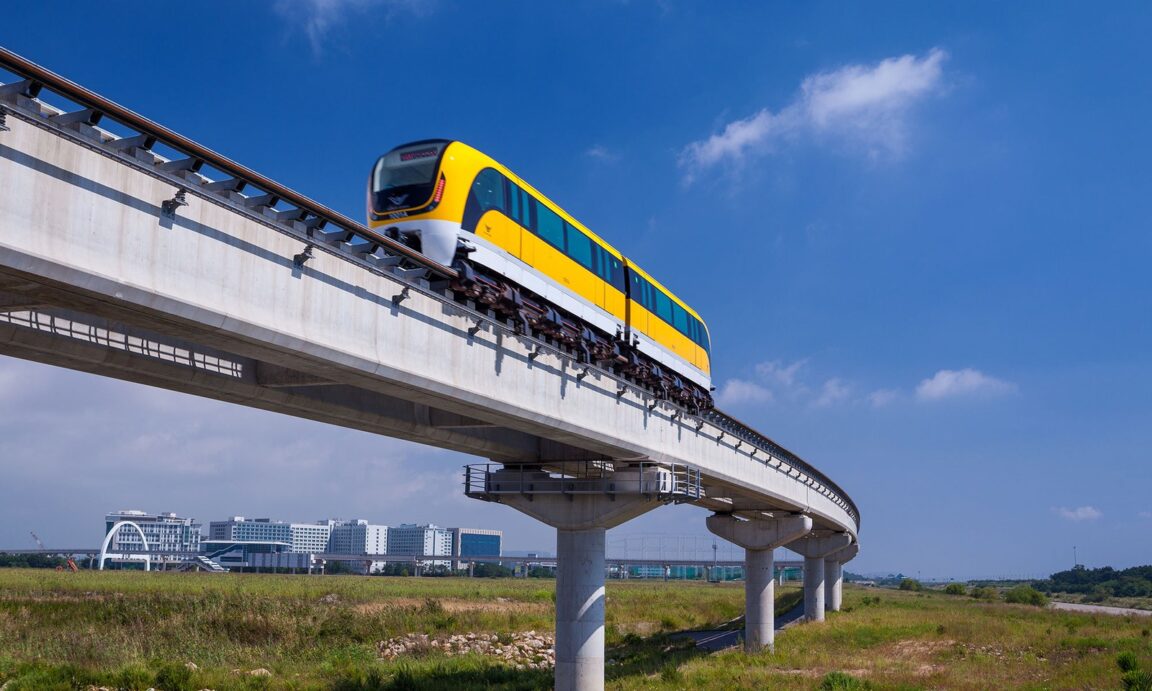
Older guides will tell you the airport maglev is a free, frequent shuttle. That maglev no longer exists, and the one that replaced it is not quite running as transport either. The line from Terminal 1 to Yongyu, through Paradise City, closed in July 2022 for heavy maintenance and stayed closed for over three years. It reopened on 17 October 2025 reclassified as a tourism and experiential facility: free to ride, six stations, about 24 trips a day at 35-minute intervals between roughly 10:00 and 17:00, and no service on Mondays.
So treat it as an attraction that happens to move. If your layover is long, landside and in the middle of the day, a round trip on one of the world’s few urban maglevs is a genuinely enjoyable hour, with the Paradise City stop for food and the Yongyu end for a look at the coast. Just never build a connection around it, and on a Monday, do not build anything around it at all.
What if you only have three hours?
Stay airside and spend the layover inside one of the world’s most deliberately entertaining airports. The Korean Cultural Experience zones in both terminals run free hands-on sessions in traditional crafts such as hanji paper work and mother-of-pearl inlay, and they need no immigration stamp and no booking logic beyond showing up. The transit floors add gardens, performance stages with rotating traditional music and dance, and some of the best airport food courts in Asia, with Korean restaurants priced for locals rather than captives. Three hours disappears easily, and it disappears without a single calculation. That, in the end, is the layover skill Incheon rewards: match the plan to the clock once, on landing, and then stop watching it.
Frequently asked questions
Are Incheon transit tours really free? Most courses are free and a few cost a few US dollars. They are run by the airport for transit passengers with layovers, include the guide and coach, and exclude meals. Register at the Transit Tour desk after immigration at least 30 minutes before departure.
How long a layover do I need for Seoul? About seven hours minimum. The AREX Express takes 43 minutes each way from Terminal 1, and immigration, security and buffer time consume roughly four hours of the layover in total.
Can I use the airport spa without entering Korea? No. Spa on Air is landside in Terminal 1’s basement, so it requires clearing immigration. Airside passengers have free showers and rest zones on the transit floors instead.
Is the Incheon maglev running? Yes, since 17 October 2025, but as a free experiential ride, roughly 10:00 to 17:00 at 35-minute intervals and closed on Mondays. It is an attraction, not a practical transport link, and it serves only the airport island, running from Terminal 1 through Paradise City to Yongyu at the island’s western end.
What does the AREX Express cost? 13,000 won each way between Incheon Airport and Seoul Station. The all-stop train is 4,750 won from Terminal 1 and also stops at Hongdae, but takes longer.
Featured image: The yellow Incheon Airport Maglev crosses its elevated guideway above Yeongjong Island, with the airport district behind it. Photo: Incheon International Airport, via airport.kr, the airport’s official website, used with credit.