 River Callahan
The Kalalau Trail is governed by two gates, and confusing them is the classic first timer error. The first two miles, from the trailhead at Haena State Park to Hanakapiai Beach, are a day hike covered by a Haena park entry reservation. Everything beyond Hanakapiai, even a day hike, requires a Napali Coast camping permit, the same permit whether or not the holder sleeps out, and the full trail runs 11 miles each way to Kalalau Beach across five valleys of cliff trail that is graded but almost never level.
Quick Facts
- Distance: 11 miles one way from Ke’e Beach in Haena State Park to Kalalau Beach, 22 miles return, traversing five valleys
- Day section: The first 2 miles to Hanakapiai Beach, plus the further 2 mile side trail to Hanakapiai Falls, need a Haena State Park entry or parking reservation, booked at gohaena.com
- Beyond Hanakapiai: A valid Napali Coast State Wilderness Park camping permit is required whether or not you camp, per Hawaii State Parks
- Camping: Only at Hanakoa, around mile 6, and at Kalalau; a maximum of five nights in the park, with a Hanakoa stopover counting against the total
- Permit cost: Hawaii State Parks lists camping at $25 per night per campsite for residents and $35 for non residents
- The hazard: Stream crossings at Hanakapiai, Hanakoa and Kalalau can become impassable after rain, and Hanakapiai Beach is a look only beach where drownings occur regularly, in the state’s own capitalised warning
Which permit covers which part of the trail?
Hawaii’s Division of State Parks draws the line at Hanakapiai, and it draws it firmly. There is no standalone hiking permit for the Kalalau Trail. To walk from Haena State Park to Hanakapiai Beach or up to Hanakapiai Falls, a visitor needs the park’s entry system: a parking and entry reservation, or a shuttle and entry reservation, purchased through gohaena.com, with Hawaii residents exempt on showing a Hawaii ID. To set one foot past Hanakapiai Beach along the coast, the requirement changes category entirely: a camping permit for Napali Coast State Wilderness Park, required, in the state’s words, whether or not you choose to camp.
That rule kills the most common workaround. Walking the whole 22 mile return in a single day to avoid camping does not avoid the permit; the state prohibits attempting the full trail in a day without one, and does not recommend day hiking beyond Hanakoa even with one. Permits are in fierce demand, sell out well in advance in summer according to the park, and are booked through the state’s camping reservation system. The honest planning sequence is therefore backwards from most hikes: secure the permit dates first, then build flights and the rest of a Kauai stay around them.
Where can permit holders actually sleep?
A Kalalau permit is not a licence to camp anywhere along the trail. The park authorises camping at exactly two places: Hanakoa Valley, roughly six miles in, and Kalalau Valley at the trail’s end. Permits are issued for Kalalau, and a Hanakoa night is a permitted stopover on the same permit, intended for hikers who need to break the trek because of fatigue, weather or darkness. The stopover is not free in the accounting that matters: one night at Hanakoa reduces the nights available at Kalalau, inside a hard ceiling of five nights total in the park.
Facilities are basic and the park is plain about self reliance. Composting toilets stand at Hanakapiai, Hanakoa and Kalalau. Everything else is carried: tent or tarp, sleeping gear, stove and fuel, food, and a water filter or purification tablets, with stream water treated before drinking. Commercial guiding is prohibited in the park, as is boat drop off and pick up at Kalalau except under special permit, so the trail is walked in and walked out, unsupported, by design.
Why is Hanakapiai the point of no return?
Hanakapiai earns its decision point status twice over. Legally, it is where the day reservation ends and the camping permit regime begins, and rangers check permits on this trail. Physically, it is where the commitment changes: the beach sits two miles in, the falls trail climbs two more miles up the valley, and a hiker who has spent the day reaching the falls has an eight mile return day behind them before any thought of continuing. The state recommends the trail beyond Hanakapiai for experienced hikers only.
The beach itself demands respect rather than a swim. Hawaii State Parks prints its warning in capitals: drownings occur here regularly. Hanakapiai’s shore break and currents have killed strong swimmers, and the correct use of the beach is as a viewpoint and a rest stop. The same caution applies to the stream that shares the valley’s name, crossed just before the beach: in dry weather it is a rock hop, after heavy rain it can rise fast and run brown and forceful, and the rule on this trail is absolute. Never cross a flooded stream. Wait, even if waiting costs hours or the permit day itself, because the crossings at Hanakapiai, Hanakoa and Kalalau are the places where this trail’s accident record is written.
How should the full hike be paced?
The trail traverses five valleys, dropping to sea level at Hanakapiai and Kalalau and climbing over the ridges between, and the state’s description, graded but almost never level, is the pacing truth: fitness for distance is not fitness for this, which is distance plus repeated ascent plus exposure on narrow cliff sections. Most permit holders walk to Hanakoa on day one, camp, and continue to Kalalau on day two, which is exactly the pattern the stopover rule was built for. Strong hikers walk through to Kalalau in a long day and keep Hanakoa as the break on the way out.
Weather sets the real itinerary. Rain on Kauai’s north shore can close the trail’s logic in an afternoon: streams rise, the red dirt turns slick, and a schedule built with no slack becomes a decision nobody should have to make at a flooded crossing. Build the slack in. A five night ceiling allows a weather day at Kalalau, which is also, not coincidentally, the day the place itself deserves: the valley, the beach, and the cliffs that end the trail where the pali meet the sea and the path simply stops.
What does the trail ask of a hiker’s kit and judgment?
The park’s own gear list reads like a checklist for self sufficiency: tent or tarp, sleeping bag or blanket and pad, a cooking stove with fuel, water purification, first aid kit, rain gear, sunscreen and insect repellent. There is no resupply, no shelter hut and no ranger station beyond the trailhead, and mobile coverage cannot be assumed in the valleys. Water comes from streams and must be treated, both because of bacteria and because Hawaiian watershed runoff carries leptospirosis risk, a point state health guidance makes for all freshwater swimming and drinking in the islands. Footwear should be chosen for wet rock and mud rather than dry trail, and poles earn their weight on the descents. The judgment half of the kit matters more: a turnaround time for the Hanakapiai Falls side trip, a hard rule on flooded crossings, and enough food to wait out a day of high water without pressure. Kalalau rewards exactly the hikers it is designed for, the ones who treat the permit as the start of the planning rather than the end of it.
Frequently Asked Questions
Is there a lottery for Kalalau permits?
No. Despite the word travellers use for it, Hawaii State Parks does not run a lottery. Camping permits are sold through the state reservation system on a first come basis and, in the park’s words, often sell out well in advance, particularly in summer. The competition feels like a lottery; the mechanism is a booking window, so being ready when dates release is the whole game.
Can the Kalalau Trail be hiked in one day?
Not legally as a loophole and not sensibly at all. A camping permit is required beyond Hanakapiai whether or not you camp, the state prohibits attempting the full 22 mile return in a day without a permit, and it does not recommend day hikes beyond Hanakoa even with one.
What does the day hike to Hanakapiai require?
A Haena State Park reservation: parking and entry, or shuttle and entry, booked at gohaena.com. Hawaii residents with a Hawaii ID do not need the reservation. The same reservation covers the side trail to Hanakapiai Falls, making an eight mile day in total.
When should a hiker turn back at a stream crossing?
Whenever the water is discoloured, fast, or above knee height, and always when it is rising. Crossings on this trail become impassable after rain and have been the site of rescues and fatalities. The state’s guidance and every experienced account agree: wait for the water to drop rather than test it.
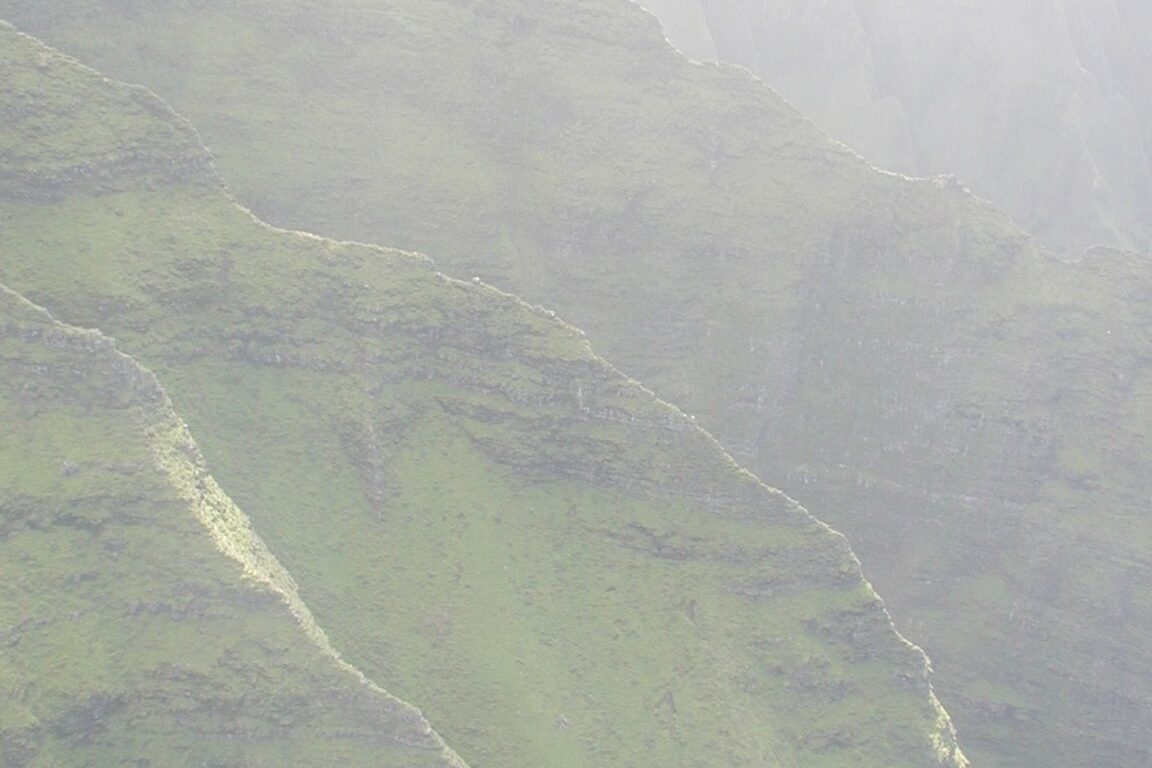
Photo: The fluted cliffs of the Napali Coast, from Hawaii’s Department of Land and Natural Resources, Division of State Parks (dlnr.hawaii.gov), the trail’s managing authority, used with credit. Permit rules and fees checked against dlnr.hawaii.gov on 24 November 2026.