 Lucas Meyer
Two weeks in Asia fits inside a 7kg cabin allowance when the trip is built around laundry, not around outfits. The system is simple: pack five days of clothing, wash twice, choose fabrics that dry overnight in humid air, and buy the bulky consumables after landing. AirAsia, the region’s strictest large carrier, allows two cabin pieces with a combined weight of 7kg, and that number, not the size of the suitcase, is the real design constraint for a carry-on only Asia trip.
Quick Facts
- The hard limit: AirAsia allows one cabin bag up to 56cm x 36cm x 23cm plus one personal item up to 40cm x 30cm x 10cm, with both pieces together weighing no more than 7kg
- The generous end: Scoot allows 10kg combined in Economy, and Cebu Pacific raised its combined cabin allowance to 10kg for flights departing from 15 September 2026
- The strict middle: Jetstar and VietJet also work to a 7kg combined cabin limit on their standard fares
- The wardrobe: Five tops, three bottoms, five sets of underwear and socks, one sleep set, one swim set, worn shoes plus one packed pair
- The laundry cadence: Wash on days 4 and 9, so no garment is needed more than five times
- The bag itself: A soft sided cabin bag around 1kg or less, because a 1.5kg hard case spends over a fifth of the AirAsia allowance before anything goes in it
Why does the 7kg limit decide everything?
Most packing advice starts with volume. In Southeast and East Asia it should start with weight, because the region’s low cost carriers weigh cabin bags at the gate and the allowances differ enough to change what a traveller can carry. AirAsia’s published rule is two pieces, a cabin bag and a smaller personal item, at 7kg combined. Scoot publishes 10kg combined in Economy and markets the difference openly. Cebu Pacific moved from 7kg to 10kg in September 2026. A bag packed to a comfortable 9kg is legal on Scoot and Cebu Pacific and chargeable, or refused, on AirAsia, Jetstar and VietJet. Packing to 7kg keeps every regional carrier open, which matters on a two week trip that strings together three or four short flights booked on price rather than loyalty.
Size still matters, and the boxes are not interchangeable. AirAsia’s cabin bag box is 56cm tall, while Scoot’s is 54cm, so a case bought to the AirAsia maximum can fail a Scoot sizer. A bag around 54cm x 35cm x 20cm or smaller clears both, and soft sides forgive the rest. Travellers buying a bag for Asia should shop to the smaller box and the lower weight, then stop thinking about the hardware.
What is the laundry maths behind a five day wardrobe?
Fourteen days divided by a five day wardrobe means each piece is worn, on average, just under three times, with two washes resetting the rotation. Wash one falls on day 4, when the first four days of clothing go in together, and wash two falls on day 9. That spacing is deliberate: it keeps a clean set in reserve on every day of the trip, and it leaves the last two days wash free, so nothing damp is packed for the flight home.
The wash itself is rarely the obstacle travellers imagine. Laundries that wash, dry and fold by the kilogram operate across the region’s cities and resort towns, and hotels and guesthouses commonly offer the same service at a higher price per kilo. The system’s only real rule is timing: hand the bag over in the morning and collect it the next day, rather than counting on a same day turnaround in wet season. A small dry bag inside the suitcase doubles as the laundry bag, keeps worn clothes separate, and weighs almost nothing.
Which fabrics actually dry in humid air?
Humidity is the quiet failure mode of light packing in Asia. A cotton t-shirt washed in Bangkok or Bali can still feel damp two days later, and a wardrobe built on cotton collapses the laundry cadence within the first week. The fabrics that work are thin merino wool, which resists odour across several wears and dries faster than its weight suggests, and lightweight synthetic knits, which dry overnight even in still, wet air. Linen is the honourable exception among natural fibres: it dries reasonably fast and stays comfortable in heat, though it creases.
The practical build is a mix. Tops in merino or synthetic, because they are washed most. Bottoms in a light technical weave or thin cotton twill, because they are washed least. Underwear and socks in quick dry synthetic, because they turn around fastest and are the pieces the whole cadence depends on. One rule decides borderline items: if a garment cannot dry overnight hanging in a bathroom, it does not earn its weight.
What should be bought on arrival instead of packed?
Every gram spent on consumables at home is a gram denied to clothing, and Asia’s convenience stores and pharmacies make restocking easy. Sunscreen, shampoo, shower gel, toothpaste beyond a travel tube, insect repellent and basic painkillers are all cheaply and widely available in the region’s cities, usually within a short walk of arrival hotels. Buying them after landing also solves the cabin liquids limit in one move, because nothing larger than a travel size needs to fly at all.
The same logic applies to a short list of bulky items. A cheap umbrella bought locally beats a packed one in the rainy season. A sarong or light scarf bought in the first market town covers temple visits, beach use and air conditioned buses for the rest of the trip. What should never be delegated to arrival shopping is anything size specific or trip critical: footwear that fits, prescription medication, chargers and adapters, and the first night’s change of clothes, which stays in the personal item in case plans change.
How does the bag get weighed before the airport does it?
The final step is a rehearsal. Pack the bag fully, including the personal item, and weigh both together on a luggage scale at home. The target is 6.5kg, not 7kg, because gate scales vary and a half kilo of headroom absorbs a paperback, a water bottle bought after security stays outside the count only if it is carried, not bagged, and the small purchases of the first days. If the rehearsal fails, the cuts come in a fixed order: the second packed pair of shoes first, then the just in case layer, then any garment that duplicates another’s job.
Worn weight is the system’s pressure valve. The heaviest items, walking shoes, the one warm layer for flights and mountain towns, and a phone and power bank in pockets, travel on the body, where no regional carrier weighs them. Used honestly, wearing the heavy layer is worth roughly a kilo, which is the difference between a five day wardrobe and a four day one.
Does the system survive a cold leg?
Two week Asia trips often end somewhere colder than they began: a few days in the mountains, a northern city in shoulder season, a night train with aggressive air conditioning. The system absorbs one cold leg without a second bag, because the warm layer is worn in transit anyway and a packable insulated jacket compresses to the size of a wash bag. What it cannot absorb is two climates at full strength, and the honest answer for a trip split between tropical lowlands and a genuinely cold week is to post a small parcel of warm clothing to the mid trip hotel, or accept one checked bag for that itinerary alone. The system is a tool for the common case, not a religion, and its credibility comes from naming the case it does not cover.
Frequently Asked Questions
Is 7kg really enough for two weeks in Asia?
Yes, with laundry. Five days of light, quick dry clothing, toiletries bought on arrival and the heaviest items worn in transit bring a realistic packed weight of 6 to 6.5kg. Without laundry, no: fourteen days of unworn changes cannot be compressed into the limit, which is why the wash cadence is the system, not an accessory to it.
Which airline allowance should a multi carrier trip be packed to?
The lowest one on the itinerary. AirAsia, Jetstar and VietJet work to 7kg combined, Scoot and, since September 2026, Cebu Pacific allow 10kg. A bag packed to the strictest carrier on the route never needs repacking mid trip.
Do personal items count toward the weight?
On AirAsia, yes: the published allowance is the combined weight of the cabin bag and the personal item. That is why the personal item in this system carries only the flight kit, documents and one change of clothes, and why its own weight matters when choosing it.
What about souvenirs on the way home?
Buy them light, buy them late, or post them. A traveller who fills the headroom early has three honest options: wear purchases, mail a parcel home from a city post office, or pay for a checked bag on the final flight only, which is usually the cheapest checked bag of the trip because it is bought once.
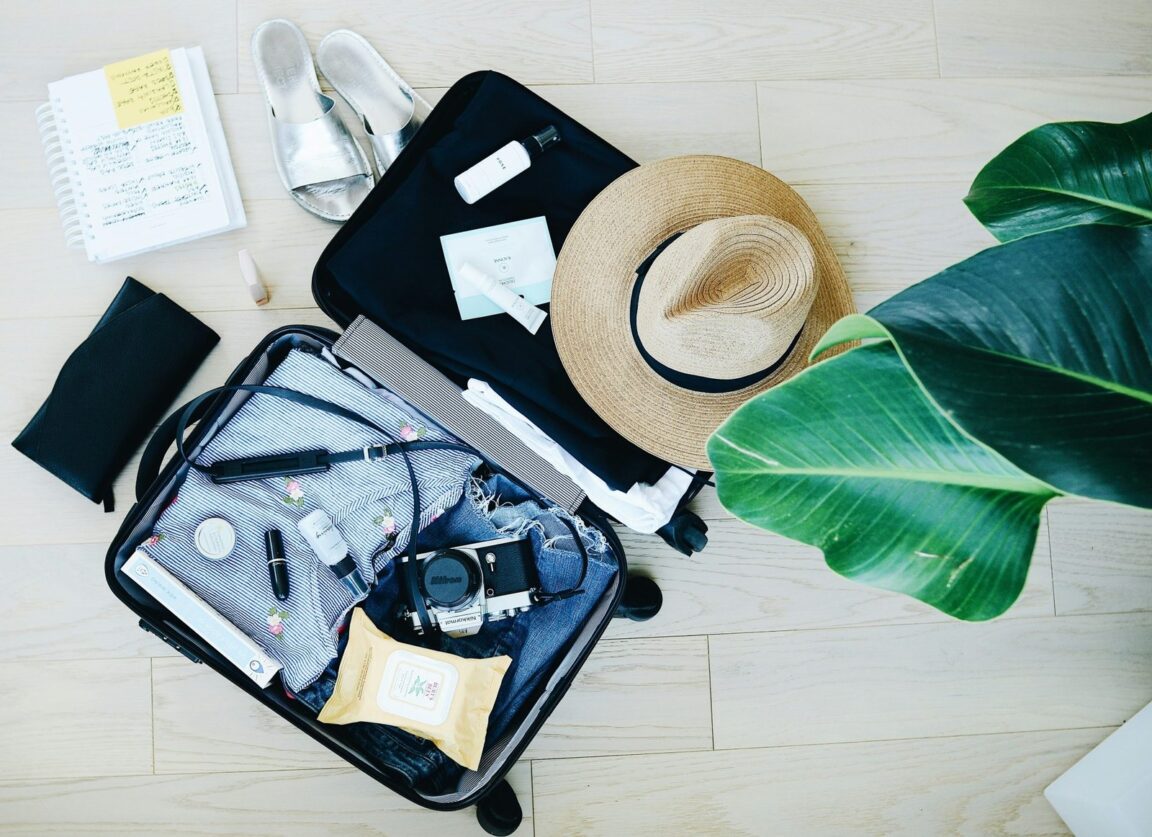
Photo: A packed carry-on suitcase, photographed by Marissa Grootes, via Unsplash (Unsplash License). Prices and allowances checked against the carriers’ published baggage pages on 24 November 2026.