 LeVar Thomas
Yes, you can still see Broadway without paying full price in 2026, and the system has four distinct doors: the digital lottery, where you enter free and pay a fixed low price only if you win; rush, a limited block of same day seats sold first come, either at the box office when it opens or in a morning app drop; standing room, sold at the back of the orchestra only when a performance is sold out; and the TKTS booths, which sell same day seats at up to 50 percent off. The cheapest ticket on Broadway remains the Hamilton lottery at $10. Most lottery and rush seats land between about $35 and $59, the limit is usually two tickets per person, and every policy can change mid run, so the working rule is to check the show’s own page on the day and treat this guide as the map, not the timetable.
Quick Facts
- Cheapest seat: Hamilton’s digital lottery, $10, entered through the show’s official site and app
- Typical range: Lottery seats about $35 to $59, rush about $40 to $59, standing room about $39 to $49 where offered
- The platforms: Broadway Direct, Telecharge’s rush site at rush.telecharge.com, TodayTix and Lucky Seat run most digital lotteries and rushes
- TKTS: Same day and next day matinee seats at up to 50 percent off, with an $8 per ticket service charge included in the board prices; limit six per person
- TKTS Times Square: Broadway at West 47th Street; Monday, Tuesday and Friday 3 pm to 8 pm, Wednesday, Thursday, Saturday and Sunday 11 am to 8 pm
- Standing room rule: Sold only when the performance is sold out, usually at the box office on the day, two per person, and you stand for the whole show
- Golden rule: Seats are at the box office’s discretion and may be partial view; policies change, so verify on the show’s official page before planning around one
How does the lottery door work?
The lottery is the lowest effort door and the only one that costs nothing to try. You enter online, usually for one or two tickets, during a window that typically opens the day before the performance, and winners are drawn and notified with a short window, often about an hour, to pay before the tickets are released to the next name. The platforms divide the current Broadway season between them. Broadway Direct runs the lotteries for a slate that includes Wicked, The Lion King, MJ, Aladdin and Six. Telecharge’s rush site runs lotteries and digital rush for shows including Buena Vista Social Club, Maybe Happy Ending, Oh, Mary! and Operation Mincemeat, with entries commonly opening at midnight the day before and draws at 10 am and 3 pm. TodayTix runs the Friday Forty for Harry Potter and the Cursed Child, $40 tickets drawn weekly, and Lucky Seat handles draws for shows such as Hadestown and The Book of Mormon. Hamilton stands apart: its $10 lottery, run through the show’s official site and app, is the best value seat in New York theatre and the one every budget traveller should enter for every performance they could attend. Enter lotteries as a background habit across your whole trip, not as a plan for one specific night, because the maths only works across several draws.
How is rush different, and when does it beat the lottery?
Rush is a sale, not a draw: a limited number of discounted seats are released for that day’s performance, first come, first served, until they are gone. In person rush happens at the theatre’s box office when it opens, usually 10 am, and rewards the early and the local; Wicked’s in person rush at the Gershwin, listed at $45, is the classic example. Digital rush moves the queue into an app at a set morning hour, commonly 9 am on TodayTix or 11 am on Telecharge, and sells out in minutes for popular shows. Rush beats the lottery when you are already in the theatre district with a flexible evening, because it converts effort into certainty on the day instead of luck the day before. The disciplines are the same everywhere: two tickets per person at most, photo ID and the paying card at collection for many shows, and seats assigned at the box office’s discretion, which can mean the front row, the side orchestra or a partial view. Student rush, where offered, undercuts general rush with a valid student ID; Six has listed a $35 student rush alongside its $45 lottery, and it is always worth asking at the box office what a student card buys.
What are the standing room rules?
Standing room is Broadway’s pressure valve: numbered standing positions at the back of the orchestra, sold only when every seat for that performance has gone. Because it depends on a sellout, it exists mainly at the hits, and it is sold at the box office on the day, usually from opening, at prices that have recently run from about $39 at Chicago and Hadestown to $49 at Six and Maybe Happy Ending. The limit is two per person, and the contract is honest: you stand, leaning on a rail, for the full running time, which for a three hour musical is a genuine physical commitment. The compensations are real too. The view from the back of the orchestra is full stage and unobstructed, the sound is excellent, and for a sold out phenomenon standing room can be the only same week way in at any sane price. Arrive at the box office early on the day, ask directly whether standing room will be sold and when, and dress for standing, not sitting.
Where does TKTS fit in 2026?
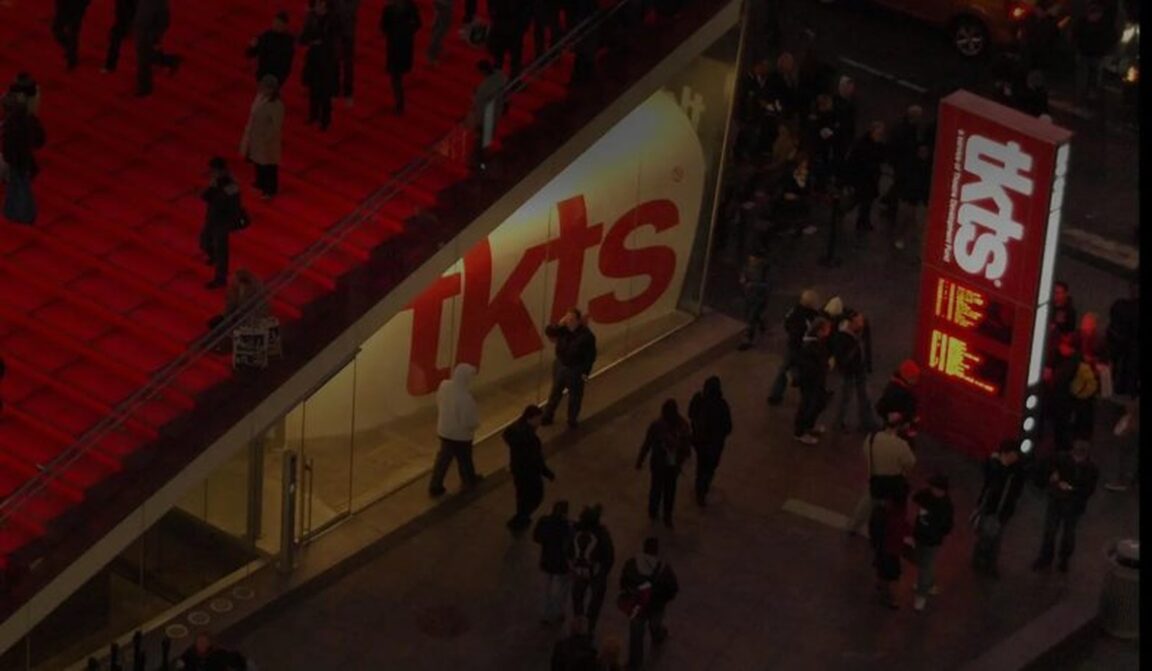
TKTS, run by the Theatre Development Fund, remains the flexible traveller’s anchor: same day performances and next day matinees at discounts of up to 50 percent, sold in person at the Times Square booth under the red steps at Broadway and West 47th Street and at the Lincoln Center booth at 61 West 62nd Street. The prices on the board already include TDF’s $8 per ticket service charge, which supports the fund’s other programmes, the limit is six tickets per person, and payment runs from the major cards to cash and TKTS gift cards. Two features reward repeat visitors: the TKTS app shows live availability at the booths before you join the line, and the 7-Day Fast Pass lets anyone who bought at the Times Square booth return within a week, ticket stubs in hand, and use the Fast Pass lane instead of the queue. TKTS is the door to choose when you want a good seat tonight at a known price and do not care which of five acceptable shows it is. It is the wrong door for one specific must-see title, which is what lotteries and patience are for. Pair this guide with our New York in 3 days itinerary to place a theatre night inside a first trip, and with our guide to driving into Manhattan under congestion pricing if you are coming in by car.
Which shows never discount, and what is the honest fallback?
Manage expectations at the top of the market. The season’s hottest titles at peak dates may offer a lottery and nothing else, or suspend discounting entirely for holiday weeks, and long running phenomena ration their cheap seats to a handful per performance. Some shows offer no rush in a given week, and standing room vanishes the moment a performance is not sold out. The honest fallbacks, in order: enter the lottery for every performance in your window; be in the district for a digital rush drop with the app already unlocked; check the TKTS board in the app at midday and again before the booth’s evening session; and consider the Wednesday matinee and the first preview weeks of a run, when demand is softest. Playbill’s running list of rush, lottery and standing room policies is the industry reference and the fastest way to confirm a single show’s current terms before you build an evening around them.
Frequently Asked Questions
What is the cheapest Broadway ticket in 2026?
The Hamilton digital lottery at $10, entered through the show’s official site and app. It is a draw, not a sale, so enter for every performance you could attend during your trip.
What is the difference between rush and lottery?
A lottery is a free draw held in advance; winners get a short window to buy fixed price seats. Rush is a first come sale of a limited number of same day seats, at the box office or in an app at a set time. Lottery rewards luck, rush rewards effort.
Can I choose my seats with a lottery or rush ticket?
No. Seats are assigned at the box office’s discretion, pairs are not always together at every show, and seats may be partial view. If the exact seat matters, buy a full price ticket.
When is standing room sold?
Only when a performance is sold out, at the box office on the day, usually with a limit of two per person. Expect to stand for the entire show at a rail at the back of the orchestra.
Is TKTS cheaper than rush?
Sometimes. TKTS discounts reach 50 percent but start from full price, so a hit show at TKTS can cost more than a $45 rush seat and less than a standard ticket. The app shows live prices, so compare on the day.
TKTS hours, fees, limits and Fast Pass rules checked against tdf.org, the Theatre Development Fund’s official site, and show lottery and rush policies against Playbill’s policy listings and the Broadway League’s broadway.org on November 24, 2026. Individual show policies change without notice; confirm on the show’s official page on the day.
Photo: Theatre Development Fund, via tdf.org, the fund’s official website, used with credit. The TKTS discount booth and red steps in Times Square at night.