 Elena Vasquez
A week in Lisbon costs less than its reputation and more than its myth, and the difference between the two is almost entirely knowable in advance. The transport maths is exact, because Lisbon publishes its fares. The food maths is favourable, because the tasca lunch is one of Europe’s last great bargains. And the accommodation maths contains one trap with a local nickname in this guide, the Alfama stair tax, the way the city’s cheapest rooms charge in climbs, noise and absent lifts what they forgive in euros. This guide prices a Lisbon week line by line using the official 2026 fares published by Carris and the Lisbon Metro, checked on November 24, 2026, and separates the verified numbers from the planning allowances, which are labelled as such, so you can build a budget on facts and adjust the allowances to your own appetite.
Quick Facts
- The card: every visitor ticket loads onto the Navegante occasional card, the card long sold as Viva Viagem. It costs 0.50 euros and is reusable for a year.
- Single fare: a Carris and Metro ticket costs 1.90 euros for 60 minutes of travel. Pay as you go zapping costs 1.72 euros a ride. Buying on board costs more, 2.30 euros on a bus and 3.30 euros on a tram.
- The 24 hour ticket: 7.25 euros for unlimited Carris buses, trams and Metro for 24 hours from first validation. Adding the Cacilhas ferry makes it 10.35 euros. Adding CP suburban trains, for Sintra or Cascais days, makes it 11.40 euros.
- The week maths: seven 24 hour tickets cost 50.75 euros. A monthly Navegante pass costs 30 euros for the municipality or 40 euros for the whole metropolitan area, but it needs a personalised card, so for a simple week the daily tickets usually win on convenience.
- The funicular warning: since September 2025 the Gloria, Bica and Lavra funiculars and the Santa Justa lift have been out of service, and only the Graca funicular runs. Lisbon’s hills currently charge legs, not fares.
- The stair tax: the cheapest rooms in Alfama sit in walk up buildings on lanes no taxi can enter. The discount is real, and so is the climb, every day, with luggage, in the heat.
Transport: the one part of the budget that is exact
Build the week from the 24 hour ticket. At 7.25 euros it beats single fares from the fourth ride of a day, and a sightseeing day in Lisbon easily makes five or six: a metro to breakfast, a tram across town, a bus up to the castle, a tram home. Seven days of them total 50.75 euros plus the 0.50 euro card. The upgrade decisions are day specific. On a Sintra or Cascais day, the 11.40 euro version that includes CP trains is cheaper than a day ticket plus a separate rail return, so buy that version that morning and no other. On a cross river evening in Cacilhas, the 10.35 euro ferry version does the same job. Zapping, the pay as you go balance at 1.72 euros a ride, suits only a genuinely quiet day of two rides, and the on board fares, 2.30 euros on buses and 3.30 euros on the famous trams, are the tourist tax of the unprepared: the same tram ride costs 1.90 euros or less with the card loaded in advance. Travellers staying a month should do the other maths: the 40 euro metropolitan monthly pass covers metro, buses, trams, trains and ferries across the whole region, but it loads onto a personalised photo card, which is an errand too far for a seven day stay. For more on moving around the hills themselves, see our guide to Lisbon’s hills, elevators and funiculars, written before the current closures and updated in spirit by the warning above: at present, only Graca runs.
Food: the tasca economy, and what to allow
Lisbon still runs on the lunch menu. Across the city, tascas and small restaurants serve a midday menu of soup or a starter, a main of grilled fish, roast meat or the day’s stew, bread, a drink and often a coffee, aimed at working Lisbon rather than at visitors, and priced accordingly. As a planning allowance rather than a quote, budget the cost of a 24 hour transport ticket and a half again for that lunch, and you will rarely be surprised upward in a neighbourhood tasca and frequently be surprised downward. Dinners are the variable: the same city contains tasca dinners at lunch like prices and Bairro Alto and Chiado restaurants at full European capital rates, and the honest budget treats dinner as the day’s chosen splurge level rather than a fixed line. Coffee and a pastel de nata at a counter remain small change items, and the standing at the counter habit, rather than sitting on a terrace, is the traditional discount. Our Lisbon tasca food guide names the rooms and dishes to build the week’s lunches around. Market halls and the city’s many bakeries cover breakfast cheaply, and a traveller who lunches large in the tasca pattern can honestly dine on soup, grilled sardines in season and a glass of vinho verde without feeling any austerity at all.
Sleeping: the Alfama stair tax, priced honestly
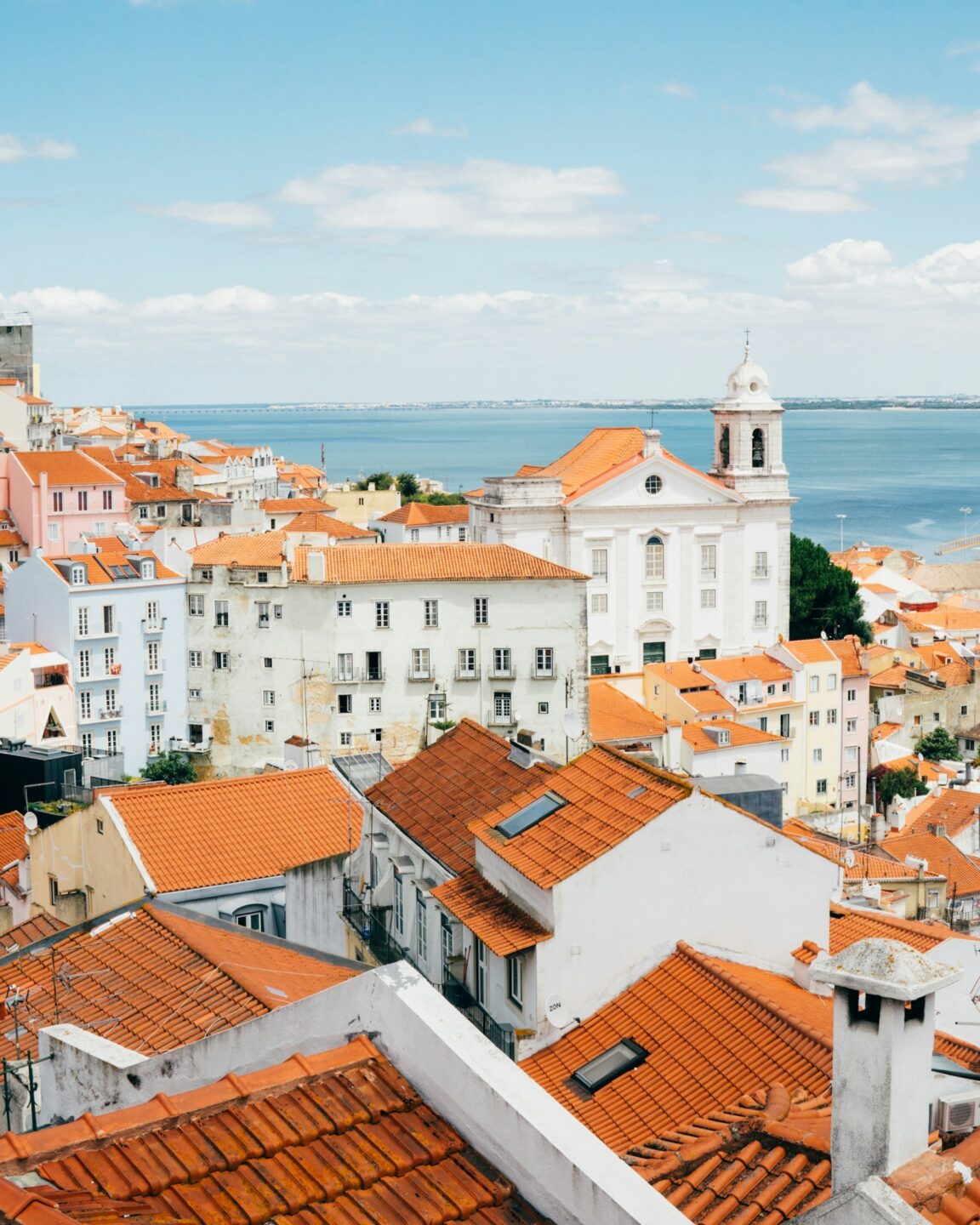
Accommodation is the week’s largest line and its least standardised, so this guide prices the mechanism rather than inventing rates. Lisbon’s price ladder runs on three variables: district, floor and lift. The historic centre commands the premium, and within it Alfama, the oldest quarter, a Moorish labyrinth of lanes and stairs below the castle, offers the city’s most atmospheric cheap rooms, in converted houses where the discount has specific physical causes. The building has no lift, because there is nowhere to put one. The lane has no vehicle access, because it is a stair. The room is small, because the house predates the corridor. None of this is a defect if you are young, fit and travelling light; all of it is a daily tax if you are not, collected in climbs with shopping, in summer heat, and in the walk back up from every evening out. The budget alternative with the same money is a plain, lift served room in a less storied district on the metro, Areeiro, Alvalade or Campo Pequeno, where local Lisbon lives, bakeries outnumber souvenir shops, and the ride downtown costs the 1.90 euros already in your transport maths. Choose Alfama for romance with open eyes, or the metro districts for value with a commute. What the week should not do is pay Alfama romance prices for a fifth floor room and discover the stairs on arrival.
A worked week, and the lines that move
Assemble the verified core first: transport for seven days on 24 hour tickets, 50.75 euros, plus the 0.50 euro card, plus one CP inclusive day already inside that pattern at the 11.40 euro rate if Sintra is on the plan, an adjustment of a few euros. That is the week’s entire movement cost for one person, and it is exact. Around it, set your allowances: tasca lunches as the anchor meal, one or two chosen dinners, counter breakfasts, and accommodation chosen by the district and lift logic above. The lines that move a Lisbon budget are never transport and rarely lunch. They are the terrace markup on drinks in view locations, the taxi taken instead of the tram, the funicular that is not running replaced by a ride hailing car up the hill, and the room upgraded or downgraded by the stair question. Control those four and a Lisbon week lands where you planned it, in a city whose municipal fares have now been held flat for years and whose lunch culture still feeds visitors like neighbours.
Frequently Asked Questions
How much does transport cost for a week in Lisbon?
On 24 hour Carris and Metro tickets at 7.25 euros, seven days cost 50.75 euros, plus 0.50 euros once for the Navegante occasional card. A Sintra or Cascais day is best covered by the 11.40 euro version of the ticket that includes CP trains.
Is the monthly Navegante pass worth it for a week?
Usually not. The pass costs 30 euros for the municipality or 40 euros for the metropolitan area, less than seven day tickets, but it requires a personalised photo card, which involves a separate application process. For stays approaching a month it wins easily.
Are Lisbon’s funiculars running?
Mostly not, at the time of checking. Since September 2025 the Gloria, Bica and Lavra funiculars and the Santa Justa lift have been out of service, and only the Graca funicular operates. Plan hill climbs on foot, by tram or by bus.
What is the cheapest way to ride Tram 28?
With a preloaded card. A Carris and Metro ticket costs 1.90 euros and a 24 hour ticket 7.25 euros, while buying on board the tram costs 3.30 euros for a single ride on that vehicle only.
Where should a budget traveller sleep in Lisbon?
Either in Alfama, accepting the stairs, small rooms and walk up lanes as the price of atmosphere, or in a lift served room in a residential metro district such as Areeiro or Alvalade, where rates run lower and local life is the compensation.
How should I budget food for the week?
Anchor on the tasca lunch menu, Lisbon’s working midday institution, allow dinner as the flexible splurge line, and take coffee and pastries standing at counters. Food is the budget’s friend in Lisbon, not its problem.
Image: The red tiled rooftops of Alfama, Lisbon, around the white church of Santo Estevao, looking toward the Tagus river. Photo: Unsplash contributor (photo 1536663815808-535e2280d2c2), via Unsplash, used with credit.