 Elena Vasquez
A Lisbon food day works in a strict order: petiscos standing or perched in a tasca at lunch, never a full menu all at once, a bifana eaten hot at a counter in the afternoon with mustard and piri piri, and pasteis only when they are warm, which in practice means going to Belem for the original bakery or catching a fresh tray in the centre. The custard tart hierarchy is real and it is settled by temperature and pastry, not by brand loyalty. Eat the tart hierarchy from the top down, treat the tasca lunch as the main event rather than a snack before dinner, and book only the modern restaurants, because the tascas that define this city mostly do not take reservations at all.
Quick Facts
- City: Lisbon, Portugal, tascas concentrated in Baixa, Alfama, Bairro Alto and Campo de Ourique
- Lunch form: Petiscos, small shared plates, ordered in rounds at a tasca counter or small table
- Afternoon order: Bifana, thin pork cutlets simmered in garlicky sauce in a bread roll, with mustard and optional piri piri
- Tart summit: Pasteis de Belem, Rua de Belem 84 to 92, baking to a secret monastery recipe since 1837
- Tart price: 1.60 euros each and 9.60 euros for a box of six, from the bakery’s official menu checked on November 20, 2026
- Bakery hours: Daily 8 a.m. to 9 p.m. from October to June, and to 10 p.m. from July to September, per the bakery
- Coffee word: A bica is the Lisbon espresso, short and taken standing
- Booking reality: Traditional tascas are walk in only; the Michelin listed modern rooms are the ones to reserve
How does a tasca lunch actually work?
Choose a small room with a counter, a short menu and no interest in turning the meal into an event. A tasca is Lisbon’s working tavern: tiled walls, a few tables, a grill or a plancha behind the bar, and a menu of petiscos, the Portuguese small plates that arrive as they are ready. Order in rounds. Start cold, with peixinhos da horta, battered green beans that predate tempura, a salad of roasted peppers, or polvo, octopus, dressed with onion and olive oil. Move to hot plates: ameijoas a Bulhao Pato, clams with garlic, coriander and olive oil, named for a nineteenth century Lisbon poet, and choco frito, fried cuttlefish, if the board lists it. Finish with something from the grill and a glass of vinho verde or a small beer. The bill stays modest because the format is built for workers’ lunches, and the room empties and refills around the diner rather than the other way round.
The standing version of the same meal is just as legitimate. At a counter tasca in Baixa or around the Rossio, lunch can be a soup, a plate of the day and a coffee taken in twenty minutes among office workers and shop staff. That rhythm is the context for everything else in this guide: Lisbon eats little and often, in public, at counters. Travellers building a wider first visit around these meals can pair this piece with our 3 days in Lisbon itinerary, which sequences Alfama, Belem and a Sintra day trip around the same neighbourhoods.
What petiscos should be ordered first?
Order the dishes that show freshness before the dishes that show technique. Clams Bulhao Pato come first because the liquor in the bowl, garlic, coriander, olive oil and clam juice, is the single best sauce in the city for bread. Octopus salad comes next, then the fried plates: peixinhos da horta, croquetes de carne, and pasteis de bacalhau, the salt cod fritters sold everywhere but best where they are fried to order and eaten within minutes. Pica pau, small pieces of beef or pork in a mustardy, pickled sauce, is the plate that converts sceptics, built for beer and bread. Cheese and presunto, cured ham, belong at the start if they appear at all, and a tasca that lists ovos verdes, herbed stuffed eggs, is showing an old Lisbon hand worth trusting.
For a sit down version of the same tradition with a modern kitchen behind it, the Michelin Guide’s Lisbon Bib Gourmand list is the discovery shortcut the programme recommends. Oficio in Chiado began as a contemporary Portuguese tavern built around sharing plates, O Frade serves Alentejo cooking around a counter, and Canalha near Belem works in the neighbourhood bistro tradition. Those listings are a reason to consider the rooms, not a substitute for checking the current menu on each restaurant’s own site, and they sit at the top of a ladder whose bottom rung, the unlisted tasca, is where most Lisbon lunches should still happen.
Where does the bifana fit, and how is it ordered?
Mid afternoon, standing up, when lunch has faded and dinner is still hours away. The bifana is a thin pork cutlet simmered in a white wine, garlic and bay sauce, sometimes finished on the grill, and served in a soft roll that soaks up the cooking liquor. The order at the counter is specific: com mostarda, with mustard, painted inside the roll, and piri piri added to taste from the bottle on the counter. Both condiments are expected, and the mustard is not optional in spirit even if it is in fact. Eat it immediately, over the counter or on the pavement outside, because the roll softens by the minute and the sandwich is engineered to be eaten hot.
The famous counters around Baixa and the Rossio serve bifanas all day, which makes the sandwich the easiest food appointment in Lisbon to keep. It is also the bridge to the city’s other great counter food, the prego, a garlic steak sandwich eaten traditionally after a seafood meal in a cervejaria, and the imperial, a small draught beer, that accompanies both. A traveller who masters the bifana order has learned the grammar of Lisbon counter eating, and every tasca after that becomes easier to read. The same counter first logic runs through northern Portugal, as our Porto food guide shows with the francesinha and the Bolhao Market tasca lunch.
What is the custard tart hierarchy, honestly?
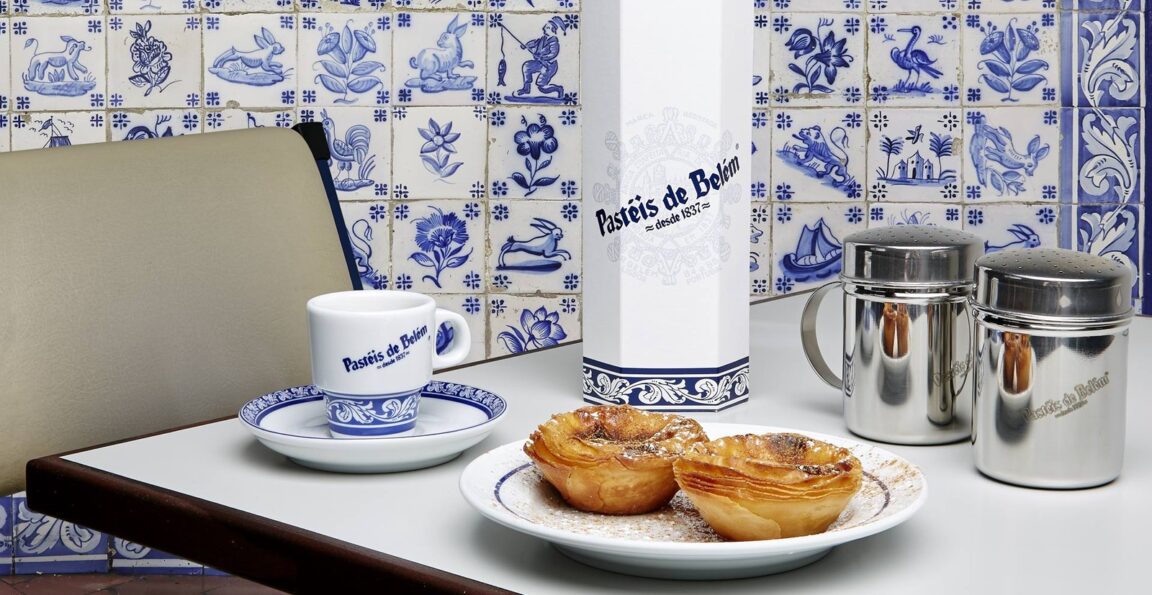
Temperature first, pastry second, address third. A warm pastel de nata from any good bakery beats a cold one from a famous one, because the custard should still tremble and the laminated pastry should shatter rather than bend. At the top of the hierarchy sits the original: Pasteis de Belem, beside the Jeronimos Monastery, which has baked since 1837 to a recipe that came from the monastery itself and is still made in its Oficina do Segredo, the secret workshop. Only this bakery may sell tarts under the Belem name. Everyone else sells pasteis de nata, and the honest ones are excellent, but the Belem tart, eaten warm at a tiled table inside with cinnamon and icing sugar shaken over it, remains the reference point the others are judged against.
Below the summit, the centre of Lisbon has its own order. Manteigaria, in Chiado and at the Time Out Market, bakes in view of the queue, so a warm tray is a matter of minutes and timing. Fabrica da Nata serves its tarts with the baking visible and the custard blistered on top, which is the correct look. Confeitaria Nacional, on Praca da Figueira since 1829, is the grand old cafe choice, better for a sit down coffee and a galao, the milky coffee in a tall glass, than for tart temperature. The practical rule: go to Belem once, properly, sit inside rather than joining only the takeaway line, order two tarts and a bica, and then spend the rest of the trip judging centre city trays by whether they arrive warm. The Visit Lisboa site lists current opening information for the Belem district sights that share the trip, the monastery and the tower among them.
What should dinner be, after a day of counters?
Seafood, in a cervejaria or a marisqueira, where the meal is ordered by weight and by tank. Tiger prawns, percebes, the goose barnacles that look alarming and taste of the sea itself, clams, and a dressed crab are the classic sequence, finished, against all logic, with the prego steak sandwich described above. Or keep dinner in the tasca register and go to Bairro Alto or Alfama, where small rooms serve grilled sardines in season, bacalhau a bras, salt cod scrambled with egg and crisp potato, and arroz de marisco, the wet seafood rice that needs two people and forty minutes. Either way, dinner is the one meal worth planning by neighbourhood rather than by dish: Alfama for the old lanes, Campo de Ourique for the market hall and local rooms, and Belem only if the day has already been spent there, because the district quiets early.
Frequently Asked Questions
What is the difference between a pastel de Belem and a pastel de nata?
They are the same family of custard tart. Pasteis de Belem is the protected name of the original bakery on Rua de Belem, baking since 1837 to the Jeronimos Monastery recipe, and only it may use that name. Every other bakery sells pasteis de nata, each to its own recipe.
How much does a tart at Pasteis de Belem cost?
1.60 euros for one tart and 9.60 euros for a box of six, from the bakery’s official menu checked on November 20, 2026. Eat in prices are the same as takeaway at the counter, and the tiled rooms inside are reached by walking past the takeaway queue.
Do Lisbon tascas take reservations?
Traditional tascas generally do not. They work on arrival, turn tables quickly and peak at local lunch hours, so arriving before 12.30 p.m. or after 2 p.m. is the practical strategy. The modern and Michelin listed restaurants are the rooms to book ahead.
What does bifana com mostarda mean?
It is the standard bifana order: the pork cutlet sandwich served with mustard inside the roll. Add piri piri chilli sauce from the counter bottle to taste. The sandwich should be eaten hot and immediately, standing at the counter or just outside.
When is Pasteis de Belem open?
Daily from 8 a.m. to 9 p.m. from October to June, and until 10 p.m. from July to September, per the bakery. The takeaway line is longest late morning; the table service rooms inside usually move faster than the pavement queue suggests.
Featured image: Two warm pasteis de Belem on a plate with a branded espresso cup, the bakery’s takeaway box and cinnamon and sugar shakers, against blue and white azulejo tiles inside the bakery. Photo from Pasteis de Belem, the subject’s own official website (pasteisdebelem.pt), used with credit.