 Elena Vasquez
Eat in Naples in this order and the city makes sense: a marinara first, because it shows the dough and tomatoes with nowhere to hide, then a margherita at a different historic pizzeria, then something fried from a friggitoria on Via dei Tribunali, then sfogliatelle while they are still warm, and espresso standing at a bar counter, never sitting down for it. The two pizza decisions that matter are marinara versus margherita and historic centre versus neighbourhood pizzeria, and both are settled below, along with the riccia or frolla pastry choice and the granita finish on the Lungomare. Book almost nothing, queue early for the famous rooms, and keep one meal free for a proper trattoria away from the pizza streets.
Quick Facts
- City: Naples, Campania, Italy, historic centre a UNESCO World Heritage Site
- First order: Pizza marinara, tomato, garlic, oregano and olive oil, no cheese
- Second order: Pizza margherita, tomato, fior di latte or buffalo mozzarella, basil and olive oil
- Pizza rulebook: The Associazione Verace Pizza Napoletana disciplines the dough, the wood fired oven and the two classic pizzas
- Pastry decision: Sfogliatella riccia, crisp layered shell, or sfogliatella frolla, soft shortcrust shell, same semolina and ricotta filling
- Coffee rule: Espresso is taken standing at the bar, quickly, and the traditional price at the counter is lower than table service
- Booking reality: The most famous pizzerias generally work by queue and numbered ticket rather than reservations
- Prices checked: November 20, 2026. Menu prices change often in Naples, so this guide names dishes and order rather than fixing a budget to a single menu
Marinara or margherita first, and why does the order matter?
Start with the marinara. It is the older of the two classics and the stricter test: hand crushed tomato, sliced garlic, oregano and olive oil on a soft, blistered base, with no cheese to cover a weak dough or a dull tomato. The Associazione Verace Pizza Napoletana, the Naples based association that codifies true Neapolitan pizza, recognises the marinara and the margherita as the two original styles, baked fast in a wood fired oven until the cornicione, the raised rim, is puffed and lightly charred. A good marinara should be soupy in the centre, foldable, and bright with tomato acidity. If a pizzeria can do that well, its margherita will follow.
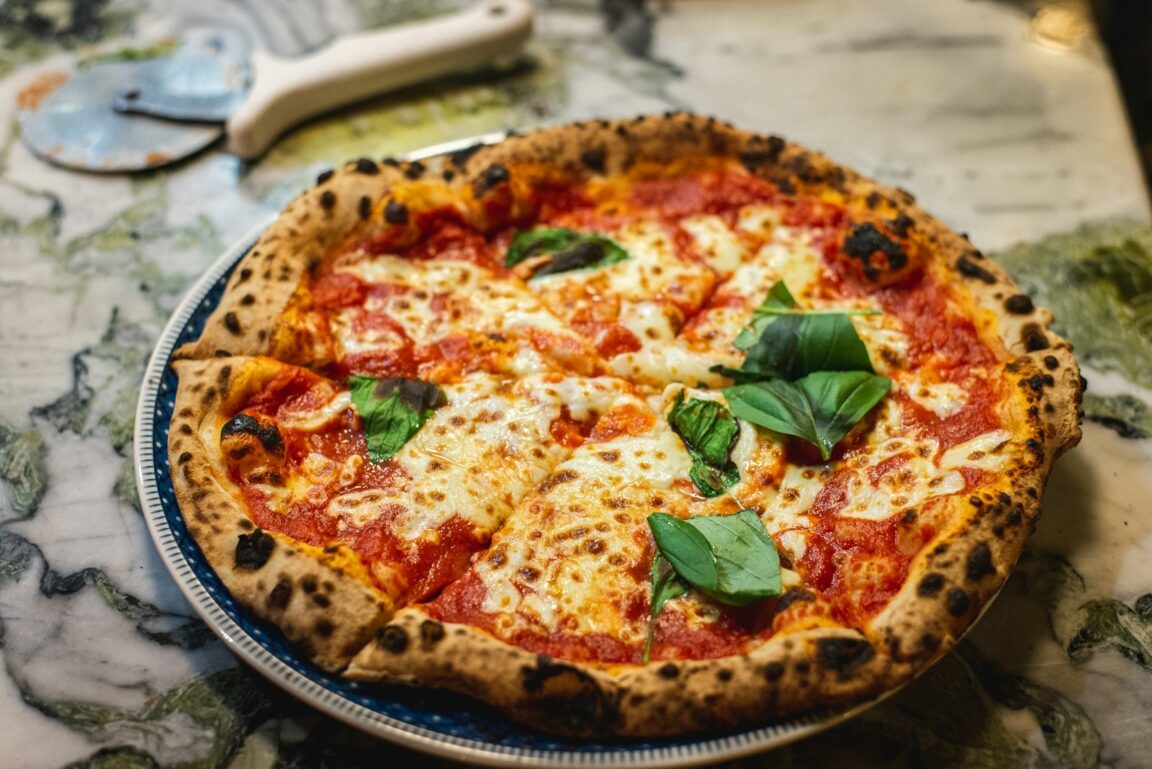
The margherita comes second, ideally at a different address, so the comparison is honest. Its story is attached to Pizzeria Brandi, where the tomato, mozzarella and basil pizza associated with Queen Margherita was served in 1889, a history the pizzeria itself tells on its official site. Expect a richer, softer eating experience than the marinara: the fior di latte melts into the tomato, the basil perfumes the whole plate, and the centre is wetter. Eat it with a knife and fork or fold a slice lengthways, the local a libretto style. Neither method is wrong, and Naples has never required visitors to perform either one.
Which historic pizzerias are worth the queue?
L’Antica Pizzeria Da Michele, on Via Cesare Sersale near the station end of the old town, is the minimalists’ temple. Founded in 1870, it built its reputation on a very short menu centred on the marinara and the margherita, served in a plain tiled room at communal tables. The system is a numbered ticket at the door and patience. Its own site, Da Michele, now covers a worldwide family of restaurants, but the Naples original is the one that matters for this comparison, and the queue outside it is part of the evidence that the formula still works.
On Via dei Tribunali, the old decumanus that functions as Naples’ pizza street, the choice widens. Gino e Toto Sorbillo serves a larger, softer pizza from a famous family name and takes the queue in its stride. Di Matteo, further along the same street, doubles as a friggitoria, which makes it the efficient stop: pizza at a table inside, or fried food standing at the counter. For readers who want the deeper pizzeria by pizzeria breakdown, our earlier Naples pizza guide covers the birthplace rules and the fried pizza tradition in full, while this piece keeps its focus on the order to eat everything in across a short stay.
What should be eaten between the pizzas?
Fried food, deliberately. The friggitoria counter is Naples’ second food language: pizza fritta, a sealed half moon of dough fried until it blisters, frittatina di pasta, a crumbed puck of leftover bucatini in bechamel, arancini style rice balls called palle di riso, and potato croquettes. Order one item, eat it on the pavement, and move on. This is also the moment for a cuoppo, the paper cone of mixed fried seafood or vegetables sold along the market streets, best around the Pignasecca market in the morning when the stalls are loudest and the frying is continuous.
Save one sit down meal for a trattoria that has nothing to do with pizza. The dishes to look for are pasta e patate con la provola, pasta with potatoes and smoked provola, ziti alla genovese, the slow onion and beef sauce that takes hours, and pasta alla Nerano with courgettes and provolone near the coast. Naples also has a serious fine dining tier for travellers who want it, and the Michelin Guide lists Bib Gourmand trattorias such as La Locanda Gesu Vecchio on Spaccanapoli for exactly this kind of cooking at trattoria prices. Book those rooms, even at lunch, because the good ones are small. The contrast matters: a traveller who only eats pizza leaves knowing one chapter of a much longer book, a point our Parma food guide makes about Emilia Romagna in the same spirit.
Sfogliatella riccia or frolla, and when should it be eaten?
In the morning, warm, with coffee. The sfogliatella is a shell shaped pastry filled with semolina, ricotta, candied citrus and cinnamon, and it comes in two forms that divide the city politely. The riccia is the dramatic one, dozens of crisp, curling layers that shatter when bitten and leave evidence on a shirt. The frolla is the same filling inside a soft shortcrust dome, easier to eat on a train and kinder to anyone who dislikes crumbs. Neither is the correct answer. The correct behaviour is to try the riccia first at a historic pastry counter such as Pintauro on Via Toledo, which claims the pastry’s modern form, and then judge every frolla against it for the rest of the trip.
Two more sweets belong in the same morning circuit. The baba al rum, a mushroom shaped sponge soaked in rum syrup, is Naples’ adopted classic and is eaten with a fork, not hands. The ministeriale, a dark chocolate disc with a liqueur cream centre created by the Scaturchio pastry house, is the souvenir grade choice. Both are better before noon, when the pastry counters are stocked and the baba has not yet dried at the edges.
What is the espresso rule, exactly?
Stand at the bar, order a caffe, drink it in three sips while it is still crema topped and almost too hot, pay, and leave. Neapolitan espresso is short, intense and served in a scalding cup, and the ritual is speed rather than lingering. The old sospeso tradition, paying for an extra coffee that the bar holds for a stranger who cannot afford one, began in Naples’ working class cafes and is still practised in some historic bars. It costs the price of one more coffee and is the easiest piece of local etiquette a visitor can join. What not to do is order a cappuccino after a meal and expect approval, or sit at a table for a single espresso without expecting the table price. The rules are economic as much as cultural, and following them is simply how the counter system stays fast for everyone.
How does granita on the Lungomare finish the day?
Walk it off by the sea. The Lungomare, the seafront promenade from Santa Lucia toward Mergellina, is where Naples takes its evening air, with Castel dell’Ovo on its causeway and Vesuvius across the bay. The correct order here is granita al limone, lemon ice scraped to order, sharp enough to reset a palate after a day of fried food and cheese. In summer the same kiosks sell watermelon and coffee versions, but lemon is the benchmark. Time the walk for the hour before sunset, when the light crosses the bay and the promenade fills with families doing exactly the same circuit, and the food day ends the way Neapolitans end it, outside, unhurried and still slightly hungry for tomorrow.
Frequently Asked Questions
Do the famous Naples pizzerias take reservations?
Generally no. The historic rooms such as Da Michele work on arrival, with a numbered ticket or a queue, which is why arriving before the main lunch and dinner peaks matters more than booking. Trattorias and fine dining rooms are the opposite: book those, even for lunch.
What is the difference between marinara and margherita?
The marinara has tomato, garlic, oregano and olive oil and no cheese at all, despite a name that suggests seafood. The margherita has tomato, mozzarella and basil. The marinara is the older sailor and worker pizza, and the stricter test of dough and tomato.
Is Neapolitan pizza protected in any formal way?
Yes, on two levels. The Associazione Verace Pizza Napoletana disciplines member pizzerias against a written specification for dough, ingredients and the wood fired bake, and UNESCO inscribed the art of the Neapolitan pizzaiuolo on its Representative List of the Intangible Cultural Heritage of Humanity in 2017.
Riccia or frolla sfogliatella for a first timer?
Riccia first, eaten warm and over a plate, because the layered shell is the version Naples is famous for. Try the frolla second, ideally from a different pastry shop, and expect a softer, cake like experience with the same filling.
How many pizza meals fit in one day?
Two, comfortably, if they are separated by walking and something fried or a market visit in between. A whole Neapolitan pizza is a single serving by design, soft and foldable rather than dense, but three in a day leaves no room for the pastry, coffee and trattoria cooking that make the trip complete.
Featured image: A Neapolitan margherita with a blistered, leopard spotted crust, fresh basil and fior di latte, photographed for Unsplash. Photo via Unsplash (photo 1574071318508-1cdbab80d002), Unsplash License, used with credit.