 Hana Kim
Eat Parma in the order the city itself produces it: a Parmigiano Reggiano dairy at dawn, when the curd is pulled from the copper vats; a Prosciutto di Parma tasting in the Langhirano hills late morning, sliced thin and eaten with bread and a glass of local sparkling wine; and tortelli d erbetta at a trattoria table in the evening, because the rule in Parma is that the filled pasta of ricotta and greens is the plate that closes the day, not an afterthought. Parma named both products, the cheese through the Parmigiano Reggiano name and the ham through the ducal crown brand, and eating them anywhere else first is a rehearsal. This guide gives you the tasting order, what must be booked ahead, and how to tell the real thing from the merely similar.
Quick Facts
- King one: Parmigiano Reggiano, made only with raw cow milk, salt and rennet, aged a minimum of 12 months by consortium rule, with tastings usually comparing young, mid aged and old wheels
- King two: Prosciutto di Parma, cured in the hills around Langhirano south of the city with only pork and sea salt, aged at least 14 months under the rules approved in 2025, up from 12, and branded with the ducal crown when it passes inspection
- The pasta rule: Tortelli d erbetta, ricotta and erbette greens pasta, is Parma home plate; in local tradition it is the dish of celebration evenings, classically eaten on the feast of San Giovanni in June and ordered year round in trattorias
- Dairy timing: Parmigiano is made early in the morning, so dairy tours start early; a working caseificio cannot be visited casually, you go with a booked tour or a prearranged visit
- Ham access: Prosciuttifici are working factories and are visited by tour only; the walk in alternative is the Museo del Prosciutto di Parma in Langhirano
- Geography: Langhirano lies about 20 kilometres south of Parma, where the hills catch the dry air the curing rooms depend on
- Pairings: Lambrusco and Malvasia from the Parma hills are the local glasses poured with both tastings
- Booking rule: Book the dairy and ham tours days ahead in high season; trattoria dinners in the centre are the only part of this plan that can stay loose
Why must the Parmigiano dairy come first in the day?
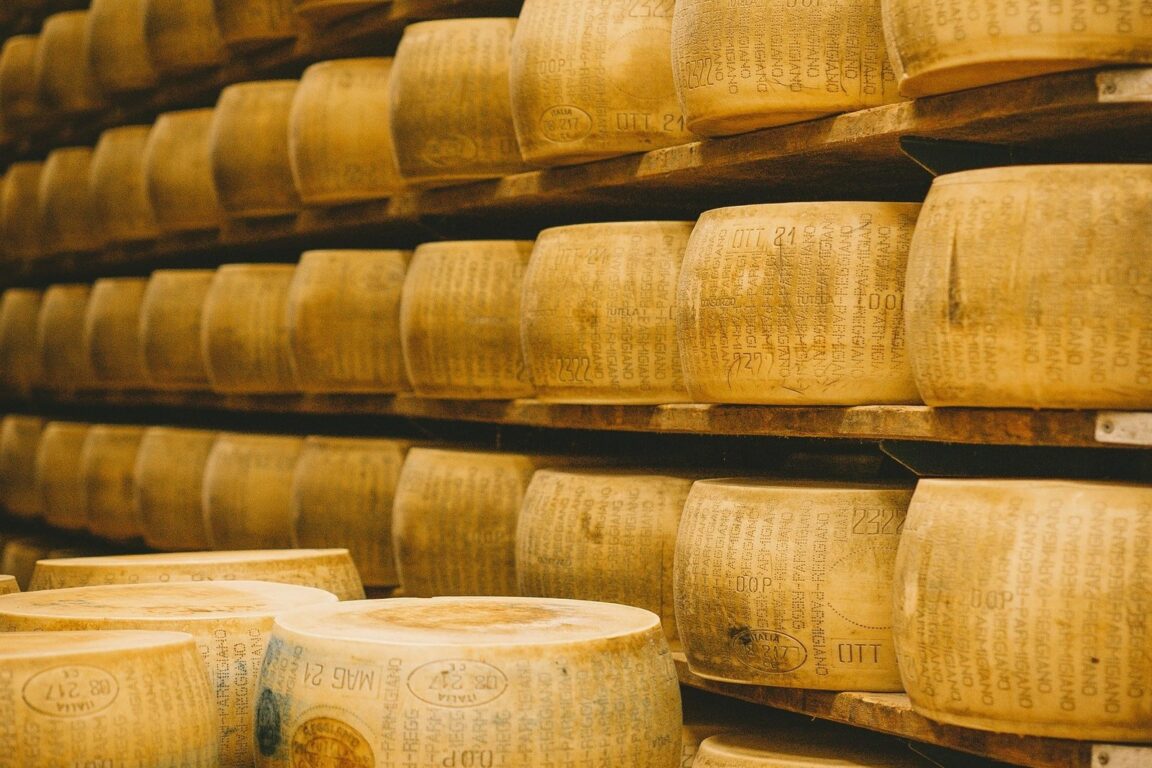
Because the cheese is made at dawn and cannot wait for you. In a working caseificio, the previous evening milk and the fresh morning milk go into copper lined vats, the curd is cooked, broken to grain size, and then lifted out in cloth by the casaro in one of the great set pieces of Italian food craft, before being shaped into the twin wheels each vat produces. Tours of Parma dairies are therefore built around early starts, and the visit then follows the wheel through the shaping and salting rooms into the stagionatura, the aging warehouse where thousands of wheels rest on wooden shelves and are turned and cleaned while they mature.
The tasting at the end is a lesson in time. Parmigiano Reggiano can only be sold under the name after a minimum of 12 months of aging and a consortium inspection in which an expert taps each wheel with a small hammer and listens for flaws; wheels that pass receive the fire brand. At the table you will usually taste across ages: the youngest is milky and gentle, the mid aged, around 24 months, is the balanced all rounder Parma cooks grate and eat, and the oldest, 36 months and beyond, turns crystalline, dry and intense, eaten in shards rather than slices. Buy the age you actually liked at the dairy shop; the same cheese in a city deli at home will cost more and taste like a memory.
For the southern counterpoint, compare this dairy discipline with the pizza rules in our guide to what to eat in Naples, and if your Italy trip runs south, our guide to Matera, the cave city of the Sassi, pairs well with a Food Valley start.
How should you taste Prosciutto di Parma so you actually learn it?
Go to the hills, not just to a deli counter. Prosciutto di Parma is made around Langhirano, about 20 kilometres south of the city, where the curing houses open their windows to the dry Apennine air. A prosciuttificio tour walks you through the cold salting rooms, where the legs rest with sea salt, the only ingredient added to the pork, then the resting and curing halls where the hams hang for months, and the moment of spillatura, when an inspector pierces the ham with a needle of horse bone and judges it by scent alone. Only hams that pass are fire branded with the five point ducal crown of Parma, and only those hams may carry the name.
Note the rule change that matters for what is in the shops now: the minimum curing time is at least 14 months under the production rules approved in 2025, up from 12 months, so the youngest legal Prosciutto di Parma is a little older and, in principle, a little deeper than it used to be. At the tasting, eat it in the local order: alone first, at room temperature, sliced thin enough to warm on the tongue; then with grissini or the local fried dough; then, if the tour pours it, with a glass of dry, sparkling Malvasia or Lambrusco from the Colli di Parma, whose acidity is the traditional reset between slices. If a full factory tour does not fit your day, the Museo del Prosciutto di Parma in Langhirano, housed in a former cattle market, is the walk in option, open mainly on weekends and holidays from March to early December, with a small entry fee and tastings available.
What is the tortelli d erbetta rule, and where do you eat it?
The rule is simple and locals take it seriously: in Parma, tortelli d erbetta is not one pasta among many, it is the city plate of celebration, a delicate parcel of ricotta and erbette, the local greens, classically dressed with melted butter and Parmigiano Reggiano, and traditionally eaten on the night of San Giovanni, June 23 into the feast day, when the city once ate it outdoors under the dew. Order it wherever you see it on a trattoria menu in the centre, and order it as your primo even if the menu tempts you with a dozen other filled pastas, because this is the dish Parma cooks judge each other by: the pasta must be thin, the filling green and fresh rather than heavy, and the butter generous.
Build the rest of the evening around it honestly. A classic Parma trattoria sequence runs: an antipasto of the two kings together, culatello if the house offers the rarer third jewel from the lowlands near the Po, then tortelli d erbetta, then, only if you have paced the tastings, a secondo of meats, and a glass of Lambrusco throughout. After a dairy dawn and a ham late morning, many travellers will find the antipasto and the tortelli are the whole dinner, and that is the correct Parma outcome, not a failure of appetite.
What must be booked ahead, and what can stay loose?
Book ahead: the Parmigiano dairy visit and the prosciuttificio tour, whether as a combined morning tour from Parma, which typically collects in the centre and runs four to five hours for the pair, or as separate producer visits you arrange yourself. Working factories admit visitors in small groups, at fixed early times, and in high season the combined tours sell out days ahead. Also book your trattoria for Friday and Saturday nights in the centre.
Leave loose: your deli shopping, which is best done after the tastings when you know your preferred cheese age and ham style; the ham museum in Langhirano, which is a walk in visit in season; and a second evening in the centre, because Parma rewards an unplanned passeggiata and a menu read at the door. If you are self driving, the dairy and ham producers are scattered in the countryside and hills, so a guided tour with transport is usually the efficient choice; if you are on trains, Parma station connects the city to Bologna and Milan, and tour pickups cluster near the centre.
Frequently asked questions
What is the difference between Parmigiano Reggiano and Parmesan?
Parmigiano Reggiano is the protected name for the cheese made in the defined zone, which includes Parma, Reggio Emilia, Modena and parts of Bologna and Mantova, from raw cow milk, salt and rennet only, aged at least 12 months and inspected wheel by wheel by the consortium. Parmesan is a generic name used outside Europe for cheeses made in a similar style without those rules.
How long is Prosciutto di Parma aged?
At least 14 months under the production rules approved in 2025, up from a previous minimum of 12 months. Only pork and sea salt are used, and hams that pass the consortium inspection are branded with the ducal crown of Parma.
Why do dairy tours in Parma start so early?
Because Parmigiano Reggiano is made in the morning: the milk goes into the vats, the curd is cooked and lifted, and the wheels are shaped on a daily cycle that visitors can only watch by arriving early. Afternoon visits see the salting and aging rooms but miss the making.
Can you visit a Parma ham factory without a tour?
Generally no. Prosciuttifici are working factories and admit visitors through organised tours. The walk in alternative is the Museo del Prosciutto di Parma in Langhirano, open mainly on weekends and holidays from March to early December.
What is tortelli d erbetta?
Parma signature filled pasta: thin parcels of ricotta and erbette greens, dressed with melted butter and Parmigiano Reggiano. It is the city celebration plate, traditionally eaten on the feast of San Giovanni in June and served year round in trattorias.
What wine do you drink with Parma ham and cheese?
The local pours are Lambrusco and dry sparkling Malvasia from the Colli di Parma. Their acidity and bubbles are the traditional counterweight to the fat of the ham and the richness of the cheese.
Image: Parmigiano Reggiano wheels aging on wooden shelves in a Parma dairy. Photo: Caroline Roose, via Unsplash.