 Elena Vasquez
A large villa in the Algarve works for a group when the shared maths is done before the photographs seduce anyone. Start with the split that causes the fewest arguments: divide the rent by bedrooms, not by heads, so couples and singles pay for the space they use, then run food, cars and extras through a shared kitty that everyone funds equally. Then price the two extras that change the bill most, because a heated pool in the shoulder months and a private chef for even two evenings can add the cost of another bedroom to the week. Finally, accept the Algarve’s geography: the coast’s towns, beaches and restaurants are strung along an east to west line, the airport is at Faro, and a group of eight or more still needs two cars. This guide works through each decision in the order a group should make it.
Quick Facts
- The split that works: Rent divided by bedroom, shared costs divided by head, agreed in writing before booking
- The licence check: A legitimate Algarve rental carries an Alojamento Local registration number, which should appear in the listing
- The extras that bite: Pool heating in cooler months and private chef services, both priced per week or per service, not included by default
- The airport: Faro, roughly central on the coast, with the western towns the longest transfer
- The car rule: Two cars for a group of eight or more: one airport and luggage runner, one beach and dinner car
- The bases: Lagos and Carvoeiro in the west, Albufeira and Vilamoura in the centre, Tavira and the quieter east
How should a group split the cost of a large villa fairly?
There are three money layers in a group villa, and mixing them is what starts arguments. Layer one is the house itself. The fairest common method is to divide the rent by the number of bedrooms, then adjust for obvious inequality: the couple in the principal suite with the terrace and the sea view pay a premium share, the friend in the small single room pays less, and the percentages are agreed before anyone books a flight. Layer two is the shared kitty: groceries, household basics, the kitty funded meals out and group taxis, split equally by head and tracked in a shared app. Layer three is personal: your own restaurant splurges, your own surf lesson, your own spa morning. A worked example makes the method plain. If a five bedroom villa rents for a hypothetical 5,000 in your currency for the week, the base share is 1,000 per bedroom before view adjustments, and a group of ten funding a 100 per head kitty starts the week with 1,000 of shared spending already settled. The figures are illustrative. The structure is the point, and it survives any price level.
Is the private chef worth it, and what does pool heating do to the bill?
The chef question answers itself once you count covers. A restaurant evening for ten in a coastal town means two taxis each way, a booking that half the group is late for and a bill with drinks that nobody reconstructs fairly. A chef cooking at the villa for two or three set evenings usually lands as one of the week’s best meals and one of its simplest payments, a single per service charge split through the kitty, with the market shopping done by the cook. Ask any agency or owner for the chef’s per service price and menu structure in writing before you commit, and do the same for pool heating. An unheated Algarve pool is bracing outside the high summer weeks, and heating is commonly charged as a weekly extra. Neither extra is a rip off. Both are simply invisible in the headline rent, which is why they belong in the spreadsheet, not in the arrival day surprises. Groups who have done the registration homework for other countries will recognise the pattern from our Croatia rental registration explainer: legal rentals show their paperwork, and clear paperwork predicts clear billing.
Why does a group this size still need two cars?
Because a villa group is never one group for transport purposes. It is golfers leaving at dawn, beach sleepers leaving at noon, cooks shopping at the market, teenagers who want the waterpark and a couple who want one quiet dinner alone. One large vehicle serialises all of that into queues and resentment, and it still cannot do the airport in one run with ten people’s luggage. Two ordinary cars solve every version of the problem: they split the airport runs, they let the day divide naturally, and they cover the Algarve’s spread, where the distance from a Lagos base to an evening in Tavira is a motorway journey, not a taxi hop. Budget both cars, both fuel sets and the motorway tolls into the kitty from the start. The region’s own logic is archipelago like in that respect, as our Azores interisland ferry guide shows for Portugal’s Atlantic islands: in spread out places, transport is the itinerary.
Which part of the Algarve suits which group?
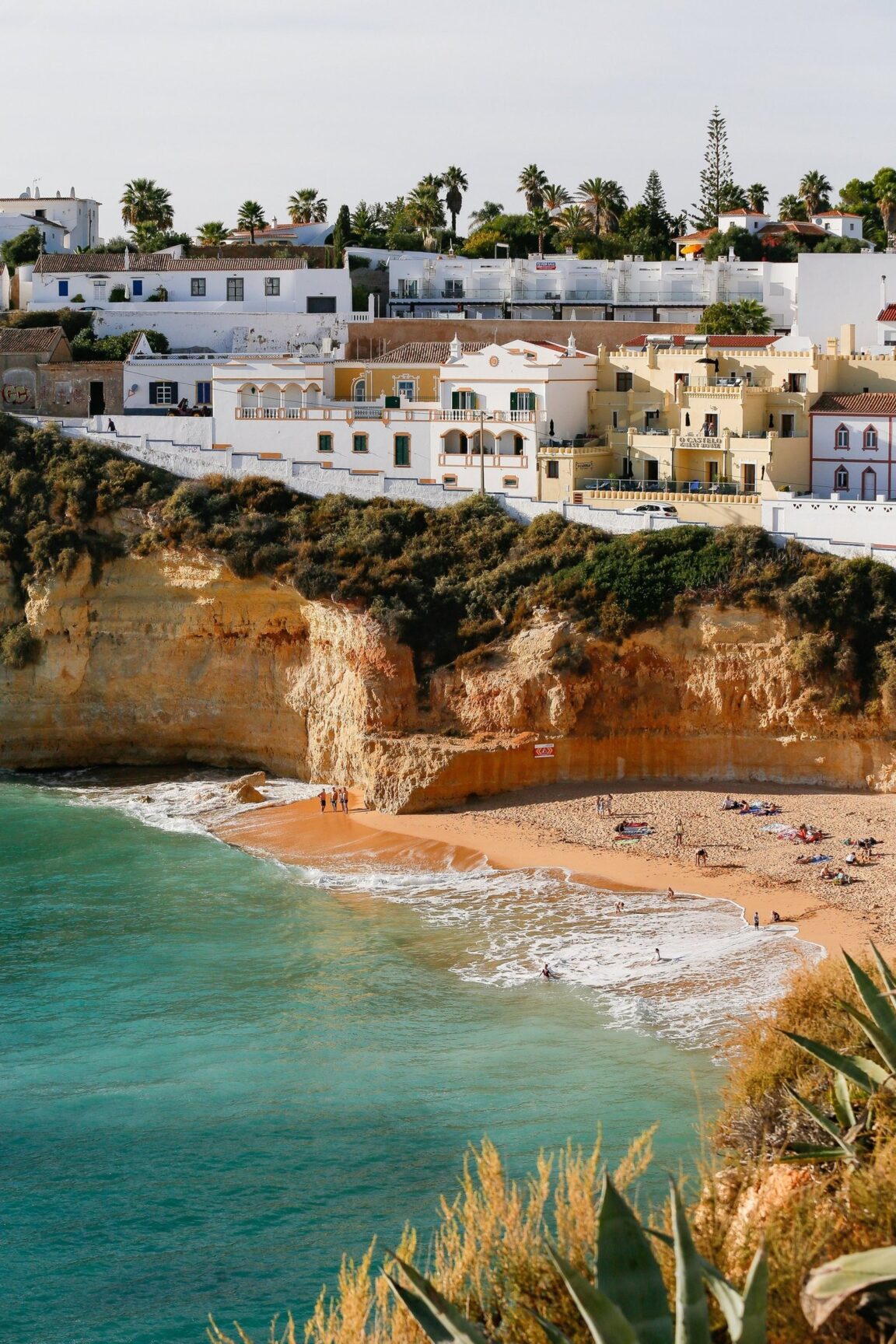
The west, around Lagos and Carvoeiro, is the cliff and cove Algarve of the photographs: golden rock, small beaches reached by steps, and towns with enough restaurants to vary a week. The centre, Albufeira and Vilamoura, carries the largest villa stock, the marinas and the golf, and the liveliest nightlife, which suits groups who want options laid on. The east, beyond Faro toward Tavira, is quieter and flatter, with island beaches reached by small ferries and a slower, more Portuguese rhythm that suits families and long lunches. All three coasts hold large villas. What differs is the week that surrounds the house, so choose the coast for the group’s real habits, not its stated ambitions.
What should you verify before paying a deposit?
Ask for the Alojamento Local registration number and check the listing matches it. Confirm, in writing, what the rent includes: cleaning and the end of stay clean, pool heating, air conditioning, linen changes, and any local tourist tax your municipality charges per guest per night. Confirm the bedroom and bathroom count against your group’s actual composition, the distance to a swimmable beach in minutes on foot, and the check in arrangements for a late flight. Photograph the inventory on arrival, agree the kitty rules in the group chat before departure, and put one person in charge of the house paperwork. A group that does this once, on paper, spends the week arguing about restaurants, which is the correct thing to argue about.
Frequently asked questions
What is the fairest way to split a villa rental?
Divide the rent by bedrooms, adjusted for room quality, and split shared living costs equally by head through a kitty. Agree the percentages in writing before booking.
What is an Alojamento Local number and why does it matter?
It is the registration number for a licensed local lodging rental in Portugal. A listing that shows one is operating inside the legal rental system, which protects your booking.
Is pool heating included in Algarve villa rents?
Often not. Heating is commonly a weekly extra, and an unheated pool is cold outside high summer. Confirm the charge in writing before you commit.
How many cars does a group of ten need in the Algarve?
Two. One vehicle cannot cover split daily plans and airport luggage runs for a group that size, and the coast’s sights are spread along a motorway corridor.
Which Algarve base is best for a first group trip?
Lagos or Carvoeiro for the classic cliff coast and walkable towns, Vilamoura for golf and marina infrastructure, Tavira for a quieter, more local week.
Image credit: Whitewashed houses and villas above a cliff backed beach at Carvoeiro in the Algarve, photo by Alexandre Godreau via Unsplash, unsplash.com.