 Aiko Tanaka
There is no hotel bedroom tax in Dublin today, and nothing in this article should be added to a booking as a charge: what exists is a live, well-advanced debate about a visitor accommodation levy, with priced models on the table, a minister who has said he has no difficulty with the idea, an enabling bill published in the Oireachtas, and a hotel industry lobbying hard against it. Dublin City Council cannot levy the tax by itself; it needs national legislation first, and that legislation has not been passed. For a traveller booking Dublin now, the practical position is simple: your quoted price cannot lawfully include a Dublin visitor levy that does not exist, the rates discussed in the debate run from 2 to 5 euros per night depending on the model, and the booking terms that protect you if a levy does land are free cancellation and a rate that states exactly which taxes are included.
Quick Facts
Status: proposal only; no visitor accommodation levy is in force in Dublin or anywhere in Ireland
Who wants it: Dublin City Council, which has modelled the levy and publicly sought the power to introduce it
The blocker: the council lacks the legal authority; new national legislation is required
Rates modelled by the council: a flat 2 euros per room per night, or a tiered 2, 3 and 5 euros by hotel grade
Research scenario: a University of Galway policy study modelled 5 euros per person per night, estimating about 46 million euros a year for Dublin
The bill: the Dublin Local Authorities (Visitor Accommodation Levy) Bill 2026 has been initiated in the Oireachtas; initiation is the start of the process, not enactment
Traveller protection: book cancellable rates and check whether the quoted price is stated as including all taxes
What Has Actually Happened, in Order
Dublin City Council’s interest is financial and long-standing: the city hosts millions of overnight stays, and its officials argue that a small nightly charge on visitors, of the kind most European capitals already levy, would fund city services that tourism loads. In March, the council’s head of economic development, Ross Curley, presented its finance committee with worked models. Three charging bases were set out: per person per night, per room per night, or a percentage of the room rate. A flat fee of 2 euros per room per night was estimated to raise about 17.5 million euros a year. A tiered model was also presented, under which guests in one and two star hotels and hostels would pay 2 euros a night, three and four star hotels and short-term lets such as Airbnb would pay 3 euros, and five star hotels would pay 5 euros.
Those figures are models, not a schedule of charges, and the council itself is clear about the next step: it does not currently have the legal capacity to introduce a bed tax, and the power must come from the national parliament. The political signals since have been permissive rather than decisive. The Minister for Housing, James Browne, has said he has “no difficulty” with the introduction of such a levy if city councils judge it would work, his party brought a Seanad motion calling for enabling legislation, and housing officials have been asked to assess the legislative implications of a wider visitor levy framework. None of that is a start date.
The newest step is a bill. The Dublin Local Authorities (Visitor Accommodation Levy) Bill 2026, Bill No. 90 of 2026, has been published as initiated in the Oireachtas. Its text would enable each of the four Dublin local authorities, not just the city council, to adopt a levy scheme by resolution after public consultation, set its own rate and basis, require accommodation providers to register and collect, and ring-fence the revenue. A bill as initiated is a proposal entering the legislative process: it must pass both houses and be signed before any council could even begin the consultation and scheme the bill itself requires. Travellers reading headlines should translate “bill published” as “possible in a future year”, not “payable on my dates”.
The Research Numbers Behind the Headlines
The largest figures in circulation come not from the council but from a University of Galway policy study by Dr Gerard Turley and Stephen McNena, published in September, which modelled how a visitor levy could work across Ireland. Its headline scenario, 5 euros per person per night, produced an estimate of almost 220 million euros a year nationally, with about 46 million euros of that attributed to Dublin City Council’s area, and the authors recommended letting local authorities choose whether to participate and how to set rates, exemptions and caps. It is a serious piece of policy research, and it is still a scenario: the study itself notes that Ireland does not currently impose the levy it examines, and no rate in it has been approved by anyone.
Against the proposal stands the Irish Hotels Federation, which argues there are no grounds for an additional tax on visitors in a market where Dublin room rates, VAT and commercial rates are already high, and which can be expected to contest every stage of any enabling legislation. That opposition, the bill’s early stage, and the absence of any visitor levy from the government’s recent budget tax changes together describe the true state of play in late 2026: direction of travel favourable to a levy, machinery not yet built, and no date on which a Dublin guest will first pay one.
Booking Terms That Protect You If It Lands
Because a levy, if it ever arrives, will most likely be collected by the accommodation at check-in or added to the bill, the protection is in the booking terms rather than in timing the market. Book rates with free cancellation up to shortly before arrival, so a trip can be repriced or moved if the cost picture changes. Read the tax line before paying: a quote should state whether it includes VAT and all applicable taxes, and a Dublin quote today should show no visitor levy, because none exists; if a platform or property adds a line calling itself a Dublin tourist tax or city levy, challenge it, since there is currently no such lawful charge to collect. Prefer paying at the property over prepaying in full where the price difference is small, keep the confirmation that states your total, and remember that any future levy would apply per the scheme a council eventually adopts, which the bill requires to be consulted on and published before it could begin. For the trip itself, Dublin rewards the same planning as its food and pubs: our guide to Dublin’s literary pub crawl and the coast at Donegal in our Wild Atlantic Way Donegal guide are the natural companions to a levy-free Dublin booking made this year.
Frequently Asked Questions
Is there a hotel tax in Dublin now?
No visitor accommodation levy is in force in Dublin or elsewhere in Ireland. Your bill carries VAT and the usual charges, but no nightly tourist levy exists to be collected.
How much would the proposed levy be?
The council’s models propose a flat 2 euros per room per night, or tiered charges of 2, 3 and 5 euros a night by property grade. A separate research study modelled 5 euros per person per night. None of these rates has been adopted.
Why can Dublin City Council not just introduce it?
It lacks the legal power. A visitor levy requires national legislation, which is why an enabling bill, the Dublin Local Authorities (Visitor Accommodation Levy) Bill 2026, has been initiated in the Oireachtas.
Does a published bill mean the tax is coming on a set date?
No. A bill as initiated is at the start of the legislative process. Even if enacted, the bill requires a council to consult publicly and adopt a scheme by resolution before any charge could begin, and no start date has been announced.
Should I delay booking Dublin until the position is clear?
No. There is no charge to avoid. Book the trip you want on cancellable terms, confirm the total price including taxes in writing, and question any line item labelled as a Dublin tourist tax, because no such tax currently exists.
Who opposes the levy?
The Irish Hotels Federation has criticised the proposal strongly, arguing that Dublin’s existing rates, VAT and commercial rates leave no grounds for an added visitor charge.
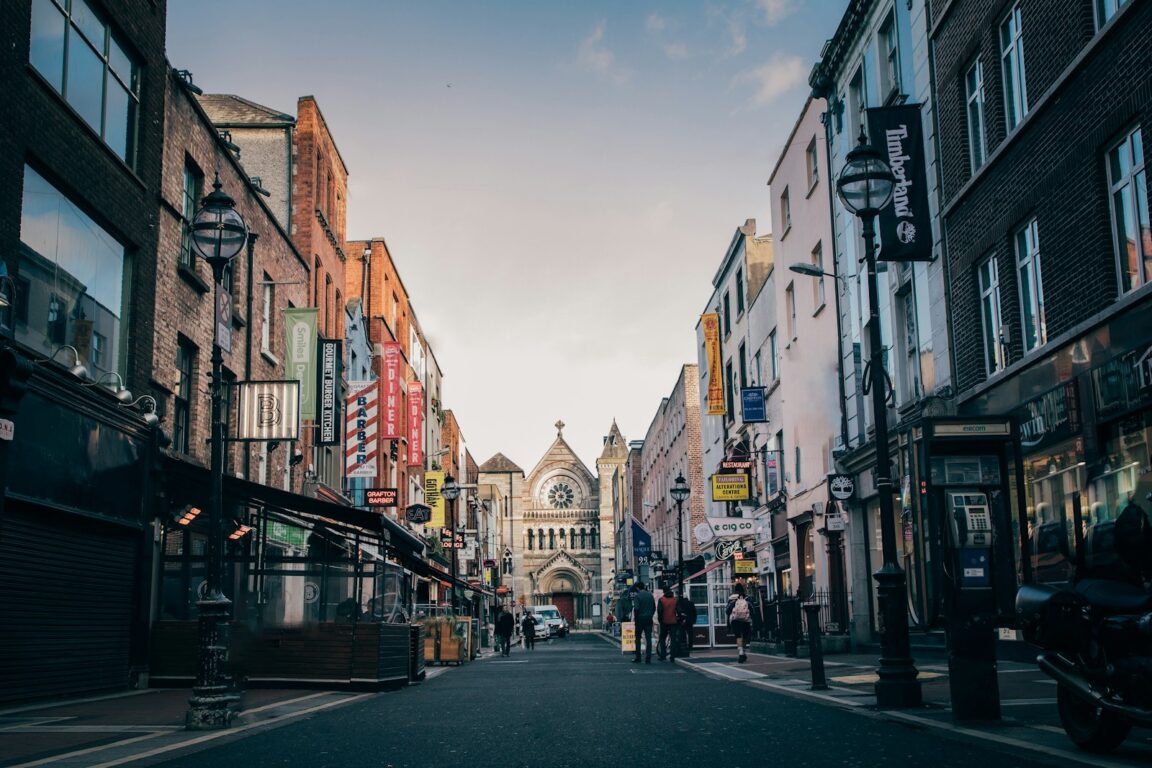
Image: A Dublin street scene with the city’s Georgian and commercial centre. Photo: Unsplash contributor (photo 1549918864-48ac978761a4), via Unsplash.