 Kwame Mensah
Homer is planned around one landform: the Spit, a gravel bar 4.5 miles long that reaches into Kachemak Bay and carries the boat harbor, the charter fleet, the campground and most of the town’s summer energy on its back. The working order for a Homer stay is simple. Give the Spit the morning, when the halibut charters leave and the harbor is at its busiest, give the town above the bay the afternoon, when the galleries, bakery and museum suit a slower pace, and treat the bear-viewing flights from Homer’s airport as the big-ticket day that needs booking first and building around. Homer sits at the end of the Sterling Highway, about 220 miles south of Anchorage, and everything in it faces the water and the mountains of the Kenai Peninsula across the bay.
Quick Facts
The Spit: 4.5 miles of gravel bar into Kachemak Bay, holding the boat harbor, charter offices, shops and the ferry terminal
The harbor: deep and shallow water docks serving up to about 1,500 commercial and pleasure boats at the summer peak
Season: Spit shops generally open from April and close in mid September; the harbor and town work year round
Charter pattern: halibut boats leave early, typically for half-day and full-day trips booked in advance
In town: the Pratt Museum, the Islands and Ocean Visitor Center, and the gallery and bakery strip along Pioneer Avenue
Big day out: bear-viewing flights to Katmai and Lake Clark country depart from Homer’s airport in season
The Charter Morning on the Spit
Start where Homer starts its day: the harbor. The Spit road runs out past the small-boat harbor, where commercial fishing boats, charter vessels and pleasure craft crowd the floats in summer, and the morning rhythm is set by departure times. Halibut charters leave early, and the dock scene before they go, with crews loading ice, bait and tackle while eagles work the harbor pilings, is worth seeing even on a day when you are not fishing. Book charter seats well ahead in June, July and August; the choice is between half-day trips, which suit a first taste and a tighter schedule, and full-day trips, which reach further grounds and give the better chance at larger fish.
Regulations shape the day, and reputable Homer charter offices explain the current halibut rules, licence requirements and bag limits at booking, because federal rules for charter-caught halibut differ from unguided fishing and change between seasons. Take the operator’s briefing as the authority, buy the licence they specify, and dress for a cold, wet ride home even in sunshine: the bay wind on the return leg is the part of the trip first-timers underdress for. Back at the dock, processors near the harbor will clean, vacuum-pack and freeze a catch for the flight or drive home, for fees quoted on the day.
Not everyone needs a boat. The Nick Dudiak Fishing Lagoon, the stocked fishing hole on the Spit, lets shore anglers fish for returning salmon in season with simple tackle, much of it rentable nearby, and it is the easiest fishing hour in town for families and the curious. The Homer Spit Trail, a paved path running the length of the Spit beside the road, gives walkers and cyclists the same views the drivers get, with the harbor on one side and the bay and its sea otters on the other.
The Spit After the Boats
By late morning the Spit’s second shift begins. The boardwalk shops and seafood restaurants open along the harbor side, galleries and gift shops fill the little clusters of buildings toward Land’s End, and the campground and beach on the bay side take the day-trippers. The Salty Dawg Saloon, housed in the small lighthouse-like tower near the harbor, is the Spit’s landmark bar, famous for walls papered with signed dollar bills left by visitors; go early in the evening if you want to see it rather than queue for it.
Seafood is the honest lunch order out here: halibut and salmon from the fleet you watched leave, served in the harbor-side restaurants with the working port as the view. Keep expectations seasonal. The Spit in May and September is a quieter, more local place than the Spit in July, and in winter most of its businesses are shuttered, though the harbor, the eagles and the views remain. The Alaska Marine Highway ferry terminal also sits on the Spit, and travellers arriving or leaving by ferry should read the sailing pattern in our guide to the Alaska Marine Highway ferry before building a Homer night around a departure.
Town: Galleries, Bakery and the Museum Afternoon
Homer proper climbs the bluff above the bay, and its centre of gravity is Pioneer Avenue. This is the afternoon town: art galleries showing Alaskan work, bookshops and cafes, and the bakery stop that locals build into errands. The Pratt Museum on Bartlett Street is the essential hour indoors, a community museum whose exhibits cover the region’s natural history, its Indigenous and settler history, and the Exxon Valdez oil spill’s effect on Kachemak Bay, with a homestead cabin and gardens outside. It gives context to everything the harbor shows you in the morning.
The Islands and Ocean Visitor Center, the headquarters visitor facility for the Alaska Maritime National Wildlife Refuge near the top of the Spit road, adds the wildlife layer: exhibits on the refuge’s seabird islands and, in season, ranger-led walks and talks. Between the museum and the visitor center, a Homer afternoon explains the bay rather than merely admiring it, and the overlook pullouts on the Sterling Highway and East Hill Road above town deliver the postcard view of the Spit curving into the water, best in evening light.
The Bear Flights, and How to Choose Them
Homer is one of Alaska’s main departure points for bear viewing, because the salmon rivers of Katmai National Park and Lake Clark country lie a short flight across Cook Inlet. In season, air services fly small groups to coastal bear country for guided days watching brown bears graze sedge flats early in summer and fish the salmon streams later. These are among the most expensive day trips in Alaska, they are weather-dependent in a way that can scrub a departure entirely, and the reputable operators are plain about both facts at booking.
Choose on three questions. First, timing: early season means grazing bears and cubs on green flats, peak salmon season means fishing bears at closer quarters. Second, walking: some trips land on beaches and walk between viewing spots, others use raised platforms or boats, and the mobility required differs. Third, the weather policy: ask what happens to your money and your schedule if the flight cancels, and hold a spare day in Homer if the trip is the point of the visit. Book the bear day first, then fit charters and town days around it. Travellers combining Homer with the state’s great park road should pair this plan with our guide to Denali National Park in three days, since the two trips share the same weather discipline and booking lead time.
Frequently Asked Questions
How many days does Homer need?
Two full days cover the charter morning, the Spit and the town. Add a third for a bear-viewing flight, and hold it flexible, because weather can move the flight.
When is the main season?
Summer. Spit businesses generally open from April and close in mid September, the charter fleet runs at full strength, and the bear flights operate on their summer schedules.
Can I fish without booking a charter?
Yes, at the Nick Dudiak Fishing Lagoon on the Spit, a stocked shore-fishing spot popular in salmon season. You still need the correct Alaska fishing licence, and tackle can be rented locally.
How do I get to Homer?
By road on the Sterling Highway from Anchorage, about 220 miles, by scheduled flights to Homer’s airport, or by Alaska Marine Highway ferry to the terminal on the Spit.
What should I pack for a charter day?
Warm layers, waterproof outerwear and shoes that can get wet. The bay is cold and windy on the ride back even when the dock morning is calm.
Are the bear flights guaranteed to fly?
No. They depend on weather at both ends of the route, and operators cancel for safety. Ask about rebooking and refunds before you pay, and keep a buffer day.
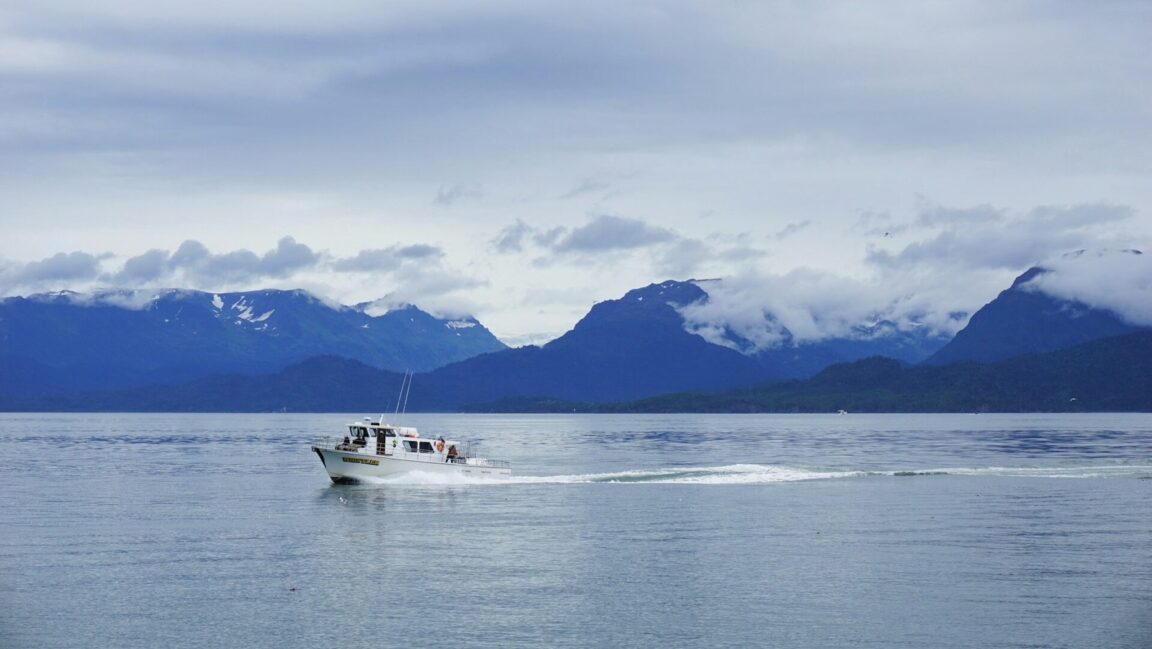
Image: A fishing boat crossing Kachemak Bay below the mountains at Homer, Alaska. Photo: Meina Yin, via Unsplash (hosted copy via Marine Industry News).