 Elena Vasquez
Three days in Marrakech works when you stop treating the medina as a list and start treating it as an order: souks by craft while your bargaining energy is fresh, the Majorelle Garden at opening before its queues build, and the Atlas Mountains judged honestly against a third city day rather than added by habit. This itinerary sequences those decisions, with the official prices that govern them, so the short trip feels full rather than frantic.
Quick Facts
Majorelle Garden: Open every day 08:00 to 17:30, last entry 17:00, per the garden’s official site. Tickets are sold online only through the official ticket site, and the foundation warns that tickets bought elsewhere will not open the gate.
Majorelle prices: 170 Moroccan dirhams for the garden alone for a foreign adult, 230 with the Pierre Berge Museum of Berber Arts, and 330 for the combined ticket covering the garden, the Berber museum and the Yves Saint Laurent Museum, per the official ticket site.
Historic palaces: Bahia Palace, El Badi Palace and the Saadian Tombs are each priced at 100 dirhams for a foreign adult on the Ministry of Culture ticket portal, generally open 09:00 to 17:00.
Imlil: The High Atlas trailhead village roughly 60 to 65 kilometres from Marrakech, about 1.5 to 2 hours by road each way, making it a full day trip rather than a half day.
Airport: Marrakech Menara Airport sits about 6 kilometres from the medina. Fix the taxi fare or transfer before you travel.
Day One: The Medina, Ordered by Craft
Start at the Koutoubia Mosque gardens for orientation, since the minaret is the landmark you will navigate by for three days, then enter the souks from the north side of Jemaa el Fnaa with a plan rather than a wander. The medina’s markets are organised by craft, and walking them in craft order is both more interesting and more efficient: dyers with their skeins of coloured wool, metalworkers hammering lanterns in a noise you hear before you see, leatherworkers around the tanneries’ quarter, wood carvers, slipper sellers and the carpet cooperatives where tea is part of the theatre. Decide before you enter what you actually want to buy, set your first price at a level you would happily pay, and keep the negotiation friendly and unhurried. Bargaining is expected; contempt is not, and the travellers who enjoy the souks are the ones who treat the exchange as a conversation with a price attached.
Break the day at the Bahia Palace, the 19th century vizier’s residence whose painted ceilings and courtyard sequences repay a full hour, at 100 dirhams on the Ministry of Culture portal. From there the Mellah, the historic Jewish quarter, and the Saadian Tombs, also 100 dirhams, complete the southern medina before you return to Jemaa el Fnaa for the evening transformation, when the square fills with food stalls, juice carts and circles of musicians. Eat where the stallholders are busiest and the turnover fastest, and treat the square as dinner and theatre in one.
Day Two: The Majorelle Morning
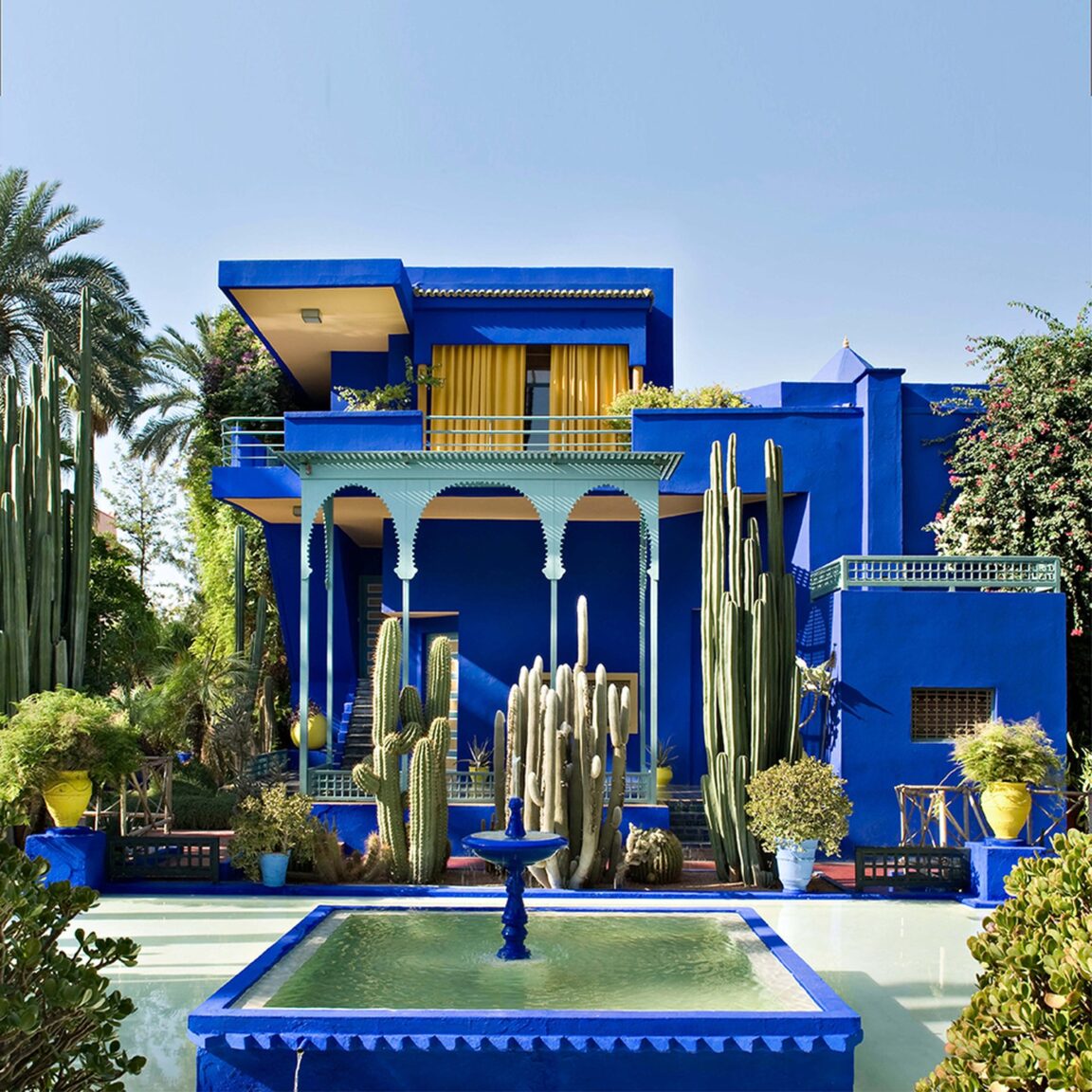
Day two belongs first to Gueliz and the Majorelle Garden, and the rule is simple: book the earliest online slot you can, because the garden is small, famous and sold online only through its official ticket site. Arrive at opening, when the cobalt blue pavilion, bamboo groves and cactus collection are at their quietest and the light is kindest. The garden alone costs 170 dirhams for a foreign adult; adding the Pierre Berge Museum of Berber Arts inside the grounds takes the ticket to 230 dirhams and is worth it for the jewellery and textiles alone. The combined 330 dirham ticket adds the Yves Saint Laurent Museum next door, which is closed on Wednesdays, a detail that should decide which day of your three gets the garden if your trip spans a Wednesday.
Use the afternoon for the medina’s second layer: the Ben Youssef Madrasa, the great Quranic college near the souks’ northern end, and the museums around it, then a hammam appointment in the late afternoon, which in Marrakech is not indulgence but infrastructure after two days of walking. Finish with dinner in Gueliz, the modern city, where the restaurant scene gives you the contemporary counterpoint to two medina days: Moroccan kitchens cooking for locals, French influenced bistros and rooftop bars looking back at the Koutoubia.
Day Three: The Imlil Decision
The third day presents the trip’s real choice. Option one is the Atlas: a day trip to Imlil, roughly 60 to 65 kilometres and 1.5 to 2 hours each way, where a local mountain guide walks you through Berber villages on the slopes below Jebel Toubkal, North Africa’s highest peak, with lunch in a village house. It is a genuinely different Morocco, all walnut trees, irrigation channels and thin mountain air, and for travellers whose trip is otherwise entirely urban it earns its road hours. Option two is a third city day: the El Badi Palace ruins at 100 dirhams, the Dar Si Said museum, the Kasbah quarter, and the slow pleasure of returning to a souk you liked with the confidence of a repeat visitor.
Choose by weather, energy and trip shape. If the Atlas is clear and you have walked the medina well in two days, go to the mountains. If your first two days were rushed, if the mountain weather is closed in, or if you are travelling with small children for whom four hours of mountain road is a cost rather than a pleasure, stay in the city and go deeper. What not to do is split the difference with a half hearted dash: Imlil cannot be done in half a day, and a tired traveller on a mountain path is a safety issue, not an itinerary style. Travellers building longer Moroccan routes can extend the same logic with our Franschhoek guide’s beyond the headline attraction approach, and those pairing city and coast should note how season shapes the choice, the same principle behind our two day Cape Town itinerary.
Practical Notes for Three Days
Stay inside or beside the medina if atmosphere matters, in Gueliz if you want easier logistics and modern hotels, and understand that a riad’s beauty and its accessibility trade against each other: the deepest medina addresses involve lanes no car can enter, which is charm at arrival and effort at departure. Agree taxi fares before moving, or insist on the meter. Drink bottled or filtered water, let your stomach adjust before the square’s stalls, and keep one entirely unplanned hour in the itinerary, because Marrakech reliably produces an invitation, a workshop or a rooftop that deserves it.
Getting the Small Things Right
Three short trips fail on small things more often than big ones, and Marrakech’s small things are knowable in advance. The airport run is short but the taxi negotiation is real, so a hotel arranged transfer earns its fee on a tight itinerary. The medina’s lanes defeat phone maps in the covered souks, so navigate by landmarks, the Koutoubia, the Ben Youssef Mosque, the main gates, and let the map be a backup rather than a guide. Friday reshapes the week, with many workshops and some shops closing around midday prayers, which makes Friday morning a garden and museum window rather than a shopping one. Cash still matters in the souks and for taxis even as cards spread through restaurants and hotels, so carry dirhams in small notes, which also solves the change problem that stalls small purchases. And pace the heat honestly in the warm months: the medina at midday in summer is a test, not a pleasure, and the itinerary above bends around it with museums, lunch and the hammam in the hot hours. None of this requires talent, only foreknowledge, which is what a three day plan is for.
Frequently Asked Questions
How do I buy Majorelle Garden tickets? Online only, through the official ticket site linked from jardinmajorelle.com. The foundation states it is the only site issuing a valid QR code. The garden costs 170 dirhams for a foreign adult, 230 with the Berber museum and 330 for all three sites.
When is the Majorelle Garden open? Every day from 08:00 to 17:30 with last entry at 17:00, per the official site. The Yves Saint Laurent Museum closes on Wednesdays.
Is Imlil worth it on a three day trip? Yes if the weather is clear and your two city days went well. It is 60 to 65 kilometres and up to two hours each way, so it consumes the full third day. In poor mountain weather, take the third city day instead.
How much are the medina palaces? Bahia Palace, El Badi Palace and the Saadian Tombs are each 100 dirhams for a foreign adult on the Ministry of Culture ticket portal.
Where should I stay for three days? A medina riad for atmosphere, Gueliz for ease. For a first short trip, a riad near the medina edge balances both.
Image credit: The Jardin Majorelle, Marrakech, from the garden’s official website (jardinmajorelle.com), Fondation Jardin Majorelle.