 Omar Haddad
Wadi Musa is not just the place you sleep before Petra. It is a working Jordanian town wrapped around one of the most famous archaeological sites on earth, and the travellers who plan it properly get more out of Petra itself: they visit the Petra Museum before they walk the Siq, they time the Visitor Centre before the tour buses, they wash off the trail dust in a Turkish bath, and they eat where the town eats rather than where the coaches stop. Treat Wadi Musa as a base with its own order of business and the whole trip improves.
Quick Facts
Where: Wadi Musa, Ma’an Governorate, Jordan, the gateway town directly outside the Petra Archaeological Park entrance.
Petra ticket: 50 Jordanian dinars for one day, 55 for two consecutive days and 60 for three, for visitors spending at least one night in Jordan, per the Petra Development and Tourism Region Authority (visitpetra.jo). Day visitors who do not stay a night in Jordan pay 90 dinars. Children under 12 enter free in the daytime.
Hours: Winter season, 2 October 2026 to 1 March 2027, the site and Visitor Centre run 06:30 to 17:00 on the authority’s published table. Summer hours are 06:00 to 18:00. Confirm last entry locally, as published sources differ slightly on winter closing.
Petra Museum: Beside the Visitor Centre at the park entrance, the town’s essential first stop for context.
Best base logic: Sleep within walking distance of the Visitor Centre if you plan dawn starts, and budget two days at Petra rather than one if your schedule allows.
Start at the Visitor Centre, Then the Museum
The order matters. Buy or validate your ticket at the Visitor Centre first, pick up the official trail information, and check the day’s conditions and any trail closures before you commit to a route. Multi day tickets are strikingly good value: the step from one day at 50 dinars to two days at 55 and three at 60 is small, which is the authority effectively telling you that Petra cannot be done justice in a single day. If you hold a Jordan Pass, confirm which Petra duration your pass tier covers before you queue.
Then walk into the Petra Museum before you walk into the Siq. The museum, opened beside the entrance in 2019, explains the Nabataean water engineering, trade routes and building techniques that turn the site from a sequence of beautiful facades into a readable city. Thirty to forty minutes here pays off at every tomb and theatre afterwards, because you arrive at the Treasury already knowing what a Nabataean capital needed to survive in a dry wadi: dams, channels, cisterns and a genius for hiding water in plain sight.
The Town Itself: Baths, Bakeries and Rooftops
After a full day on the trails, Wadi Musa’s most restorative institution is its Turkish bath tradition. Local hammams near the town centre offer the classic sequence of steam, scrub and massage that dusty legs genuinely need after the Monastery steps, and an early evening bath appointment is the correct bridge between a trail day and dinner. Book on the day, go before dinner rather than after, and treat it as part of the hiking logistics rather than a luxury extra.
For dinner, the pattern to follow is the town’s own. The restaurants residents use cluster along the main street running up from the Visitor Centre and around the town’s central roundabout, serving Jordanian staples such as mansaf, the national dish of lamb in fermented yoghurt sauce, alongside grills, lentil soup, fresh flatbread and sweet mint tea. Rooftop terraces are the town’s evening signature: as the light leaves the mountains around Petra, the roofs fill with diners eating slowly above the street. Ask your hotel which rooftop it rates, because the best view and the best kitchen are not always at the same address.
How to Sequence Two Days
Day one belongs to the main trail: enter at opening, walk the Siq in the cool of the morning, take the Treasury, the Street of Facades, the Theatre and the Royal Tombs at a steady pace, and finish with the Colonnaded Street and Qasr al Bint before walking out in the late afternoon. Day two is for height and distance: the climb to the Monastery, Ad Deir, which rewards an early start with quieter steps, and the viewpoints beyond it. Splitting the site this way is exactly what the two and three day ticket pricing encourages, and it converts Petra from an endurance event into two good walks.
Practical towncraft helps. Carry water from town rather than relying on site vendors, keep small dinar notes for drinks and the bath, and agree any taxi fare, for example to Little Petra, before you get in. Little Petra, Siq al Barid, is the natural half day pairing: a smaller Nabataean suburb with its own narrow gorge and painted house, reached by road from Wadi Musa, and best visited in the morning before returning to town for lunch.
Where Wadi Musa Fits a Jordan Trip
Most visitors reach Wadi Musa by road from Amman, roughly three hours by the Desert Highway or longer and prettier by the King’s Highway, or from Aqaba in about two hours. That geography makes the town a natural hinge in a Jordan itinerary, and travellers building a wider heritage route can pair it with the kind of slow, museum first approach we recommend for other ancient sites, as in our guide to Livingstone beyond the falls, where the museum before the main event changes the whole visit. The same patience applies to town based exploring generally, a theme we return to in Franschhoek beyond the wine tram.
Little Petra and the Back Door Question
Guides in town will raise the Monastery back door route, which starts near Little Petra and walks into the site from the west, arriving at Ad Deir without climbing the main staircase. It is a legitimate and beautiful approach for a second day, using a local guide and a taxi drop at the trailhead area, and it pairs naturally with a morning at Little Petra itself. What it is not is a way to avoid a ticket: your Petra ticket is checked on the route, so carry it, and carry your passport as the ticket office requires identification at purchase. Done properly, the back door day is the connoisseur’s Petra: quiet path, sudden Monastery, then a descent of the 800 plus main steps into the basin as everyone else is climbing up.
Frequently Asked Questions
How much does Petra cost in 2026? For visitors staying at least one night in Jordan, 50 dinars for one day, 55 for two consecutive days and 60 for three, per the Petra Development and Tourism Region Authority. Day visitors without a night in Jordan pay 90 dinars, and children under 12 are free in the daytime.
Is one day enough for Petra? One long day covers the main trail to Qasr al Bint and, for strong walkers, the Monastery. Two days is the comfortable answer, and the small price difference between the one and two day tickets makes the second day the best value decision of the trip.
Should I visit the Petra Museum before or after the site? Before. The museum’s explanation of Nabataean water systems and trade makes the ruins legible, and it sits beside the Visitor Centre, so it costs no extra travel time.
What is there to do in Wadi Musa in the evening? A Turkish bath after the trails, then dinner on a rooftop terrace or at a local restaurant in the town centre. The town winds down early, which suits the dawn starts Petra rewards.
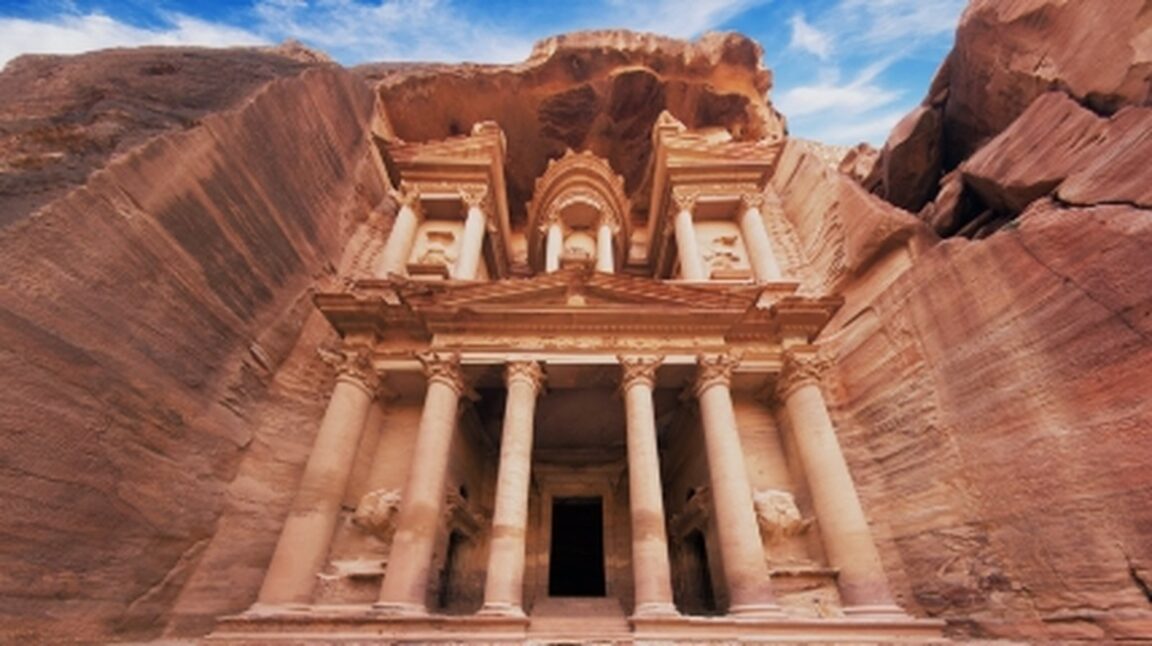
Image credit: The Treasury, Al Khazneh, at Petra, photographed from the official Visit Petra website (visitpetra.jo), the Petra Development and Tourism Region Authority.