 Omar Haddad
Morocco has already staged its rehearsal. The Africa Cup of Nations ran from 21 December 2025 to 18 January 2026 across nine stadiums in six cities, and the build out that tournament used is the floor, not the ceiling, for the 2030 World Cup, which Morocco co-hosts with Spain and Portugal. For travellers, the changes that matter are concrete: a new terminal at Casablanca’s Mohammed V airport designed to lift capacity from about 14 million passengers a year to about 35 million, a rail programme worth about 96 billion dirhams that extends high speed running toward Marrakech, a new 115,000 seat Hassan II Stadium at Benslimane with its own rail connection, and expanded stadiums and hotel supply in the six host cities. This guide separates what is open now from what is still a target date, because Morocco coverage often blurs the two.
Quick Facts
- AFCON 2025: Played 21 December 2025 to 18 January 2026 in Rabat, Casablanca, Tangier, Marrakech, Agadir and Fes; the final was held at Rabat’s Prince Moulay Abdellah Stadium, capacity 69,500.
- World Cup 2030: Co-hosted with Spain and Portugal across six Moroccan cities, per FIFA’s confirmed hosting arrangement.
- Casablanca airport: New terminal investment of about 15 billion dirhams, lifting Mohammed V capacity from about 14 million to about 35 million passengers a year, targeted for completion before 2030.
- Rail programme: About 96 billion dirhams, including the Kenitra to Marrakech high speed extension, with commissioning targeted for late 2029 in project reporting.
- New stadium: Hassan II Stadium at Benslimane, planned at 115,000 seats, with a commuter rail link connecting toward Casablanca and its airport corridor.
- Already running: Al Boraq high speed trains already link Tangier and Casablanca, the first high speed line in Africa, opened in 2018.
The Airports: Casablanca First, Then the Host City Ring
Casablanca’s Mohammed V International is Morocco’s main gateway and the centre of the airport programme run by the national airports office, ONDA. The flagship project is a new hub style terminal, reported at about 600,000 square metres in an H shaped layout, designed to add roughly 20 million passengers of annual capacity and take the airport to about 35 million a year. Moroccan contractors SGTM and TGCC have been awarded major construction packages, and the completion target sits in 2029, ahead of the tournament. Travellers flying in before then should expect a working airport wrapped around a building site: the existing terminals keep operating, and the honest advice is to allow extra time for transfers and to check which terminal a flight uses on the day.
The programme is national rather than a single airport vanity project. Morocco’s stated aim is to lift total airport capacity from roughly 30 million passengers a year toward 80 million by 2030, with upgrades also reported for Rabat, Marrakech, Agadir and Tangier, the airports that serve the other host cities. For a visitor, the practical effect arrives in stages: more stands and smoother processing at the big gateways first, then the new Casablanca terminal as the decade turns. Anyone planning a 2030 trip should treat today’s airport experience as the worst version they will meet, and should still book the longer connection, because construction era airports reward slack. Our guide to Essaouira beyond the day trip shows the Morocco that sits beyond the gateway cities once the flying is done.
The Rail Link to the Stadiums: Al Boraq Today, Marrakech Tomorrow
Morocco’s rail story starts with what already exists. Al Boraq, operated by the national railway ONCF, has run high speed trains between Tangier and Casablanca, via Kenitra and Rabat, since 2018. That corridor already serves three host cities and both of the country’s biggest stadiums of the AFCON tournament, in Tangier and Rabat, sit on or near it. The 2030 programme extends the high speed idea south: the Kenitra to Marrakech line, about 430 kilometres in project reporting, is under construction with a commissioning target late in 2029 and a projected Casablanca to Marrakech journey of about 1 hour 15 minutes. Until it opens, Marrakech remains a conventional rail and road journey from Casablanca, and travellers should plan on that basis rather than on renderings.
The stadium rail connection with the most ink is the Hassan II Stadium at Benslimane, between Casablanca and Rabat, planned as the largest stadium in the country at 115,000 seats. Project reporting describes a three way commuter railway serving the stadium and linking toward the airport corridor, which is the correct instinct: a stadium of that size on a greenfield site lives or dies by its trains. The Fes stadium expansion, reported as lifting capacity from about 35,500 toward 55,800 by 2028, follows the same pattern of building the venue and its access together. For travellers, the rule of the build out years is simple: trains that exist today are bookable on ONCF, trains with target dates are not, and match day plans for 2030 should wait for the timetable that ONCF actually publishes.
Hotels and Host Cities: Supply Is the Quiet Half of the Programme
Stadiums photograph well, but hotel beds decide whether a tournament feels welcoming or extortionate. Morocco’s tourism authorities have announced a programme of roughly 60,000 additional hotel beds across about 700 projects by 2030, alongside a national target of 26 million visitors a year. The six host cities divide by character. Rabat is the administrative capital and held four AFCON venues, including the final stadium. Casablanca is the commercial hub and air gateway. Tangier faces Spain across the strait and holds the country’s largest AFCON stadium. Marrakech is the tourism heavyweight, Agadir the Atlantic resort city, and Fes the imperial medina city, whose stadium expansion matters because its historic core was never built for tournament crowds. Travellers visiting before 2030 get the benefit early: renovated venues, improving stations and a hotel pipeline that is already opening in phases. The friction to expect is the same as in any build out: roadworks near stadium districts, changing station layouts and prices that spike around event dates. Our companion guide to mistakes to avoid in Marrakech’s medina covers the on the ground half of a Morocco trip, and more Morocco coverage is linked from the Always Packed homepage.
Frequently Asked Questions
Which Moroccan cities host the 2030 World Cup?
Six: Rabat, Casablanca, Tangier, Marrakech, Agadir and Fes, the same six that staged AFCON 2025, with Morocco co-hosting alongside Spain and Portugal.
When will the new Casablanca airport terminal open?
The target reported by the airports programme is completion in 2029, ahead of the 2030 tournament, lifting Mohammed V capacity to about 35 million passengers a year. Until then the existing terminals operate.
Can I already ride a high speed train in Morocco?
Yes. Al Boraq trains have linked Tangier, Kenitra, Rabat and Casablanca since 2018. The high speed extension to Marrakech is under construction with a late 2029 target and is not yet bookable.
What is the Hassan II Stadium and how will fans reach it?
It is the planned 115,000 seat stadium at Benslimane, between Casablanca and Rabat. Project plans include a commuter rail link serving the stadium and the airport corridor.
Are World Cup 2030 tickets on sale?
No. FIFA has not put 2030 tickets on sale, and anyone selling them now is unauthorised. Register interest only through FIFA’s official channels.
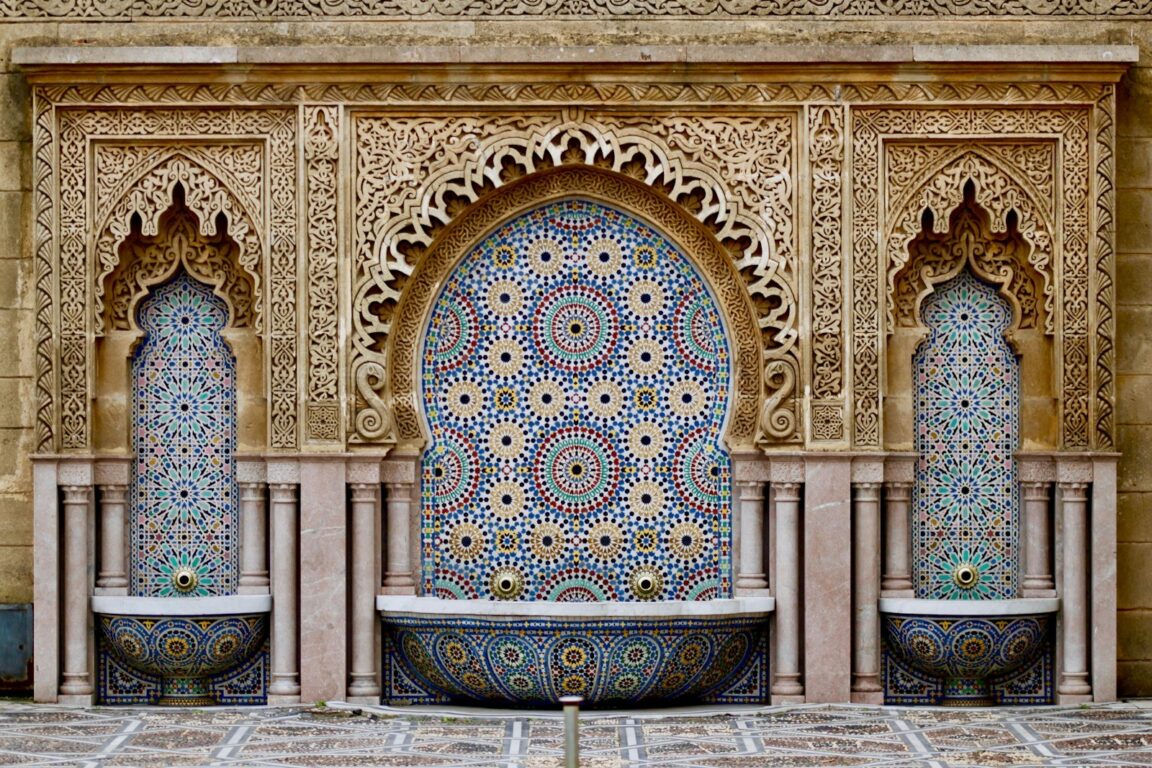
Image: Zellij mosaic fountain at the Hassan II Mosque complex, Casablanca, Morocco. Photo by Unsplash contributor (photo 1539020140153-e479b8c22e70), via Unsplash, Unsplash License.