 Omar Haddad
Almost every bad hour a traveller spends in Marrakech’s medina comes from one of five predictable moments: accepting the first offer of directions, following a stranger to a tannery, photographing someone without asking, saying yes to a carpet shop out of politeness, or discovering at the end of a service that its price was never agreed. None of these requires bad luck, and none of them needs to happen twice. The medina is a working UNESCO listed old city of souks, workshops and family homes, not a theme park with friction added for colour, and its rules are learnable in advance. This guide names the friction honestly, script by script, so that the genuinely wonderful parts of the medina, the craft, the food and the architecture, are what you spend your attention on.
Quick Facts
- The core rule: in the medina, any service that finds you, rather than one you chose, will expect payment. Directions, tours, photographs and terrace views all work this way.
- Official guides: licensed Moroccan guides carry an official badge. Anyone without one who leads you is unofficial, however friendly, and will expect a tip.
- The tanneries: Marrakech’s tanning quarter sits by Bab Debbagh, the tanners’ gate, in the northeast of the medina. Views come from the lanes and from leather shop terraces, not from a ticket office.
- Best tannery hour: the morning, around 9 to 11 a.m., when the vats are in full work and the light is on the colours.
- Photographs: ask first, every time. Portraits of performers, snake charmers, henna artists and stallholders are a paid service, and the price should be settled before the shutter, not after.
- Getting lost: it is normal, temporary and free. The medina’s lanes all eventually reach a gate, a square or a landmark.
Mistake 1: falling for the guide tout script
The script has three standard openings, and recognising them is most of the defence. The first is the false closure: the sight you are walking toward is declared shut today, for prayer, for renovation, for a festival, but fortunately your new friend knows something better. The second is the festival fiction: today only, a Berber market, a leather auction or a carpet cooperative exhibition is happening just around the corner, and it ends within the hour. The third is the simple kindness: a young man falls into step, asks where you are from, and begins walking in your direction, narrating as he goes. Twenty minutes later, at your destination or at his cousin’s shop, the narration becomes an invoice, and the amount is whatever he thinks the moment will bear. The counter is boring and total: a smile, a firm no thank you, and no engagement with the content of the claim. If you want a guide, and a good licensed guide genuinely transforms the medina, hire one through your riad or an agency, agree the route and the price in advance, and check for the official badge that licensed Moroccan guides carry. Our guide to day trips from Marrakech to Imlil, Ouzoud and the Agafay applies the same hire properly principle to the Atlas foothills.
Mistake 2: treating photographs as free
In Jemaa el-Fnaa and across the medina, a camera changes the economics of every encounter. The snake charmers, water sellers in their red costumes, henna artists and monkey handlers of the great square are performers, and a photograph of them is their product: take it and a hand comes out, sometimes attached to a demand far above the small note the picture was worth. The same applies, more quietly, to portraits of craftsmen and stallholders, many of whom simply do not want to be photographed at work and are entitled to that refusal. The working rule is ask first, agree the small price before you shoot if money is expected, and accept no as a complete answer. Photograph architecture, lanes, goods and food freely, and be discreet around mosques, schools and family doorways. Travellers who follow this rule report something else as well: the asking itself, done with a smile and a few words of French or Arabic, produces better pictures and better conversations than any amount of telephoto stealth.
Mistake 3: the tanneries detour, taken on someone else’s terms
The tanneries are worth seeing. Around Bab Debbagh, the tanners’ gate in the medina’s northeast, raw hides are still soaked in lime, softened, trodden and dyed in stone vats in a sequence of work that has run for centuries, and the smell, earthy and powerful, is part of the record. The mistake is not going. The mistake is arriving as someone’s commission. Unofficial guides steer visitors to particular leather shops because the shop pays for the delivery, and the price of everything you later touch quietly includes that payment. Go on your own terms instead: walk or take a taxi to Bab Debbagh or Place Moukef in the morning, when work in the vats is at its height, accept the sprig of mint that shopkeepers hand visitors for the smell, and view the vats from the lanes and from a shop terrace of your own choosing. A small tip for a short escorted visit is customary, twenty dirhams is a reasonable figure for a brief one, and browsing the shop afterwards is a courtesy, not a contract. For the grander version of the same craft, the vast Chouara tannery, see our guide to Fes and its car free medina, where the terrace system works the same way at triple the scale.
Mistake 4: entering the carpet shop to be polite
The medina’s most reliable time sink begins with an invitation that costs nothing to accept and an hour to leave: mint tea in a carpet shop, a weaving cooperative, a herbalist with a miraculous argan oil, just looking, no obligation. The tea is real, the carpets are often beautiful, and the obligation arrives on schedule, in the form of a floor covered with unrolled rugs, a patient masterclass in Berber symbolism, and a host whose warmth cools in exact proportion to your reluctance to buy. The exit problem is structural: once you have accepted hospitality and an hour of a man’s labour, leaving empty handed feels like a debt, which is precisely the design. The defence is at the door, not at the till. Decline tea in shops you do not intend to buy from, warmly and without apology, and if you do go in, say before the first rug is unrolled that you are looking only and will not buy today, then keep the appointment short. If you are buying, haggle as the ritual expects: opening prices in the souks are routinely set at double or triple the figure a seller will settle for, so counter low, stay friendly, and be genuinely willing to walk away, because walking away is the only negotiating instrument that has ever worked in a souk.
Mistake 5: paying the panic premium for being lost
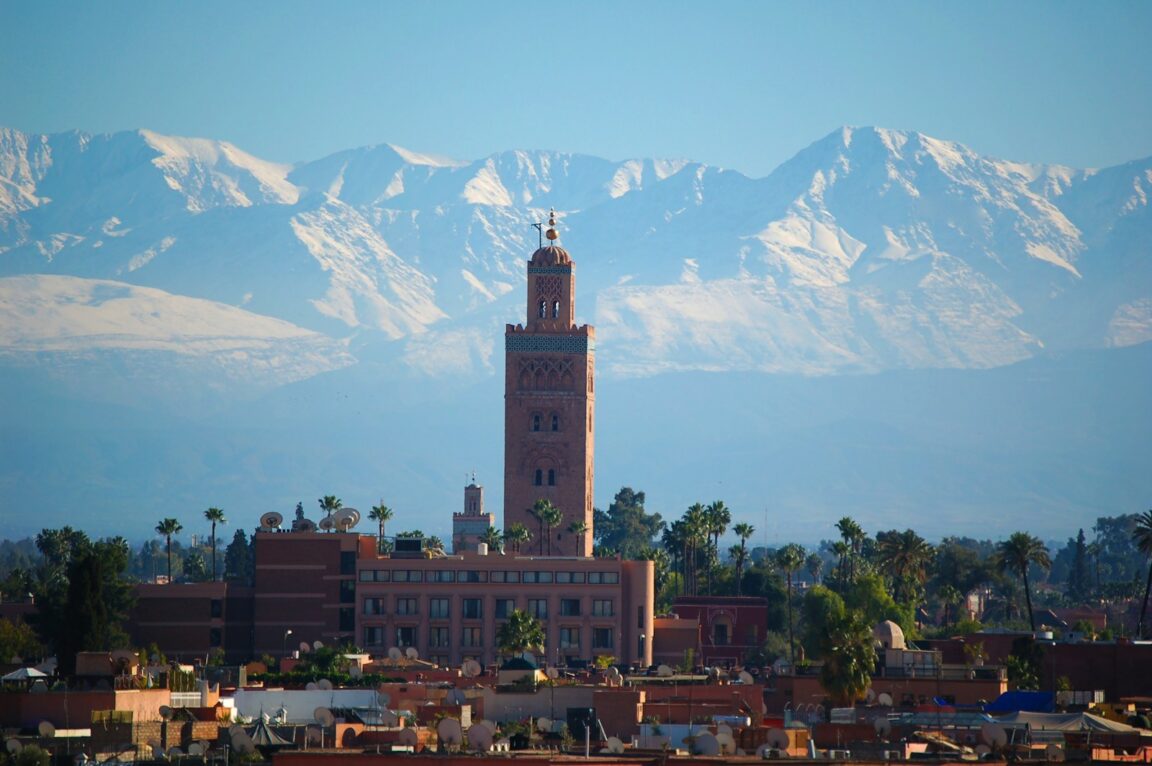
The medina is a labyrinth by design, and every visitor gets lost in it, usually within the first hour. What turns a pleasant wrong turn into a bad memory is panic spending: paying a stranger to lead you out, accepting a taxi’s invented fare at a gate, or abandoning a planned sight because the lanes feel impenetrable. Resist all three. Being lost in the medina is temporary and self correcting: lanes widen toward gates and squares, the Koutoubia minaret orients the west, Jemaa el-Fnaa anchors the south, and any cafe will point a polite asker toward both. Download an offline map before you enter, drop a pin on your riad, agree taxi fares before the door closes, and treat dead ends as the medina’s ordinary texture. Some of its best moments, a bread oven in full work, a fountain in carved tile, a lane of dyers with wool drying overhead in blue and saffron skeins, are only ever found by people who took a wrong turn calmly.
The medina, enjoyed on purpose
It is worth ending on what the friction protects. Inside the same walls are the Ben Youssef Madrasa’s carved plaster and tile, the souks ordered by trade as they have been for centuries, dyers, metalworkers, wood carvers and slipper makers practising crafts at a level Europe mostly lost, and a street food culture that peaks after dark when Jemaa el-Fnaa fills with grill smoke. A traveller who hires guides deliberately, asks before photographing, visits the tanneries independently in the morning, declines tea strategically and treats being lost as weather will have a completely different medina from the one in the warning stories, and it is the same medina. The difference was never the city. It was preparation.
Frequently Asked Questions
How can I tell an official guide from a tout in Marrakech?
Licensed Moroccan guides carry an official badge and can be hired through riads, hotels and agencies for an agreed route and price. Anyone who attaches themselves to you in the street is unofficial, whatever they claim, and will expect payment.
Is it safe to visit the Marrakech tanneries?
Yes, as an independent visit. Go in the morning, around 9 to 11 a.m., to the Bab Debbagh quarter, view from the lanes or a leather shop terrace, accept the mint sprig for the smell, and tip small for any escorted look. The hazard is not safety but the hard sell that comes with arriving as a tout’s delivery.
How much should I tip for a short tannery visit?
Twenty dirhams is a reasonable figure for a brief escorted visit or terrace access arranged on the spot. Agree any larger guiding arrangement, and its price, before it starts.
What do I say to leave a carpet shop?
Prevention beats exit lines: decline the tea unless you may genuinely buy. If you are already inside, be warm, be clear, and leave: thank the host, say you are not buying today, stand up and go. Politeness does not require a purchase.
How much should I haggle in the souks?
Expect opening prices at two to three times the settling figure for many goods. Counter low, negotiate in good humour, and be ready to walk away. Fix the price of services, taxis, photographs and guiding before they begin, not after.
What if I get completely lost in the medina?
Stay calm and walk toward a gate, a square or a cafe and ask. The Koutoubia minaret and Jemaa el-Fnaa are the two great orientation points. An offline map downloaded in advance solves most of it.
Image: The Koutoubia minaret above the medina rooftops of Marrakech, with the snow covered High Atlas mountains behind. Photo: Unsplash contributor (photo 1597212618440-806262de4f6b), via Unsplash, used with credit.