 Lucas Meyer
JFK has five working passenger terminals, numbered 1, 4, 5, 7 and 8, and there is no Terminal 2, 3 or 6 in service. That single fact, plus knowing which terminal your airline uses and that the AirTrain runs between terminals on the landside, outside security, is most of what a traveller needs. Delta works from Terminal 4, JetBlue from Terminal 5 and American from Terminal 8. Everything else in this guide is the order of the AirTrain loop, the transfer times that decide whether a tight connection survives, and the rebuild that is quietly changing the airport underneath its passengers.
Quick Facts
- Active terminals: 1, 4, 5, 7 and 8. Terminals 2 and 3 are closed and demolished; Terminal 6 is under construction
- Terminal 1: International carriers including Air France, Lufthansa, Korean Air and Turkish Airlines
- Terminal 4: Delta Air Lines hub, plus Emirates, KLM, Virgin Atlantic and others; the only terminal open 24 hours
- Terminal 5: JetBlue, with Cape Air and Sun Country; the TWA Hotel sits at Terminal 5
- Terminal 7: Air Canada, Aer Lingus, ANA, Frontier, Icelandair and Norse Atlantic among others
- Terminal 8: American Airlines and oneworld partners including British Airways, Iberia, Japan Airlines and Qatar Airways
- AirTrain: Free between terminals, running 24 hours; a fare applies when entering or exiting at Jamaica or Howard Beach stations
- Rebuild: A major Port Authority redevelopment is under way, including the New Terminal One and a new Terminal 6
Which terminal does your airline use at JFK?
JFK’s terminals are separate buildings arranged around the airport’s central road system, each with its own check in, security, baggage claim and AirTrain station. There is no walkway between gate areas in different terminals, so the airline on your ticket decides your building, and codeshares are the classic trap: the terminal belongs to the operating airline, the one whose aircraft you actually board, not the partner whose code sold the seat. Check the operating carrier before you set out, because the airport’s own airline directory on jfkairport.com is the authoritative list and assignments do move as the redevelopment progresses.
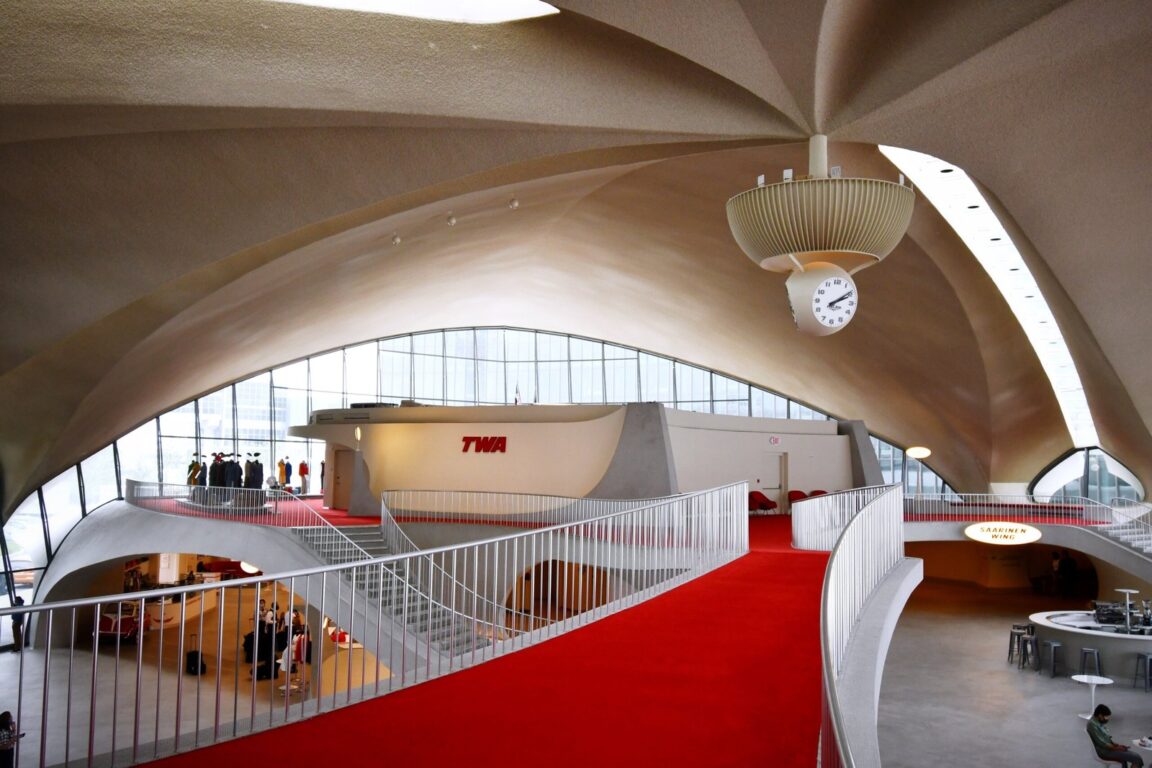
Terminal 1 is the international terminal in the original sense, home to a long list of overseas carriers including Air France, Lufthansa, Korean Air, Turkish Airlines, SWISS, ITA Airways, Austrian, TAP Portugal, Air China, EVA Air and Asiana. Terminal 4 is the airport’s workhorse and its largest operation, built around Delta and its partners, with Emirates, KLM, Virgin Atlantic, Singapore Airlines, Etihad, Air India, Aeromexico and LATAM among the other carriers, and it is the only terminal that stays open around the clock. Terminal 5 is JetBlue’s home, a single airline operation with Cape Air and Sun Country alongside, connected to the TWA Hotel in the landmark former TWA Flight Center. Terminal 7 is the mixed house, currently listing carriers such as Air Canada, Aer Lingus, ANA, Frontier, Icelandair and Norse Atlantic. Terminal 8 belongs to American Airlines and its oneworld partners, including British Airways, Alaska Airlines, Qatar Airways, Japan Airlines, Cathay Pacific, Iberia and Finnair. One arrival nuance catches people out: JetBlue’s international arrivals can use Terminal 4 in the overnight hours, so an arrival terminal can differ from the departure terminal on the same airline.
How does the AirTrain loop actually run?
The AirTrain is the airport’s spine. Every terminal has its own station, and the system runs three patterns: the airline terminal loop that circulates between the terminals, and the two branches out to Jamaica and Howard Beach, where the airport meets the city. Trains between terminals are free, run around the clock and, in the airport’s own guidance, complete the terminal to terminal journey in under 10 minutes, with trains every few minutes at busy times and longer gaps overnight. The fare is charged at the two city facing stations, Jamaica and Howard Beach, when you enter or exit the system there; the single ride was priced at 8.75 dollars in the Port Authority’s published information, on top of the subway or Long Island Rail Road fare that brings you to those stations.
The order matters because the loop is a loop. Riding the terminal circuit in its direction of travel, the stations follow the terminal sequence around the airport, and going the wrong way round can turn a two minute hop into a full circuit. Read the platform signs for the direction, all terminals, before boarding, and remember that the Jamaica and Howard Beach branches also stop at Federal Circle, for rental cars and hotel shuttles, and at Lefferts Boulevard, for long term parking and the free drop off and pick up lot the Port Authority promotes as the way to dodge terminal road traffic. For travellers with a long wait rather than a tight one, our JFK long layover guide covers what to do with the hours, including when leaving for the city makes sense.
How much time does a terminal change really take?
Budget a terminal change as a sequence, not a train ride. You leave the secure area of your arrival terminal, walk to its AirTrain station, wait for a train, ride, walk into the departure terminal and clear security again, because the AirTrain runs landside and every terminal change at JFK means a fresh TSA screening. The train portion is the smallest part: under 10 minutes between terminals. The honest planning figure for the whole sequence is 45 minutes to an hour on a good day, and more with checked bags to reclaim and recheck, a slow security line or an overnight AirTrain gap. Connections within one terminal are a different world: inside Terminal 4, for example, Delta’s airside shuttle links its concourses without a new screening, which is why same terminal connections can be booked far tighter than cross terminal ones.
Three rules protect a tight JFK connection. Book both flights on one ticket, so a missed connection is the airline’s problem to solve. Prefer connections that stay inside one terminal, and treat any itinerary that changes terminals with under two hours between flights as fragile. And confirm terminals again on the day, from your airline, because the redevelopment below has airlines moving more often than habit expects. Travellers pairing JFK with a first New York stay should line this up with our New York in three days itinerary so the airport plan and the city plan agree.
What is the rebuild changing, and what should you ignore?
JFK is in the middle of a Port Authority redevelopment programme valued in the airport’s own materials at about 19 billion dollars, and its two headline projects will redraw this guide’s map in stages. The New Terminal One is rising on the site of the current Terminal 1 and the former Terminals 2 and 3, with its first phase, including new arrival and departure halls and the first of its gates, expected to open in 2027. A new Terminal 6 is under construction beside Terminal 7, with its first gates described by the Port Authority as opening in 2026, and several Terminal 7 carriers have announced moves there; Terminal 7 itself continues operating until the second phase of Terminal 6 construction requires its site. Terminal 5 is also being renovated. For today’s traveller the practical consequences are construction traffic on the airport roads, pick up and drop off arrangements that move, notably for Terminals 5 and 7, and airline terminal assignments that deserve a fresh check for every trip. The terminals in service today remain 1, 4, 5, 7 and 8, and anything you read that sends you to Terminal 2, 3 or 6 for a flight today is out of date.
Frequently Asked Questions
How many terminals does JFK have?
Five in service: Terminals 1, 4, 5, 7 and 8. Terminal 2 closed in 2023 and Terminal 3 was demolished in 2013. A new Terminal 6 is under construction and the New Terminal One is being built on the Terminal 1 site.
Is the AirTrain free at JFK?
Between terminals, yes, and it runs 24 hours. A fare applies when you enter or exit the AirTrain at Jamaica or Howard Beach stations, where it connects with the subway and the Long Island Rail Road.
Can you walk between terminals at JFK?
No. The terminals are separate buildings with no airside walkway between them. Use the AirTrain, which runs outside security, and expect to clear TSA screening again at your departure terminal.
How long should I allow to change terminals at JFK?
The AirTrain ride itself is under 10 minutes, but the full sequence of exiting, riding and re-clearing security takes 45 minutes to an hour or more. Treat cross terminal connections under two hours as fragile.
Which terminal is open all night at JFK?
Terminal 4, the Delta hub, is the only terminal open 24 hours. Travellers with overnight waits should plan around Terminal 4 and the landside AirTrain, which also runs around the clock.
Featured image: The TWA Flight Center at JFK Airport, now the TWA Hotel at Terminal 5, New York. Photo by Max Harlynking via Unsplash, Unsplash License.