 LeVar Thomas
Choose Williamsburg if your trip runs late, Fort Greene if you want the park and the arts calendar, and Park Slope if you are travelling with children or simply want Brooklyn at its calmest. That is the honest short answer to where to stay in Brooklyn. All three neighbourhoods sit on good subway lines, all three cost less than an equivalent Manhattan base more often than not, and each one changes the texture of a New York trip in a different way. This guide matches the neighbourhood to the trip you are actually taking, and prices the choice against Manhattan without pretending Brooklyn is a secret or a bargain basement.
Quick Facts
- Williamsburg: Best for nightlife, restaurants and a first Brooklyn stay; L and G trains, plus the ferry
- Fort Greene: Best for park mornings, theatre and a residential base; many subway lines at Atlantic Terminal nearby
- Park Slope: Best for families and slow mornings; brownstone streets beside Prospect Park
- The park: Prospect Park is Brooklyn’s great landscape, with the Brooklyn Botanic Garden on its eastern edge
- The honest price rule: Brooklyn usually undercuts prime Manhattan, but prime Williamsburg can match Manhattan prices
- Manhattan access: Every neighbourhood here reaches Manhattan by subway in roughly 20 to 40 minutes, depending on the destination
Who should stay in Williamsburg, and what does it cost in sleep?
Williamsburg is Brooklyn’s loudest success story: a former industrial waterfront on the East River, facing the Manhattan skyline, rebuilt over two decades into the borough’s densest concentration of restaurants, bars, music venues and hotels. Bedford Avenue and the streets around it run from morning coffee to late night without a pause, the waterfront parks give the neighbourhood its skyline view, and Domino Park, built on the site of the former Domino Sugar refinery, is the emblem of the change: a public park threaded through industrial relics, with the factory’s story kept visible rather than erased. The L train puts Manhattan’s Union Square one stop away across the river, which makes Williamsburg the easiest Brooklyn base for a traveller whose days are in Manhattan and whose evenings are not.
The trade is written into the same facts. Williamsburg is the Brooklyn neighbourhood least likely to save you money: its hotels price against Manhattan, not against the borough, and its weekend streets are busy and loud well past midnight. Light sleepers should ask for a room away from the main avenues, and travellers who want to feel they are staying somewhere residential should read on. Choose Williamsburg when the trip is about eating, drinking, music and skyline views, and when a late scene outside the door is a feature rather than a flaw. For a first Brooklyn stay with a social itinerary, it remains the default answer.
Why is Fort Greene the connoisseur’s base?
Fort Greene is the neighbourhood Brooklyn keeps for itself: tree lined brownstone streets around Fort Greene Park, a green hilltop square of lawns and paths that anchors local life, and the Brooklyn Academy of Music, whose theatres and cinemas give the area the strongest arts calendar in the borough. Evenings here are cultural rather than commercial: a performance at BAM, dinner on the restaurant rows of DeKalb and Lafayette avenues, a walk home through streets that go quiet at a residential hour. The neighbourhood also carries serious history, from the Prison Ship Martyrs Monument in the park, commemorating Americans who died on British prison ships in the harbour during the Revolutionary War, to the literary associations of its brownstone blocks.
Practically, Fort Greene may be the best connected base in Brooklyn. Atlantic Terminal, a few minutes’ walk away, gathers a long list of subway lines plus the Long Island Rail Road, which is the fastest route to JFK’s AirTrain at Jamaica for many travellers. Hotels are fewer here than in Williamsburg, and much of the stock is small; travellers who want a large full service hotel may need to look at neighbouring Downtown Brooklyn and walk in. That scarcity is part of the character. Fort Greene suits couples, culture led trips and repeat New York visitors who have done the Manhattan base and want the city at a human scale without giving up reach. It is also the calmest of the three for actual sleep, with the park setting the tone.
What makes Park Slope the family answer?
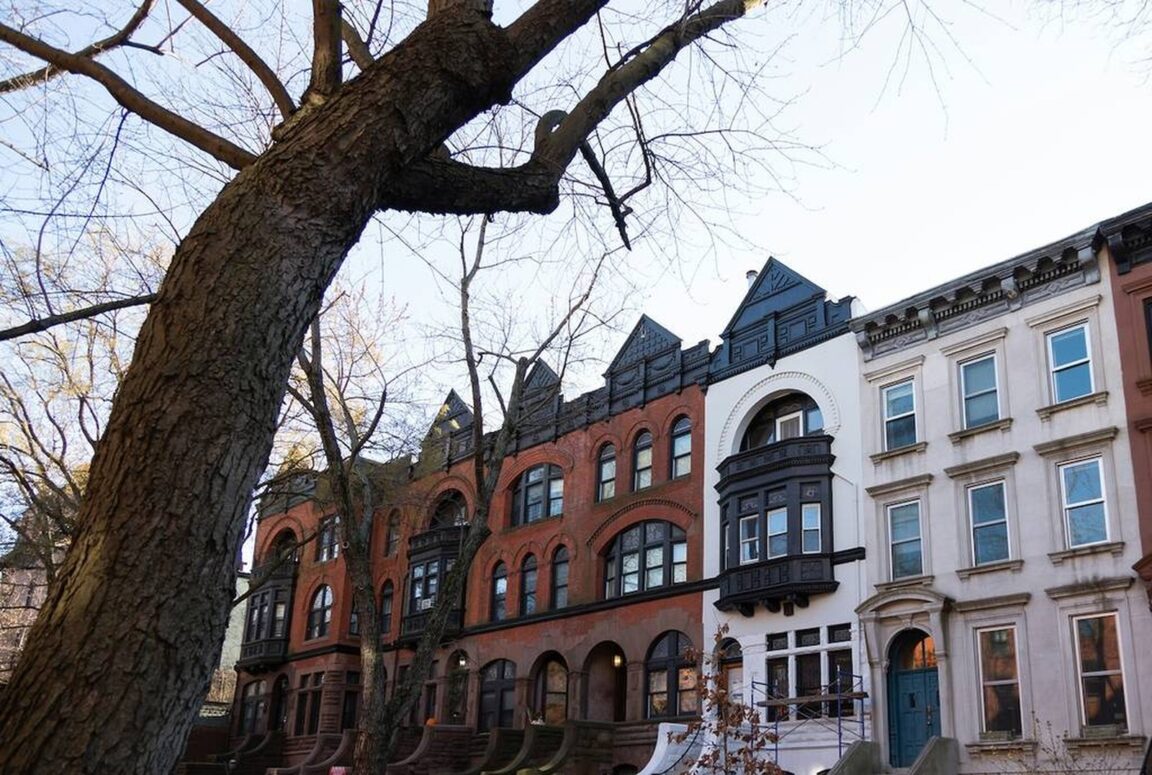
Park Slope is Brooklyn’s brownstone archetype: long streets of 19th century row houses running down from Prospect Park, with Seventh Avenue carrying the neighbourhood’s everyday shops and Fifth Avenue carrying its restaurants and bars. The pace is set by the park and by the families who structure their days around it. Prospect Park itself is the main event, a vast landscape of meadow, woodland and lake designed by the same partnership, Frederick Law Olmsted and Calvert Vaux, that designed Central Park, and many New Yorkers consider it their finer work. On the park’s eastern side sit the Brooklyn Museum and the Brooklyn Botanic Garden, whose seasonal displays reward a dedicated visit; our Brooklyn Botanic Garden by season guide plans that day in detail.
For families the case compounds: larger rooms and apartment style stays are easier to find than in Williamsburg, the streets are quiet at night, the park absorbs whole days at no cost, and the neighbourhood’s infrastructure of playgrounds, libraries and casual restaurants is built for children rather than adapted to them. The cost is distance and nightlife. Park Slope evenings wind down early, and Manhattan sightseeing days start with a longer subway ride. Travellers building a wider first trip should read this alongside our New York in three days itinerary, and decide honestly how many of their days belong to Manhattan before paying Manhattan prices to sleep there.
How does Brooklyn really price against Manhattan?
The honest version is a range, not a slogan. A comparable room in Park Slope or Fort Greene will usually cost meaningfully less than the same standard in Midtown or the Upper West Side, and apartment style stays widen the gap for families and longer trips. Williamsburg’s best located hotels, by contrast, often price within sight of Manhattan, because their customers are buying the scene as much as the room. What Brooklyn reliably saves is not only money: it buys space, quieter streets and mornings that begin in a neighbourhood rather than a hotel district. What it costs is time, roughly 20 to 40 minutes of subway between your door and Manhattan’s main sights, and that cost is lowest in Fort Greene, moderate in Williamsburg and highest in Park Slope. Price the whole trip, room plus hours, and the right answer usually names itself.
What about arriving, and the first evening in each neighbourhood?
Arrival logistics quietly confirm the choice. Fort Greene is the easiest landing of the three: Atlantic Terminal connects to the Long Island Rail Road at Jamaica, where the JFK AirTrain begins, so the airport to door journey is a single seat train ride plus a short subway hop or walk. Williamsburg arrivals from JFK usually route through Jamaica and the L train as well, crossing under the East River to Bedford Avenue. Park Slope is the longest airport journey of the three, and travellers arriving late at night with children and luggage should weigh a car service against the savings. The first evening test is simpler. In Williamsburg, walk to the waterfront and look back at Manhattan, then eat late. In Fort Greene, check what is on at BAM and eat on DeKalb Avenue. In Park Slope, walk the park’s edge at dusk and eat on Fifth Avenue, then enjoy the unfashionable luxury this neighbourhood sells best: a full night of quiet sleep in a city that is famous for withholding it.
Frequently Asked Questions
Which Brooklyn neighbourhood is best for a first visit?
Williamsburg for a social, food led trip; Fort Greene for culture and connections; Park Slope for families. First timers splitting days between Brooklyn and Manhattan usually land happiest in Fort Greene or Williamsburg.
Is Brooklyn cheaper than Manhattan for hotels?
Usually, but not always. Park Slope and Fort Greene generally undercut comparable Manhattan areas, while prime Williamsburg hotels can match Manhattan prices. Apartment style stays improve Brooklyn’s value further.
How long does it take to reach Manhattan from these neighbourhoods?
Roughly 20 to 40 minutes by subway depending on the neighbourhood and the Manhattan destination. Williamsburg is one L train stop from Union Square; Fort Greene sits beside Atlantic Terminal’s many lines.
Which area is quietest at night?
Park Slope first, Fort Greene a close second. Williamsburg’s main avenues stay lively late, so light sleepers there should request rooms away from Bedford Avenue and the waterfront nightlife streets.
Where should families with young children stay?
Park Slope, for Prospect Park, the playgrounds, the larger apartment style stock and the early, quiet nights. The Brooklyn Museum and Brooklyn Botanic Garden sit on the park’s eastern edge for easy big days out.
Featured image: Brownstone row houses in Park Slope, Brooklyn, New York. Photo by Sam Balye via Unsplash, Unsplash License. Original 1024px wide, upscaled to 1600px per program standard.