 Aiko Tanaka
Three days in Kyoto works without the crowd crush if you treat the clock as your main ticket: the famous sights are at their emptiest in the first hour after opening, several of the greatest ones never close at all, and the single best crowd escape in the city is a half day in the mountain village of Kurama, where most three day visitors never go. This itinerary sequences Kyoto by neighbourhood and by hour, dawn temples first, the northwest pair at opening time, Arashiyama before the tour buses, and one evening in Gion timed for the hour when the day trippers have gone and the district belongs to its residents again. Prices and hours below were checked against the temples’ and the city’s own published information on November 24, 2026.
Quick Facts
- The crowd rule: arrive at any headline sight within its first open hour, or after 4 p.m. The crush in Kyoto is a mid morning phenomenon, roughly 9:30 a.m. to 3 p.m.
- Free and always open: Fushimi Inari Taisha costs nothing and its grounds never close, which makes it the perfect dawn start. The Arashiyama Bamboo Grove and the Philosopher’s Path are also free.
- Gate prices, adults: Kiyomizu-dera 500 yen, Kinkaku-ji 500 yen, Ryoan-ji 600 yen, Ginkaku-ji 1,000 yen, Tenryu-ji garden 500 yen.
- Opening hours that matter: Kiyomizu-dera opens at 6 a.m. Kinkaku-ji opens at 9 a.m. and closes at 5 p.m. Ginkaku-ji opens at 8:30 a.m. in the March to November season.
- Getting around: the Subway and Bus 1-Day Pass costs 1,100 yen. Kyoto asks visitors to keep large luggage off city buses, so travel light or use the subway and trains where you can.
- Gion rule: the private lanes off Hanamikoji have been closed to visitors since April 2024, with signs warning of a 10,000 yen fine. Stay on the public streets.
How the three days are sequenced, and why
Kyoto’s sights cluster into five loose districts: the south around Fushimi Inari, the east along the Higashiyama lanes and Gion, the northwest around Kinkaku-ji, the west at Arashiyama, and the centre around Nijo Castle and Nishiki Market. Crowd pain in Kyoto is almost never about the sight itself. It is about arriving at the same sight in the same hour as every tour group in the city. So each day below pairs one headline sight at its quietest hour with a district that absorbs the rest of the day at walking pace, and the whole plan is built so that no day crosses the city twice. For a longer stay built on the same logic, see our Kyoto in 5 days itinerary, which spreads this sequencing across a full working week of mornings.
Day 1: Fushimi Inari at dawn, then the Higashiyama lanes
Start before breakfast at Fushimi Inari Taisha
Fushimi Inari is the one Kyoto sight where an early start is not a compromise but a gift. The shrine is free, the grounds are open at all hours, and the JR Nara Line from Kyoto Station reaches Inari Station in about five minutes, with the shrine’s great gate directly across from the station exit. Be walking through the first vermilion tunnels of the Senbon Torii by 6:30 or 7 a.m. and you will share them with a handful of locals and photographers rather than a slow shuffle of tour groups. You do not need the summit. The full mountain loop takes two to three hours; the Yotsutsuji intersection, roughly half an hour to forty five minutes up, gives the classic view over southern Kyoto, and the gates thin out dramatically above it because most visitors turn back at the first viewpoint. Come down by mid morning, eat on the shopping street by the station, where kitsune udon and inari sushi are the local signatures, and the day’s biggest sight is already done before the crowds have finished breakfast.
Midday and afternoon in Higashiyama, walked downhill
From Fushimi Inari, the Keihan Line runs north toward Higashiyama. Kiyomizu-dera, the great wooden stage temple, opens at 6 a.m. and charges 500 yen, but on a three day plan its best use is the late afternoon, when the light turns and the school groups leave. Spend the middle of the day instead on the quieter northern half of the district: Ginkaku-ji, the Silver Pavilion, opens at 8:30 a.m. and now charges 1,000 yen, and the Philosopher’s Path canal walk that runs south from it is free, shaded and calm at almost any hour. Walk the path south through the lane temples toward Nanzen-ji, whose brick aqueduct and vast gate reward an unhurried hour, then drift down into the preserved lanes of Sannenzaka and Ninenzaka as the day cools. Finish at Kiyomizu-dera in its last open hour if the season’s closing time allows, or save the temple for a 6 a.m. start on Day 3 and end today with coffee in a machiya cafe instead. Either way, you have walked the east side in the direction the crowds do not.
Day 2: the northwest pair at opening, Arashiyama before the buses
Kinkaku-ji at 9 a.m. sharp, Ryoan-ji after
Kinkaku-ji, the Golden Pavilion, opens at 9 a.m., charges 500 yen, takes cash at the gate and sells no advance tickets, so the only strategy is the queue at opening. Arrive by 8:45. The pavilion’s reflection in the Mirror Pond is at its calmest in the first minutes of the day, and the visit itself is a fixed one way circuit of about twenty five minutes, which makes it an ideal first stop rather than a destination to linger in. Twenty minutes on foot or a short bus ride away, Ryoan-ji opens earlier in the morning and charges 600 yen for the most famous rock garden in Japan, fifteen stones in raked gravel that you contemplate from a single veranda. In the morning the veranda is a place of actual quiet. Pair the two, be done by 11, and you have cleared the northwest before its coach park fills.
Arashiyama in the afternoon, against the flow
Most visitors reach Arashiyama’s Bamboo Grove by 10 a.m. and leave by lunch. Arrive instead in the early afternoon. The grove itself is free and takes ten minutes to walk; its neighbour is the point. Tenryu-ji, a UNESCO listed Zen temple, charges 500 yen for its garden, a 14th century landscape that has survived intact while everything around it burned and was rebuilt, and the garden frames the grove rather than competing with it. Then keep walking north, away from the station crowds, to the quiet temple streets of Sagano, where small sub temples and bamboo fences line lanes that see a fraction of the grove’s footfall. Cross the Togetsukyo Bridge at dusk for the river and mountain view, and ride back into the centre from Saga-Arashiyama station as the day trippers are finishing dinner.
Day 3: the Kurama escape, and one evening in Gion
A half day in Kurama, Kyoto’s mountain reset
On the third morning, leave the city entirely. The Eizan Line runs from Demachiyanagi station up into the northern mountains, and its terminus is Kurama, a cedar scented village built around Kurama-dera, a mountain temple reached by a short cable car or a steep, beautiful climb through towering cryptomeria. The classic walk continues over the saddle of Mount Kurama and descends into Kibune, the neighbouring village, where a single lantern lined lane follows the river and lunch is served on platforms above the water in summer. The whole excursion takes four to five hours at a gentle pace, the paths are shaded, and on a weekday you may share the mountain trail with more local hikers than visitors. It is the deliberate counterweight in this itinerary: after two days of managing crowds, a morning in which there is nothing to manage. Travellers who want the full traditional inn experience to close the trip should also read our profile of Hiiragiya, Kyoto’s two century old ryokan, where the same philosophy of slowness has been practised since 1818.
The Gion evening, at the residents’ hour
End the trip in Gion, and time it for dusk. Hanamikoji, the district’s great public street of preserved wooden tea houses, is at its best in the blue hour when the lanterns come on, the dinner reservations begin, and geiko and maiko move between engagements. This is also the hour to be most careful. Gion is a working residential district, not a set. Since April 2024 the private lanes off Hanamikoji have been closed to visitors by the residents’ council, with signs warning of a fine of up to 10,000 yen, and photographing the lanes or their residents is prohibited. Never stop, follow or photograph a geiko or maiko, never touch a sleeve or an ornament for a picture, and keep to the stone edges of the public street so traffic can pass. Walk Hanamikoji slowly, cross to the Shirakawa canal lane, where willows and tea house backs line the water, and have dinner in Pontocho Alley across the river, a narrow lantern lit lane of restaurants that has fed Kyoto for centuries. It is the right final evening: atmospheric because the district is real, and enjoyable precisely when you behave as a guest in it.
The practical layer: passes, luggage and cash
Three small decisions protect the whole plan. First, buy the 1,100 yen Subway and Bus 1-Day Pass on days when you will ride four or more times, and pay single fares on the Kurama day, when the Eizan Line sits outside the pass and the day is mostly walking. Second, keep luggage small or forward it: Kyoto City asks visitors not to bring large cases onto city buses, and the dawn starts above depend on travelling light and fast. Third, carry cash. The great temples take cash at the gate, Kinkaku-ji included, and the small shrines, market stalls and mountain teahouses of this itinerary are not card first businesses. None of this is complicated, but all of it is easier decided the night before than at a bus stop at 6 a.m.
Frequently Asked Questions
What is the single best time to visit Fushimi Inari?
Before 8 a.m. The shrine is free and open at all hours, and the lower torii tunnels are at their quietest in the first hours of daylight. Evenings after dinner are the second quiet window.
Can I book Kyoto’s temples in advance to skip the queues?
Generally no. The headline temples in this itinerary sell tickets at the gate, Kinkaku-ji for 500 yen in cash, so timing, not booking, is the tool. Arrive at opening or in the last hour.
Is Gion closed to tourists?
No. Gion’s public streets, including Hanamikoji and the Shirakawa canal lane, are open to everyone. Only the private residential lanes off Hanamikoji are closed, since April 2024, with signs warning of a fine of up to 10,000 yen.
How long does the Kurama to Kibune walk take?
Plan four to five hours for the return excursion from central Kyoto, including the Eizan Line trains, the climb to Kurama-dera, the walk over the mountain saddle and time in Kibune. The trail section itself is about an hour to ninety minutes of walking.
Which day pass should I buy in Kyoto?
The Subway and Bus 1-Day Pass at 1,100 yen pays for itself from roughly four rides. It suits the temple days in this itinerary. It does not cover the Eizan Line to Kurama.
When is Kiyomizu-dera quietest?
At its 6 a.m. opening, and again in the final hour before closing. Mid morning brings the day’s full weight of groups to the Higashiyama lanes below it.
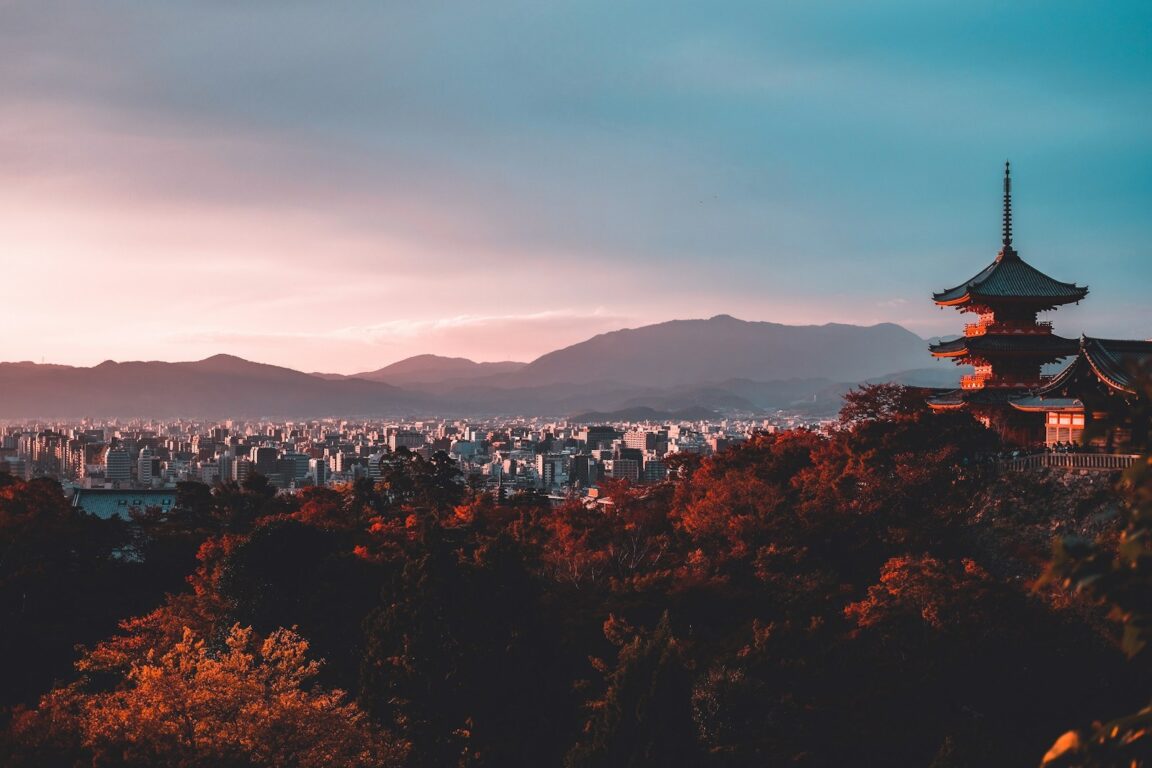
Image: The three storey pagoda of Kiyomizu-dera above autumn trees, looking over the city of Kyoto at sunset. Photo: Unsplash contributor (photo 1545569341-9eb8b30979d9), via Unsplash, used with credit.