 Hana Kim
For a woman travelling solo, the Seoul base decision comes down to two neighbourhoods with opposite rhythms. Hongdae, the district around Hongik University in Mapo, stays lively late, with busking crowds, clubs, cheap eats and streets that feel populated well into the night. Seongsu, the former industrial district in Seongdong now known for its cafes and converted factory spaces, is calmer, more local in feel and quieter after dark. Choose Hongdae if your evenings are the point of the trip and you want company and noise around you on the walk home. Choose Seongsu if your days are the point, you sleep early, and you would rather come back to a neighbourhood winding down. This guide decides base and transport together, covers the late subway logic that governs both, and answers the women only floors question honestly.
Quick Facts
The choice: Hongdae for late, lively streets and easy social energy; Seongsu for cafe days, design shops and quieter nights. Both sit on well connected subway lines.
The transport rule: Seoul’s subway winds down around midnight, with last trains varying by line and direction. The solo discipline is to know your line’s last train before you go out, not after.
Money and access: A reloadable transit card covers subway and buses. Entry rules for South Korea change by nationality and date, so check the current position before booking; the standing explainer is linked below.
Women only floors: Some Seoul hotels and guesthouses offer women only floors or dormitories. They exist and can be booked, but they are a comfort feature, not a safety guarantee, and the neighbourhood and building matter more.
Emergencies: Police 112, fire and ambulance 119. Save your accommodation’s address in Korean on your phone for taxi drivers and for any call where English is limited.
Facts checked: 24 November 2026, against official South Korea entry guidance and Seoul transport information. Neighbourhood descriptions reflect the districts’ established character; check your specific property’s current reviews and policies before booking.
Hongdae or Seongsu: which base suits a solo woman better?
Hongdae suits the solo traveller who wants the city to keep her company. The streets around Hongik University fill in the evening with buskers, dancers, students and visitors, and the restaurant, bar and club scene runs late. Walking back to a well chosen Hongdae guesthouse or hotel at 11 p.m. means walking through crowds on lit main streets, which many solo travellers find more comfortable than an empty residential road. The trade offs are noise, weekend crowd pressure and a scene skewed young; a room on a quiet side street, a few minutes from the main drag, is the experienced booking.
Seongsu suits the solo traveller whose Seoul is a daytime city. The district’s converted factories hold some of the capital’s most talked about cafes, bakeries and design stores, and the streets have a local, unhurried feel that rewards slow mornings. Evenings are gentler and earlier. That calm is the appeal and the caution in one: late returns cross quieter streets, so Seongsu works best for travellers whose plans end with dinner rather than after midnight. Neither district is the wrong answer. The right answer is the one that matches the hours you actually keep, and the packing logic for a cold season version of this trip is covered in the Seoul winter packing and subway layers guide.
How does the late subway logic actually work?
Seoul’s subway is the solo traveller’s best friend until, quite suddenly, it is finished for the night. Services wind down around midnight, and the last train on your line, in your direction, is the only timetable that matters. Missing it converts a cheap ride into a taxi negotiation at the busiest possible hour. The discipline is simple and worth building into every evening: check the last train time for your return journey when you arrive at your evening destination, set a leaving time half an hour before it, and treat that as the end of the night unless you have already decided to pay for a taxi.
Taxis are the backup, and they work better with preparation. Have your accommodation’s name and address written in Korean, use a ride hailing or taxi app where possible so the destination is entered rather than explained, and expect late night demand to spike when the subway closes and the clubs empty. Buses run later on some corridors but are harder to read cold at midnight in a second language. The travellers who enjoy Seoul’s nightlife solo are rarely the ones with the best stories about the last train; they are the ones who never needed it to be a story.
Are women only floors and dorms worth booking?
They are worth booking for sleep quality and comfort, and should be understood on those terms. A number of Seoul hotels market women only floors with controlled access, and many guesthouses and hostels run women only dormitories, which suit solo travellers who want the social side of a hostel without a mixed dorm. Both products genuinely exist in Hongdae and across the city, and both can be the right choice, particularly for light sleepers and first time solo travellers.
What they are not is a substitute for the basics that actually govern a solo stay. A reputable building on a lit, populated street, a room with a proper lock, a front desk or host who is reachable at night, and a walk home that stays on main roads matter more than the label on the floor. Read recent reviews by other solo women for the specific property, check whether the women only policy is enforced in practice or merely advertised, and confirm the check in arrangements if you arrive late. Comfort is a legitimate reason to pay for the floor. Just do not let the label do the thinking that the location should have done.
What safety ground rules apply in Seoul specifically?
South Korea is, by the standards of large world cities, a low violent crime environment, and Seoul’s busy districts feel orderly late into the evening, which is one reason the city suits solo women well. The realistic risks are the ordinary ones of any capital: bag and phone theft in crowds is uncommon but not unknown, drink spiking is a recognised concern in nightlife districts everywhere and the standard precautions apply, and scams aimed at visitors tend to be commercial rather than threatening. Keep your drink in sight, be politely deaf to strangers inviting you to a specific bar or tea house, and let your accommodation know your rough plans if you are heading out alone for the night.
Before the trip, settle the entry paperwork for your passport rather than assuming it: South Korea’s exemption and authorisation arrangements change by nationality and have been extended and revised in recent years, and the current position is set out in the South Korea K-ETA exemption guide. Save the police number, 112, and the fire and ambulance number, 119, and keep your accommodation’s Korean language address on your phone. None of this is alarm. It is the small administrative layer that lets a solo traveller stop thinking about safety and start thinking about dinner.
How should a solo woman plan her Seoul evenings?
Plan evenings backwards from the last train. In Hongdae, that means enjoying the busking crowds and a late dinner on streets that stay populated, then drifting back before the final services. In Seongsu, it means front loading the day: the cafes and shops that make the district are daytime pleasures, dinner is early by Seoul standards, and a nightcap is a quiet one. In both districts, eat where the queue is local, keep one evening unplanned for the neighbourhood itself, and remember that convenience stores, brightly lit and open all night across the city, are useful landmarks and safe places to pause, check a map or order a taxi on any late walk.
The deeper pattern is that Seoul rewards the solo traveller who chooses her base by rhythm rather than by fame. Hongdae’s energy and Seongsu’s calm are both real products. Book the one that matches your hours, learn your line’s last train on the first evening, and the city becomes easy to be alone in, which is the highest compliment a solo base can earn.
Frequently Asked Questions
Is Seoul safe for a woman travelling alone?
Seoul is widely regarded as one of the more comfortable large cities in Asia for solo women, with busy, well lit districts and a low rate of violent street crime. The standard capital city precautions still apply, particularly around nightlife, drinks and late night transport.
Which is better for a solo base, Hongdae or Seongsu?
Hongdae if your evenings matter most: lively late streets, crowds on the walk home and a young social scene. Seongsu if your days matter most: cafes, design shops and quiet nights. Match the district to the hours you keep.
When does the Seoul subway stop at night?
Services wind down around midnight, and last train times vary by line, station and direction. Check the last train for your exact return journey before an evening out, and plan to leave well before it.
Do Seoul hotels really have women only floors?
Yes. Some hotels offer women only floors and many guesthouses run women only dorms. Book them for comfort and sleep quality, verify the policy in recent reviews, and still choose the property by location, locks and late night access.
What emergency numbers should I save?
Police on 112 and fire and ambulance on 119. Also save your accommodation’s address in Korean, which helps taxi drivers and any official you need to direct to your base.
Do I need a K-ETA for South Korea?
It depends on your passport and your travel dates; exemption arrangements have been extended and revised in recent years. Check the current position for your nationality before booking rather than relying on an older trip report.
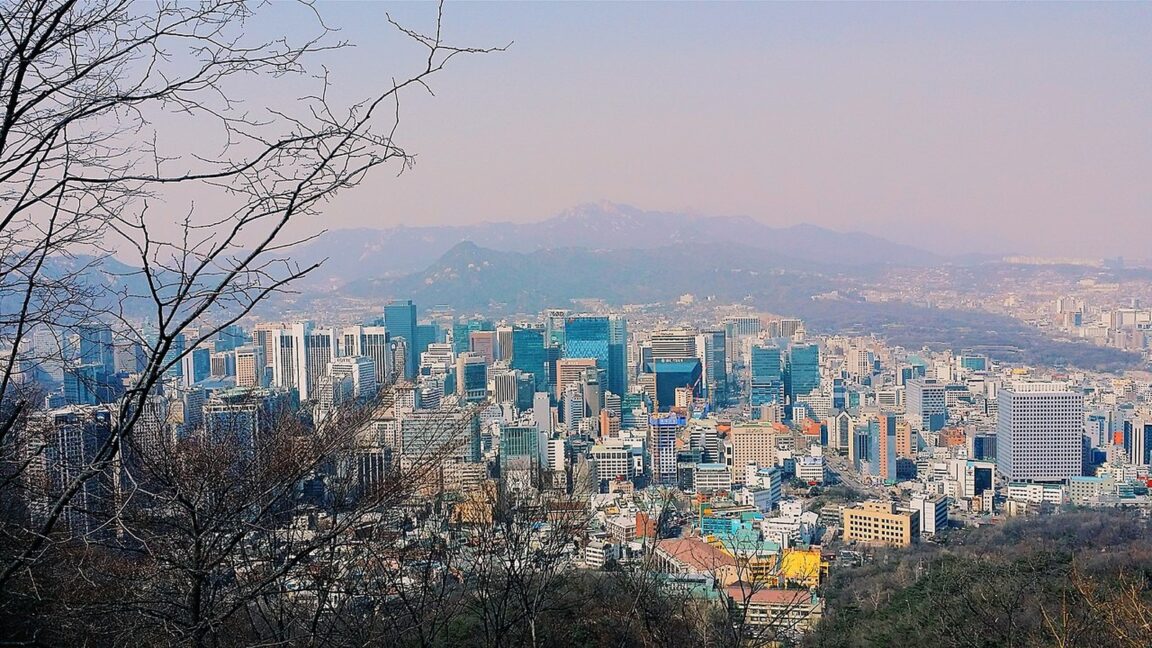
Photo: The central Seoul skyline seen from Namsan, South Korea. Photo by Jenny Kim, via Unsplash, used with credit.