 Hana Kim
Seoul’s palace circuit runs on a small set of rules, and almost every disappointed visitor broke one of them without knowing it existed. Wear a proper hanbok and entry to the palaces is free, but a top over jeans does not count. The guard ceremony at Gyeongbokgung runs at 10:00 and 14:00, but never on a Tuesday, because Gyeongbokgung is the palace that closes on Tuesdays while most of the others close on Mondays. The Secret Garden at Changdeokgung is a separate timed tour with a separate ticket that sells out. None of this is hidden. It is simply a system, and this guide teaches the system before the mistakes teach it to you.
Quick Facts
The five palaces: Gyeongbokgung, Changdeokgung, Changgyeonggung, Deoksugung and Gyeonghuigung, plus the Jongmyo royal shrine. Adult admission is 3,000 won for Gyeongbokgung and Changdeokgung, 1,000 won for Changgyeonggung, Deoksugung and Jongmyo, and Gyeonghuigung is free.
The hanbok rule: Visitors wearing hanbok enter the Royal Palaces and Tombs Center sites free. The outfit must be a full hanbok: a jeogori top with a skirt or trousers. A top worn over jeans, or a skirt with a T-shirt, does not qualify.
The closed days: Gyeongbokgung and Jongmyo close on Tuesdays. Changdeokgung, Changgyeonggung, Deoksugung and Gyeonghuigung close on Mondays. If the closed day falls on a public holiday, the site opens and closes the next working day instead.
The guard ceremony: The Royal Guard Changing Ceremony at Gyeongbokgung runs at 10:00 and 14:00 for about 20 minutes in the Heungnyemun courtyard, free to watch without a palace ticket, and never on Tuesdays. A shorter gate ceremony at Gwanghwamun runs at 11:00 and 13:00.
The Secret Garden: Changdeokgung’s Huwon is entered only on guided tours, with a separate 5,000 won ticket on top of palace admission. Hanbok does not make the garden free. Online tickets are released days ahead and sell out in spring and autumn.
The combined ticket: An integrated ticket covering the four paid palaces and Jongmyo costs 10,000 won and is valid for three months, one visit per site.
Facts checked: 24 November 2026, against the Korea Heritage Service Royal Palaces and Tombs Center.
Mistake one: assuming the hanbok discount is automatic
The free-entry rule is generous and specific. The Korea Heritage Service waives admission at its royal sites for visitors in hanbok, and the rental shops clustered around Gyeongbokgung and Anguk stations exist largely because of it, with a few hours’ rental typically costing less than two palace tickets. But the gate staff apply a definition: the outfit must read as a hanbok, top and bottom together. The fusion outfits that catch people out are the short modernised skirts worn without the proper underskirt, and the mix-and-match combinations, a jeogori over jeans, a hanbok skirt under an ordinary jacket.
The fix costs nothing. Rent a complete set from one shop rather than assembling pieces, keep the rental receipt, and walk to the gate at Heungnyemun where hanbok visitors are waved through the free-entry line. Remember also what the rule does not cover: the Huwon tour at Changdeokgung still needs its own paid ticket, hanbok or not, and the two national museums inside Gyeongbokgung’s grounds are free to everyone anyway. Travellers building a full Seoul stay around the palaces can pair this guide with our Seoul winter packing guide, since palace courtyards are exposed, windy places in the cold months.
Mistake two: building the day around the wrong closed day
The staggered closures exist so that something is always open, and they punish anyone who assumes all heritage sites close on Monday. Gyeongbokgung, the biggest and most visited palace, closes on Tuesday, as does Jongmyo. The rest close on Monday. So a Monday palace day is a Gyeongbokgung day, and a Tuesday palace day belongs to Changdeokgung, Deoksugung and Changgyeonggung. A Wednesday-to-Sunday trip can ignore the whole question.
The public holiday rollover adds one more wrinkle: when a closed day lands on a national holiday or substitute holiday, the palace opens that day and takes its closure on the following working day. Travellers visiting across Chuseok, Seollal or a Monday holiday should check the Royal Palaces and Tombs Center notice for their exact week rather than trusting the standing rule. The same discipline applies to evening openings: the palaces run seasonal night openings on limited dates, which are announced separately and are never a walk-up assumption.
Mistake three: mistiming the guard ceremony
The Royal Guard Changing Ceremony is the best free show in Seoul, and the easiest to miss by an hour. It runs at 10:00 and 14:00 in the courtyard inside Gwanghwamun, before the ticket gates, so you do not need palace admission to watch it, and it lasts about twenty minutes. The shorter Gwanghwamun gate-guard ceremony runs at 11:00 and 13:00. There is no ceremony on Tuesdays, and severe weather or extreme heat can shorten or cancel it on the day.
The crowd logic follows from the times. The 10:00 ceremony pairs with a morning inside Gyeongbokgung: watch the guards, then enter as the gates’ first wave spreads out across a very large site. The 14:00 ceremony is the more crowded one, fed by every tour group in the district. Deoksugung runs its own guard ceremony at its Daehanmun gate at 11:00 and 14:00 on its open days, a useful fallback when your day lands on the wrong side of the closures. If you are only passing through the city, our e-Arrival Card explainer covers the entry paperwork that now starts every Korea trip.
Mistake four: treating the Secret Garden as a walk-up
Changdeokgung is a UNESCO-listed palace built into its terrain rather than imposed on it, and its Huwon, the Secret Garden behind the palace buildings, is the single most rationed ticket in Seoul’s heritage system. Entry is by guided tour only, in Korean or in scheduled foreign-language tours, with numbers capped per tour. Tickets are sold online in advance, released six days ahead, and a portion is held for on-site sale on the day, which is gone early in blossom and autumn colour weeks.
So the mistake is arriving at Changdeokgung at noon in late October expecting to stroll into the garden. The repair is to book the garden first and build the palace day around the tour time, or to accept the palace grounds alone, which are still the finest in the city. Note the arithmetic: palace admission 3,000 won plus garden 5,000 won, and hanbok waives only the first of those.
What does a correct palace day look like?
On any day except Monday and Tuesday, the circuit runs cleanly in one direction. Start at Gyeongbokgung for the 10:00 guard ceremony and the morning in the big palace. Walk east through Bukchon or Samcheong-dong at lunch. Take Changdeokgung in the afternoon, with the Huwon tour booked ahead, and finish at Deoksugung, which stays open into the evening and faces City Hall, as the light goes. On a Monday, drop the eastern palaces and make it a Gyeongbokgung and museums day. On a Tuesday, reverse the logic and give the day to Changdeokgung and Deoksugung. The system is simple once it is stated. Almost every palace disappointment in Seoul is one of these four mistakes wearing a disguise.
Mistake five: forgetting the two free museums inside the big palace
The last common error is paying for a fuller day than you need to. Inside Gyeongbokgung’s grounds sit two national museums, the National Palace Museum of Korea and the National Folk Museum of Korea, and both are free to everyone, hanbok or not. The Palace Museum holds the Joseon royal collection, seals, state rites and royal furniture, and it is the natural rainy-hour or hot-hour refuge in the middle of a palace day. Visitors who sprint the palace grounds in ninety minutes and leave have usually missed the two rooms that explain what they just walked through.
Frequently asked questions
Does wearing hanbok really make palace entry free? Yes, at the Royal Palaces and Tombs Center sites, provided the outfit is a complete hanbok, top and skirt or trousers together. Partial or fusion outfits worn over ordinary clothes do not qualify, and the Changdeokgung Secret Garden ticket is never waived.
Which Seoul palace is open on Monday? Gyeongbokgung, which closes on Tuesdays instead. Changdeokgung, Changgyeonggung, Deoksugung and Gyeonghuigung all close on Mondays.
When is the Gyeongbokgung guard ceremony? At 10:00 and 14:00, lasting about 20 minutes, in the courtyard inside Gwanghwamun. It is free to watch, needs no ticket, and does not run on Tuesdays or in severe weather.
How do I get Secret Garden tickets? Book online when tickets are released six days before the tour date, or arrive early for the limited on-site allocation. The garden is guided-tour only and costs 5,000 won on top of Changdeokgung admission.
Is the combined palace ticket worth it? At 10,000 won for the four paid palaces plus Jongmyo, valid three months, it pays off from the third site onward. Single visits are cheap enough that casual visitors can skip it.
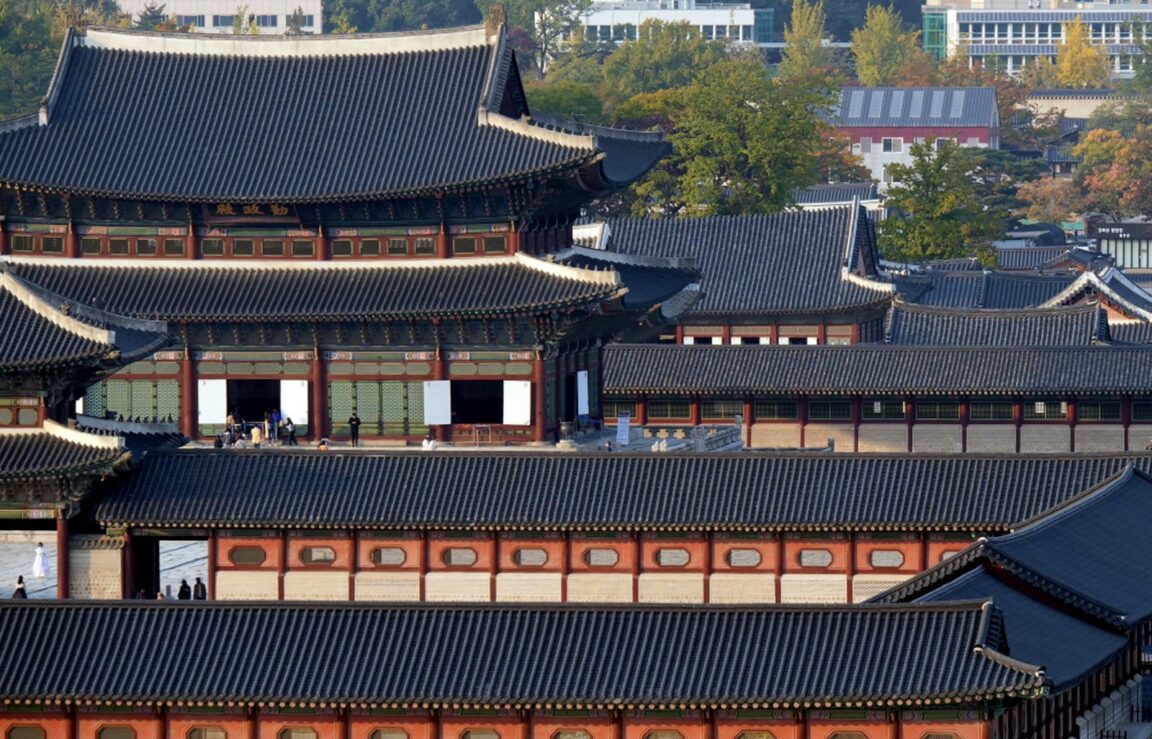
Featured image: Geunjeongjeon, the throne hall of Gyeongbokgung Palace in Seoul, with visitors on its stone terrace and the palace rooftops layered behind it. Photo: Seoul Metropolitan Government, via english.seoul.go.kr, the city’s official website (handout photo, free for editorial use), used with credit.