 Hana Kim
Pack for Seoul in winter as a layering problem with two climates: biting, dry cold outdoors, where January averages around minus 2 degrees Celsius and palace courtyards catch the wind, and aggressively heated interiors, where subway cars, malls and restaurants run warm enough to make a heavy sweater unbearable. The working system is a merino base layer, a light midlayer you can remove in one motion, and a long insulated coat on top, with the extremities taken seriously: insulated hat, real gloves, warm socks and footwear that grips icy pavement. Pack that system and Seoul’s winter becomes an asset, because the palaces, lantern lit streams and markets are at their most atmospheric in the cold months.
Quick Facts
- Core cold: January in Seoul averages about minus 1.9 degrees Celsius, and winter is the driest season, with roughly 67.6 mm of rain and snow across December to February combined.
- First snow: The Korea Meteorological Administration’s normal date for Seoul’s first snow is around 20 November.
- The real challenge: Not the cold itself but the swing. Heated subway cars and department stores mean you will strip and rebuild layers several times a day.
- Palace hours shrink: Gyeongbokgung Palace closes at 17:00 from November to February, with last entry at 16:00, and closes on Tuesdays.
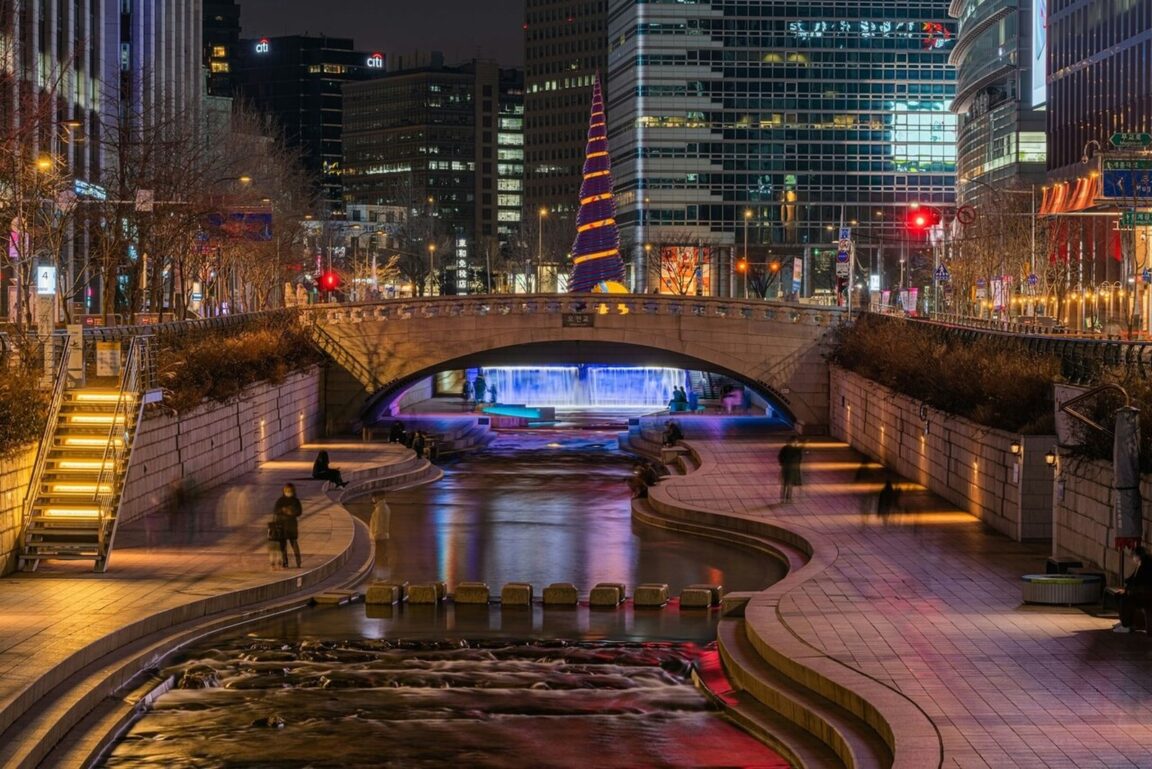
- Winter rewards to pack for: The Seoul Lantern Festival on Cheonggyecheon and the Seoul Plaza ice rink, at 1,000 won for an hour including skates and helmet, both run in the coldest weeks.
- Footwear verdict: Insulated, waterproof shoes with genuine tread. Palace courtyards and old town lanes ice over, and smooth fashion soles are a liability.
- Facts checked: Temperatures, palace hours and event details verified on 14 November 2026.
How cold does Seoul actually feel in winter?
The average understates it. A January mean near minus 2 degrees Celsius comes with dry Siberian air and wind that finds every gap at the neck and wrist, and the wide stone courtyards of Gyeongbokgung and Changdeokgung offer no shelter at all. Locals dress for it with long padded coats that reach below the knee, and visitors in short fashion jackets feel the difference within one palace visit. At the same time, winter is dry: snow days happen, but most days are crisp, bright and entirely walkable in the right layers. That combination, severe but stable cold, is exactly what a good layer system handles best, and it is the same logic our Quebec City December packing guide applies to a Canadian winter city.
What is the subway to street layer system?
Base layer: merino, top and bottom
A merino wool base layer top regulates temperature in both climates, warm on the street and not stifling for a ten minute subway ride. Merino leggings or thermal tights under trousers or a skirt are the single most effective item in the bag: legs are where palace wind bites, and a thin thermal layer under normal clothes fixes it without bulk. Pack two sets so one can dry while the other works.
Midlayer: light, removable, packable
Choose a thin fleece or light knit you can take off in the subway and carry over an arm or in a tote. This is the adjustment layer, on for the walk to the station, off for the ride, on again for the market. A heavy sweater fails this job because it is all or nothing. Two light midlayers worn together beat one thick one for the same reason.
Outer layer: the long coat
One long insulated coat, ideally to the knee, windproof and with a hood, is the Seoul winter uniform and worth its suitcase space. If your coat is short, compensate with the thermal leggings and a longer scarf. A compact packable down jacket works as a travel compromise and doubles as an extra layer on the coldest days under a shell.
What should you pack for hands, feet and face?
- Gloves: Insulated gloves, not thin fashion ones, ideally touchscreen compatible so navigation does not mean bare hands at a windy intersection.
- Hat: A warm beanie that covers the ears. Most body heat complaints in palace courtyards are actually uncovered head and neck complaints.
- Scarf or neck gaiter: Long enough to wrap twice. It is also the fastest layer to remove in a heated cafe.
- Socks: Merino hiking weight socks, one pair per day plus a spare. Cold feet end sightseeing days early.
- Shoes: Insulated, waterproof, with a lugged sole. Bukchon Hanok Village’s lanes and palace thresholds are polished stone and ice in winter.
- Heat packs: Disposable hand warmers are sold everywhere in Seoul, including convenience stores, so buy them there rather than packing a supply.
- Skin kit: Rich moisturiser and lip balm. The dry cold plus indoor heating is hard on skin, and this is the item first time winter visitors forget.
How do you pack this system into one bag?
Wear the coat and the heaviest shoes on the flight; they are the bulkiest items and the ones you will want on arrival anyway. Roll the base layers and midlayers, and use the coat’s travel day role to keep the suitcase to ordinary clothes, one smart outfit for Seoul’s excellent restaurants, and the skin and extremities kit above. The system is deliberately short on variety and long on repetition: in winter, nobody in Seoul is judging a traveller for wearing the same coat in every photo, because the entire city is doing exactly that. For a second cold city worked example with the same wear it on the plane discipline, see our New York in December packing guide.
What winter specific mistakes should you avoid?
Do not pack for indoors. First time visitors imagine heated hotels and pack light, then discover that Seoul sightseeing is outdoor sightseeing: palaces, markets, the Cheonggyecheon stream walk and Bukchon lanes are all open air. Do not rely on an umbrella strategy either; winter precipitation is mostly snow, and a hat and hood beat an umbrella in wind. Do not schedule palace visits late in the day without checking winter hours, because last entry at Gyeongbokgung is 16:00 in the cold months. And do not skip the thermal bottom layer because your hotel is near a station: the walk is never the whole exposure, the destination is.
Frequently Asked Questions
How many layers do I need for Seoul in January?
Three working layers: a merino base, a light removable midlayer, and a long insulated coat, plus hat, gloves and scarf. That system handles both the street cold and, by removing the midlayer, the heated subway.
Are jeans warm enough for Seoul in winter?
Not on their own on a windy palace day. Jeans over merino leggings or thermal tights work fine, and that combination is what makes ordinary trousers viable all winter.
Do I need snow boots for Seoul?
Full snow boots are more than most trips need. Insulated waterproof shoes or boots with real tread handle Seoul’s mostly dry winter and its icy patches. Smooth soled fashion shoes are the thing to avoid.
What should I wear for a hanbok palace visit in winter?
Wear your base layers underneath and keep the coat for before and after. Hanbok rental visits are shorter and more exposed than ordinary sightseeing, so thermal leggings, warm socks and gloves matter more, not less, and it is sensible to keep the palace visit brisk.
Is Seoul worth visiting in winter at all?
Yes, if you pack for it. Winter brings the lantern festival on Cheonggyecheon, the Seoul Plaza ice rink, hot street snacks such as hotteok and bungeoppang in their natural season, and palaces that look their best under a dusting of snow, with thinner crowds than spring or autumn.
Climate figures, palace hours and event details checked on 14 November 2026 against Korea Meteorological Administration normals and Seoul visitor sources as reported on that date.