 Kwame Mensah
The 30th edition of FESPACO, the Pan-African Film and Television Festival of Ouagadougou, runs from 20 to 27 March 2027 in Ouagadougou, Burkina Faso, and the honest first thing any traveller needs to know is that the festival is confirmed while the trip, for most foreign visitors, is not yet bookable in good conscience. The festival’s own site, fespaco.bf, carries the March dates in its current regulations and calls, moved from the 27 February to 6 March window announced earlier. At the same time, the United Kingdom’s Foreign, Commonwealth and Development Office advises against all travel to Burkina Faso, and the United States rates the country at Level 4, Do Not Travel. This guide therefore does two jobs: it sets out everything the organisers have verified about the 2027 edition, and it sets out the safety position plainly, so that anyone who loves African cinema can follow the edition properly and make a booking decision based on current official advice rather than hope.
Quick Facts
- What: FESPACO, the Pan-African Film and Television Festival of Ouagadougou, the 30th edition of Africa’s oldest and largest film festival, founded in 1969 and held every two years.
- When: 20 to 27 March 2027, moved from the previously announced 27 February to 6 March 2027 window, per the festival’s official site.
- Where: Ouagadougou, capital of Burkina Faso, with screenings and industry events across the city.
- Theme: African cinema and endogenous development, as announced for the 30th edition.
- Guest of honour: Togo, announced as the edition’s guest country.
- Top prize: The Étalon d’Or de Yennenga, the Golden Stallion of Yennenga, the most prestigious award in African cinema.
- Organiser: The festival is organised under the Burkinabè Agency for Cinematography and Audiovisual, known as ABCA, through fespaco.bf.
- Travel advice, checked 25 November 2026: The UK FCDO advises against all travel to Burkina Faso. The US State Department lists Burkina Faso at Level 4, Do Not Travel.
What FESPACO Is, and Why the 30th Edition Matters
FESPACO began in 1969 as a film week in Ouagadougou and grew into the defining meeting point of African cinema. Every two years, in odd numbered years, filmmakers, producers, critics, festival programmers and film lovers from across Africa and its diaspora converge on the Burkinabè capital for a week of premieres, retrospectives, debates and deal making. The official competition is restricted to films by African and diaspora directors, which is precisely what gives the festival its character: this is not a market that imports African cinema as one strand among many, but the place where African cinema judges itself, argues with itself and celebrates itself in front of its home audience.
A 30th edition is a landmark for any festival, and FESPACO arrives at it with momentum. The 29th edition, held from 22 February to 1 March 2025, ended with a result the home crowd had waited 28 years for: Burkinabè director Dani Kouyaté won the Golden Stallion of Yennenga for Katanga, la danse des scorpions, a Mooré language reworking of the Macbeth story, becoming the first Burkinabè winner since Gaston Kaboré took the prize for Buud Yam in 1997. The festival’s own report of the award, published on fespaco.bf, records the win at the closing ceremony on 1 March 2025. For the 30th edition, the organisers have set the theme of African cinema and endogenous development, a framing that asks how African film industries can build on their own resources, stories and economic models, and they have named Togo as guest of honour, which puts Togolese filmmakers and culture in a spotlight strand throughout the week.
The Dates Have Moved, So Check Which Ones You Are Looking At
The single most useful practical fact in this guide is that FESPACO 2027 changed its dates. The edition was first announced for 27 February to 6 March 2027, and a number of pages, including some older posts still live on the festival’s own site, carry that February window. The festival’s current documents tell the newer story. The Special Prizes regulation for FESPACO 2027, published by the organisers, states in its first article that the 30th edition takes place from 20 to 27 March 2027. The call for entries for the Official Selection uses the same March dates. The call for accreditations does too. Where an older post and a current regulation disagree, the regulation is the document to trust, and the March dates are the ones repeated across the festival’s 2027 paperwork.
That shift matters beyond tidiness. A three week move changes flight prices, hotel availability and the relationship between FESPACO and the rest of the spring festival calendar. It also means that any third party listing still showing February dates is out of date, however authoritative it looks. The organisers’ site, fespaco.bf, is the only source that settles the question, and it is worth rechecking in the weeks before any travel decision, because a festival that has moved once can publish further adjustments to individual programmes, such as the MICA industry market, whose dates in current festival posts were written against the older calendar.
The Yennenga Stallion, Explained
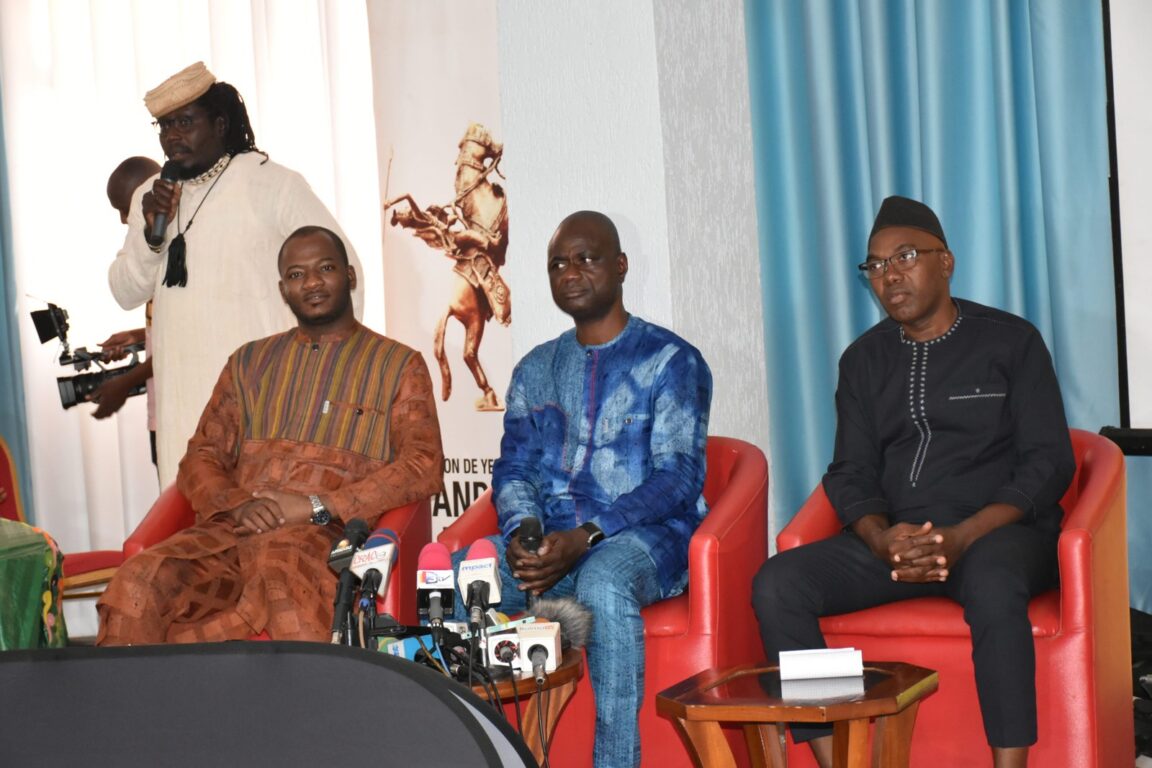
The festival’s top prize is the Étalon d’Or de Yennenga, the Golden Stallion of Yennenga, awarded to the best feature film in the official competition, with silver and bronze stallions for the runners up and a parallel documentary stallion, won in 2025 by Malaury Éloi Paisley’s L’Homme-Vertige according to the festival’s own report. The prize takes its name from Yennenga, the legendary princess credited in Mossi tradition as the founder of the Mossi kingdoms, whose story sits at the root of Burkinabè national identity. The stallion figure appears on the festival’s banners and trophies, including the banner visible behind the speakers at the festival’s own press conferences in Ouagadougou.
Festival prize listings for recent editions put the Golden Stallion’s cash award at 20 million CFA francs, with 10 million for silver and 5 million for bronze, figures worth treating as the recent pattern rather than a promise for 2027 until the edition’s own prize regulation is read in full. What is not in doubt is the prize’s standing. For an African filmmaker, the Golden Stallion is the award that changes a career at home: it carries a weight with African audiences, broadcasters and funders that no imported festival laurel quite matches, which is why the closing ceremony, when the stallions are handed out, is the emotional peak of the week and the hardest ticket of the festival.
How the Festival Week Works for a Visitor
FESPACO is a citywide event rather than a single venue festival. Screenings run through the week in cinemas and cultural spaces across Ouagadougou, the industry market known as MICA, the African International Film and Audiovisual Market, brings producers and buyers together, and the Yennenga workshops, including the Yennenga Academy for young filmmakers and the co-production and post-production workshops whose calls the organisers have already published for 2027, run alongside the public programme. The official selection is assembled from submissions that, for the 2027 edition, were open from 24 February to 20 October 2026 under the call for entries on fespaco.bf, so the programme itself is curated and fixed well before the public sees it.
For the public, the practical pattern of past editions is that a printed and online programme is published by the organisers ahead of the festival, screenings are ticketed at the venues, and accreditation, which the festival opened a call for through its site, is the route for industry delegates, media and festival professionals rather than casual visitors. Because the 2027 ticketing detail will be published by the organisers closer to the edition, the correct move for a visitor is to watch fespaco.bf for the programme and ticketing announcements rather than rely on any third party’s description of a previous edition’s prices. Anyone attending in a professional capacity should follow the accreditation call’s own instructions and deadlines on the festival site.
The Travel Advice, Stated Plainly
None of the above changes the security position, and this guide will not soften it. The UK Foreign, Commonwealth and Development Office advises against all travel to Burkina Faso, citing the threat of terrorist attacks and terrorist kidnap and the unstable political situation. There is no British embassy in the country; consular support is provided from Accra, in Ghana, and cannot be given in person. The FCDO also warns that travelling against its advice can invalidate travel insurance. The United States Department of State places Burkina Faso at Level 4, Do Not Travel, its highest advisory level. Other Western governments take the same or similar positions.
That advice covers the whole country, including Ouagadougou. It is therefore not possible, honestly, to write the usual festival guide paragraph about booking flights early and choosing a hotel near the venues. The correct advice for the 30th edition is this: follow the festival remotely and through its official channels if your government’s advice remains at this level, and only convert interest into bookings if and when the official advice for Burkina Faso changes. Anyone with a professional obligation to attend should take their own government’s advice, their insurer’s position and their organisation’s security assessment as the deciding documents, not a travel article. FESPACO has run through hard years before and its audience is, first of all, African and regional; the festival will fill its cinemas in March 2027 with or without long haul visitors, and respecting the advice is part of respecting the place.
How to Follow FESPACO 2027 Well From Anywhere
A remote follower can still have a rich festival. The organisers publish the official selection, prize announcements and ceremony results on fespaco.bf, and the trade and African cinema press cover the competition closely, so the shape of the edition, which films premiere, which debut directors break through, and who takes the stallions home on closing night, is fully followable in real time. The 2025 edition also showed the value of watching the winner’s trail: Katanga, la danse des scorpions went on to further festival attention after its Ouagadougou win, and the FESPACO laurels are a reliable early signal of which African films will reach international screens and streaming catalogues in the following year. Building a watchlist from the official selection when it is published, then tracking those titles through the year, is the closest thing to attending that the current advice allows most of us.
Readers planning a festival year around living traditions rather than film should also see our guide to Timkat in Gondar, and for a street festival on a very different scale, our Rio Carnival guide covers the blocos and Sambadrome tiers in detail.
Frequently Asked Questions
When is FESPACO 2027?
The 30th edition runs from 20 to 27 March 2027 in Ouagadougou, per the festival’s current official documents on fespaco.bf. It was previously announced for 27 February to 6 March 2027, and older listings showing February dates are out of date.
What is the Golden Stallion of Yennenga?
It is FESPACO’s top prize, the Étalon d’Or de Yennenga, awarded to the best feature film in the official competition. It is named for Princess Yennenga, the founder figure of the Mossi kingdoms, and is regarded as the most prestigious award in African cinema.
Who won FESPACO in 2025?
Burkinabè director Dani Kouyaté won the Golden Stallion for Katanga, la danse des scorpions at the 29th edition on 1 March 2025, the first Burkinabè win since Gaston Kaboré in 1997, as reported by the festival itself.
Can I buy tickets for FESPACO 2027 now?
Public ticketing detail for the 2027 edition is published by the organisers closer to the festival on fespaco.bf. Accreditation for professionals, media and festival delegates is handled through the festival’s own call on that site. Do not rely on third party ticket sellers.
Is it safe to travel to Burkina Faso for FESPACO?
Current official advice says no for most visitors. The UK FCDO advises against all travel to Burkina Faso, and the US State Department rates it Level 4, Do Not Travel. Check your own government’s advice before making any plan, and note that travelling against FCDO advice can invalidate insurance.
How often is FESPACO held?
Every two years, in odd numbered years, in Ouagadougou. It was founded in 1969, which makes the 2027 edition the 30th.
Featured image: A FESPACO press conference in Ouagadougou, with the Yennenga Stallion banner behind the speakers. Photo: FESPACO, via the festival’s official website, fespaco.bf.