 Thandiwe Nkosi
Timkat, Ethiopia’s Orthodox Epiphany, is celebrated on 19 January in most years and 20 January in leap years, and Gondar is its most famous stage because of one building: Fasilides’ Bath, a walled royal pool with a two storey pavilion standing in its centre, dry and quiet for most of the year and filled with water for the festival. On the eve, called Ketera, the tabots, the consecrated replicas of the Ark of the Covenant from Gondar’s churches, are carried in procession to the bath and keep vigil there overnight. Before dawn the water is blessed, and as the sun rises the crowd enters the pool, renewing baptism in the place an emperor built for the purpose.
Quick Facts
- What: Timkat (also spelled Timqet or Timket), the Ethiopian Orthodox Tewahedo Church’s celebration of Epiphany, marking the baptism of Jesus in the River Jordan.
- When: 19 January, or 20 January in a leap year, corresponding to 11 Terr in the Ethiopian calendar. The eve processions, Ketera, fall on the afternoon before, and the following day carries the feast of St Michael.
- Where in Gondar: Fasilides’ Bath, on the northwest side of the city, a couple of kilometres from the Royal Enclosure of Fasil Ghebbi.
- Heritage status: UNESCO inscribed the Ethiopian epiphany on its Representative List of the Intangible Cultural Heritage of Humanity in 2019. Fasil Ghebbi, including the bath, is a World Heritage Site.
- The tabot rule: each church’s tabot is carried wrapped in rich cloth on a priest’s head, escorted by chanting, drums and umbrellas, and only clergy handle it. Visitors watch; they never touch.
- Travel warning, checked today: Gondar is in Ethiopia’s Amhara Region, and current UK and US government advisories warn against travel there. Read the festival here as it is documented, and check your own government’s live advice before planning any trip.
What is a tabot, and why does it sleep out?
Every Ethiopian Orthodox church keeps a tabot, a consecrated tablet representing the Tablets of the Law and the Ark of the Covenant, which is the true sacred heart of the building. At Timkat the tabots leave their sanctuaries, wrapped in brocade and carried on the heads of priests under ceremonial umbrellas, while deacons chant, drums beat, and congregations in white process alongside. The overnight stay at the water is the festival’s theological core: the tabot camps beside the pool as the Ark camped with Israel, and the whole city, in effect, spends the night outside with it.
Ketera afternoon is therefore not a warm up act. The processions converge on Fasilides’ Bath through the afternoon of the eve, each church’s company arriving with its own music and colour, and tents rise around the compound for the tabots’ vigil. Worshippers settle on the surrounding ground for a night of prayer and chanting that runs, with pauses, until the liturgy before dawn. Arrive for the eve, not just the morning, or you will have seen the climax without the story.
What happens at the bath at dawn?
The main morning builds slowly and then all at once. Liturgy is celebrated beside the water in the dark hours; as sunrise approaches, the senior clergy bless the pool, traditionally with a cross dipped into the water and a burning candle extinguished in it. Then the barrier of the moment breaks: worshippers enter the water in their hundreds and thousands, splashing, immersing and filling bottles with blessed water to take home, while the crowds on the stepped sides and walls, reports put them in the tens of thousands at Gondar, press close and sing.
The setting does half the work. The pool is a large rectangular basin in a walled, tree shaded compound, and the pavilion, a small stone castle of two storeys on arches, rises from the middle of the water, so that when the basin is filled from the Qaha River channel the building appears to float. Tradition credits Emperor Fasilides, who founded Gondar as his permanent capital in 1636, with the bath, and whether its first purpose was ceremony, pleasure or both, Timkat has made it sacred infrastructure: no other Epiphany in the world has a stage set quite like it.
How do the three days fit together?
Day one is Ketera, the eve: processions from the early afternoon, the tabots installed at the bath, and the vigil night. Day two is Timkat itself: the dawn blessing and the entry into the water, followed by feasting across the city, and then, later in the day, most tabots are carried back to their churches in processions as joyful as the outward ones. Day three honours St Michael, a beloved figure in Ethiopian devotion, when the tabot of St Michael’s church makes its return journey. Visitors who stay for all three see the festival’s full arc rather than its single famous photograph.
Festivals built around sacred objects and water have their own etiquette everywhere: compare the mask makers’ rules at Venice Carnival, where the craft and its codes matter more than the crowds, or the layered calendars of towns like Sitka, Alaska, where Orthodox heritage still sets dates. In Gondar the code is simple to state. Dress modestly, expect to stand for hours, ask before photographing people at prayer, never reach for a tabot or block a procession route, and let the clergy and the congregation set every distance.
What should a future visitor plan, honestly?
Start with the advisory position, because it is the fact that governs everything else. Gondar sits in the Amhara Region, and at the time of writing the UK Foreign Office advises against all travel to the region and the US State Department lists it at its highest warning level. Timkat will be celebrated in Gondar with or without foreign visitors, as it always has been; a responsible traveller’s job in a warning period is to follow the festival through Ethiopian and church sources, and to plan a visit only when their own government’s advice allows it. Timkat is also celebrated across Ethiopia, including in Addis Ababa at Jan Meda, which sits outside the current regional warnings.
When travel is open, the planning rules are stable: book Gondar rooms and domestic flights months ahead, because the city fills; base yourself within walking distance of the bath if you can; carry small notes, water and patience rather than valuables; and hire a local guide through your hotel for the procession geography, since routes and timings are announced locally and shift with the day. However it is reached, Timkat at Fasilides’ Bath remains what UNESCO recognised in 2019: a living rite of unusual beauty, in a pool built by an emperor, in a city of castles.
Frequently Asked Questions
When is Timkat in 2027?
Timkat falls on 19 January in most years and on 20 January in a leap year, following the Ethiopian calendar date of 11 Terr. The eve processions, Ketera, take place on the afternoon of the day before, and the feast of St Michael follows on the day after.
Why is Gondar the famous place for Timkat?
Because of Fasilides’ Bath: a large royal pool with a pavilion in its centre, built in the seventeenth century and filled each year for the festival, giving the dawn blessing and the entry into the water a setting no other city can match.
What is a tabot?
A tabot is a consecrated tablet kept in every Ethiopian Orthodox church, representing the Tablets of the Law and the Ark of the Covenant. At Timkat each tabot is wrapped in rich cloth and carried in procession on a priest’s head to spend the night beside the water.
Can visitors enter the water at Fasilides’ Bath?
The blessing and immersion are acts of worship by the congregation, not a public swim. Visitors attend as respectful observers, follow local guidance on the day, and should not treat the pool as an attraction to join uninvited.
Is it currently safe to travel to Gondar for Timkat?
At the time of writing, UK and US government advisories warn against travel to Ethiopia’s Amhara Region, which includes Gondar. Check your own government’s live advice before making any plans; the festival is also celebrated in Addis Ababa and across Ethiopia.
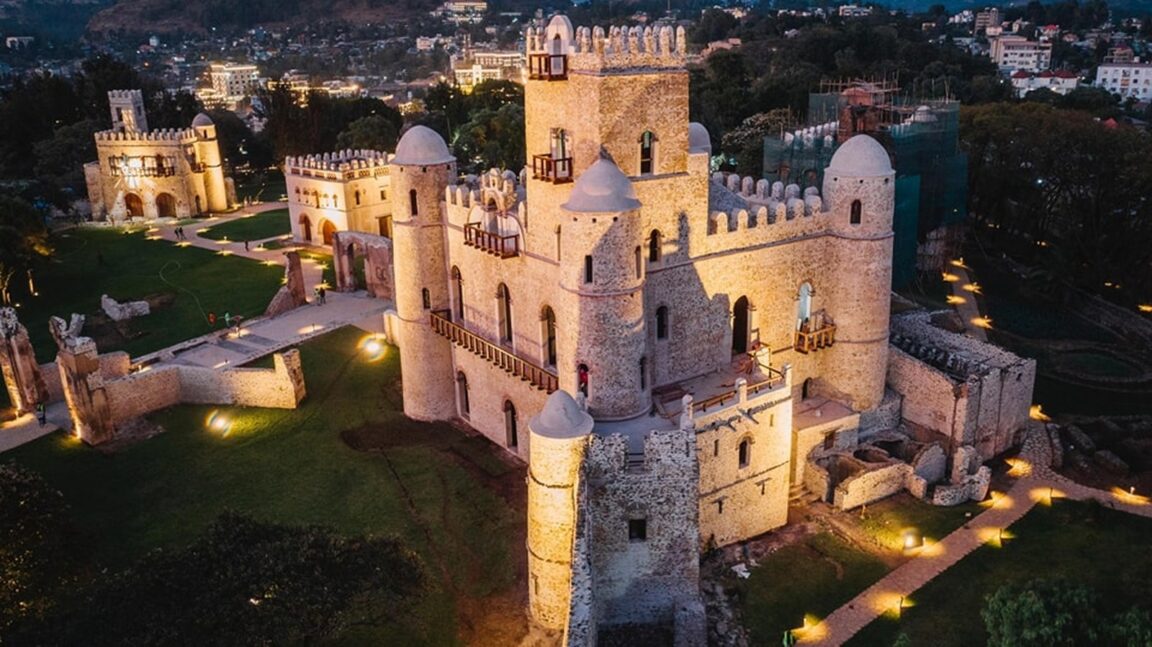
Image: Fasilides’ Castle in the Royal Enclosure of Fasil Ghebbi, Gondar, illuminated at dusk, the work of the emperor whose bath hosts Timkat. Photo via Visit Ethiopia, the official national tourism platform (visitethiopia.et), used with credit.